



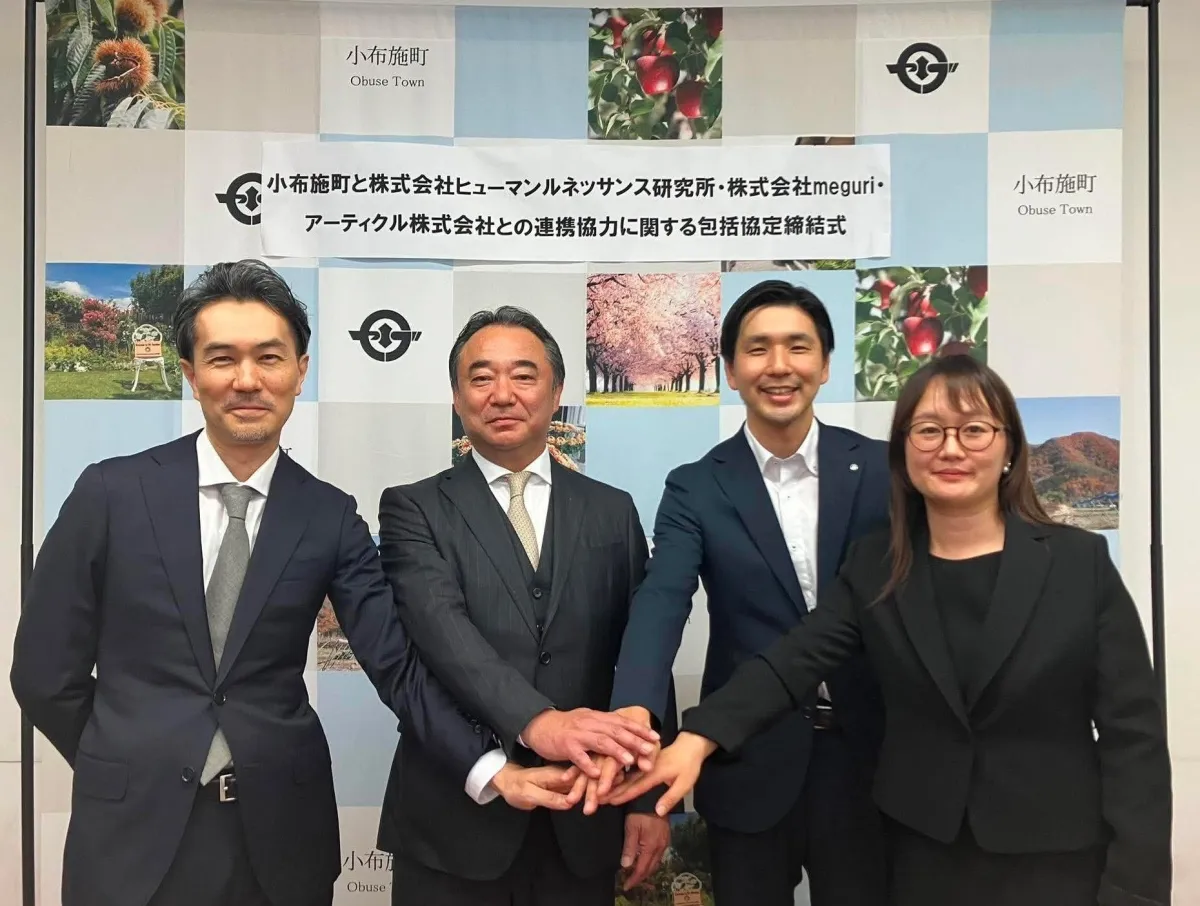
Omron's Human Renaissance Institute Unites with Obuse Town for Future Societal Model
Omron's Visionary Agreement with Obuse Town
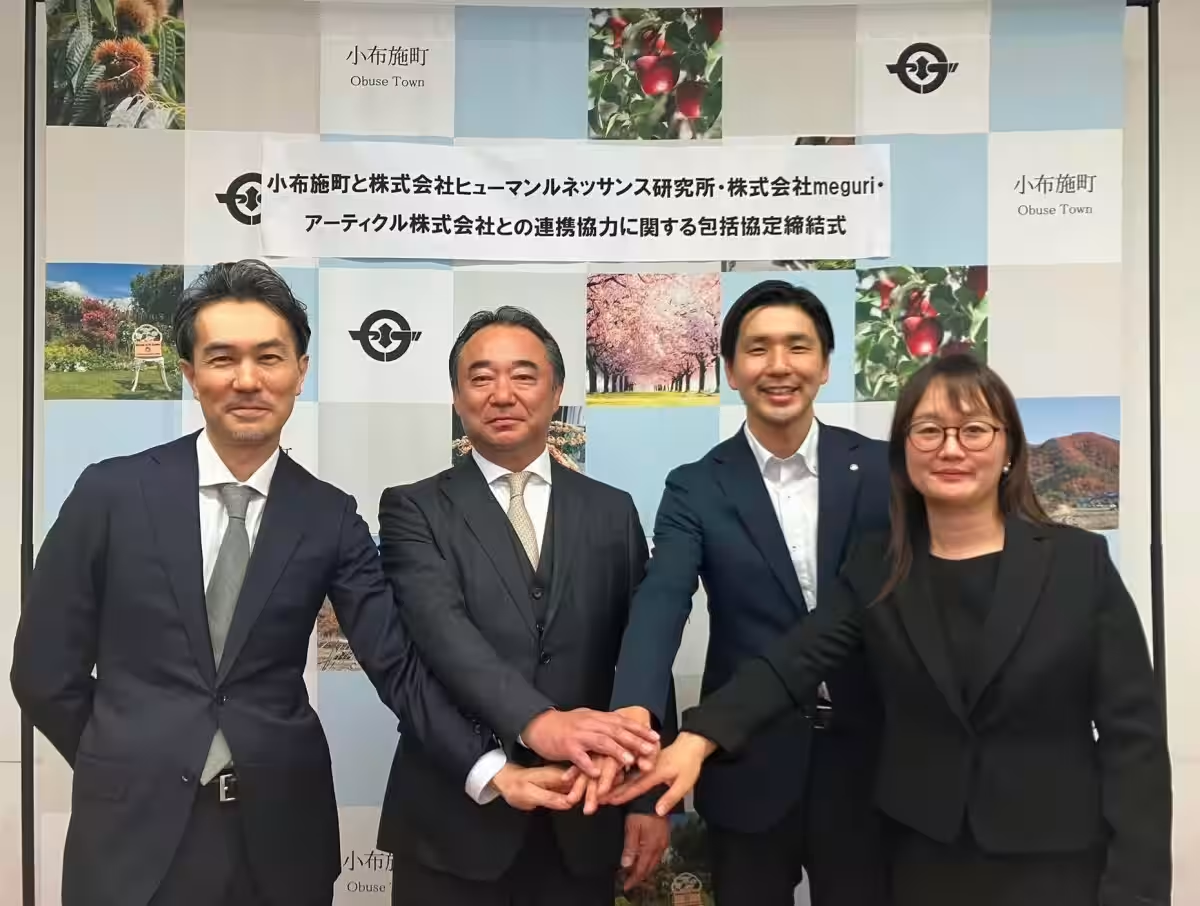
On July 15, 2026, Omron Corporation's Human Renaissance Institute (HRI) has officially entered into a comprehensive partnership with Obuse Town, Nagano Prefecture. This strategic collaboration also includes other key players: meguri and Article Co., Ltd. Together, they aim to implement a next-generation societal model by the year 2050.
1. Background and Social Significance of the Agreement
In an era marked by rapid advancements in generative AI and digital transformation (DX), the SINIC Theory, a future prediction framework developed by Omron's founder Kazuma Tateishi in 1970, has gained renewed attention. This initiative aims not only to encapsulate theoretical insights but to turn them into practical implementation on the ground in Obuse Town, creating a living laboratory for advancing societal models of the future.
The SINIC Theory observes how science, technology, and society feed into one another, allowing humanity to shift from an industrial society to an information society, and eventually towards a self-sustaining natural society. By using this model, stakeholders plan to foster a holistic approach that resonates with Obuse's unique identity while leading to effective practices towards this envisioned future.
Practical Elements of the Agreement
HRI aims to blend the philosophical underpinnings of Obuse's historical development with contemporary theories surrounding urban living. This partnership strives to cultivate practical initiatives as experiments, focusing on the instigation of a sustainable and autonomous society by 2050. Obuse has a storied past, having implemented distinct local developments since the 1970s, including the creation of the Hokusai Museum and other projects that harmonize natural and cultural landscapes. By challenging conventional approaches, this partnership looks to create a town model that not only preserves but also revitalizes the essence of Obuse.
2. Overview and Key Features of the Partnership
The comprehensive agreement leverages the strength of the SINIC Theory as a guiding principle, concentrating on three key areas or “Regenerations”:
- - Regenerate Identity: Recognizing and nurturing the unique historical, cultural, and environmental values that Obuse has long cherished, allowing for harmonious integration with external trends.
- - Regenerate Ecosystem: Emphasizing the importance of creating socio-environmental systems that merge urban living standards with the principles of nature, contributing to the well-being of the community.
- - Regenerate Autonomy: By fostering equal partnerships and ensuring collaborative frameworks, the agreement seeks to create spaces where diverse agents can innovate together grounded in individual intrinsic motivation.
Areas of Collaboration
The partnership is structured around three primary focus areas that underline the “three regenerations,” setting frameworks for specific initiatives that will involve varied entities in and out of Obuse Town. The goal is to generate real-world practice through co-creation and shared insights across various locales:
1. Co-creation Relationships: Systematizing cooperation between corporate governance and local management to adapt roles and methodologies that embrace evolving community needs.
2. Future Structuring: Developing conditions that encourage harmonization of local and external advancements in keeping with the predictions of the SINIC theory, where everyone can participate in the future vision.
3. Local Implementation: Fostering practical examples originating from the overlaps achieved through the projects mentioned above.
3. Comments from Stakeholders
In an official statement, Obuse Town Mayor Toru Omiya addressed the pressing issues of declining population and climate-related natural disasters, emphasizing that adapting to these changes requires both honoring local traditions and inviting fresh ideas and methodologies to foster vibrant community life.
On behalf of HRI, President Ikuro Tateishi expressed excitement about this partnership, viewing it as a chance to evolve the SINIC Theory into relevant practice for the future. He remarked on the great potential Obuse possesses as a field for executing such societal experimentation that could yield rich communal coexistence.
4. About the Partner Organizations
- - Human Renaissance Institute: Founded in 1990, HRI is part of the Omron Group and focuses on research devoted to future prediction methodologies based on the SINIC Theory. More Info
- - meguri: This organization provides consulting and outsourcing solutions aimed at creating a sustainable society. More Info
- - Article Co., Ltd.: Established through a merger, this company focuses on implementing projects in collaboration with diverse stakeholders. More Info
By pooling diverse capabilities and insights, the partnership between Omron's HRI, Obuse Town, meguri, and Article aims to pave the way for a profound societal transformation, emphasizing community resilience and cooperation to address future challenges effectively.
Conclusion
The newly established agreement signals a meaningful step towards sustainable governance and societal evolution, fostering an environment where unique local identities can thrive while collectively addressing the challenges of tomorrow.
Topics General Business)
【About Using Articles】
You can freely use the title and article content by linking to the page where the article is posted.
※ Images cannot be used.
【About Links】
Links are free to use.