



JAL Applies for International Cargo Fuel Surcharge Effective October 2025
Japan Airlines' International Cargo Fuel Surcharge Application
On September 25, 2025, Japan Airlines (JAL) made a significant move by applying to the Ministry of Land, Infrastructure, Transport and Tourism for an international cargo fuel surcharge that will take effect on October 1, 2025. This decision comes in response to the fluctuating prices of jet fuel, an essential component for air freight services.
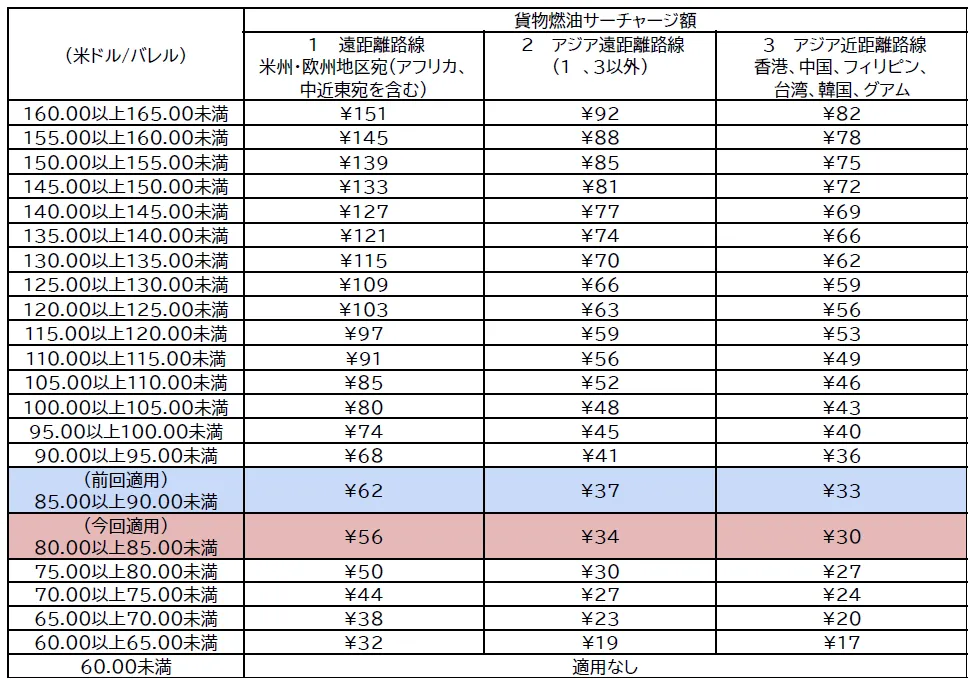
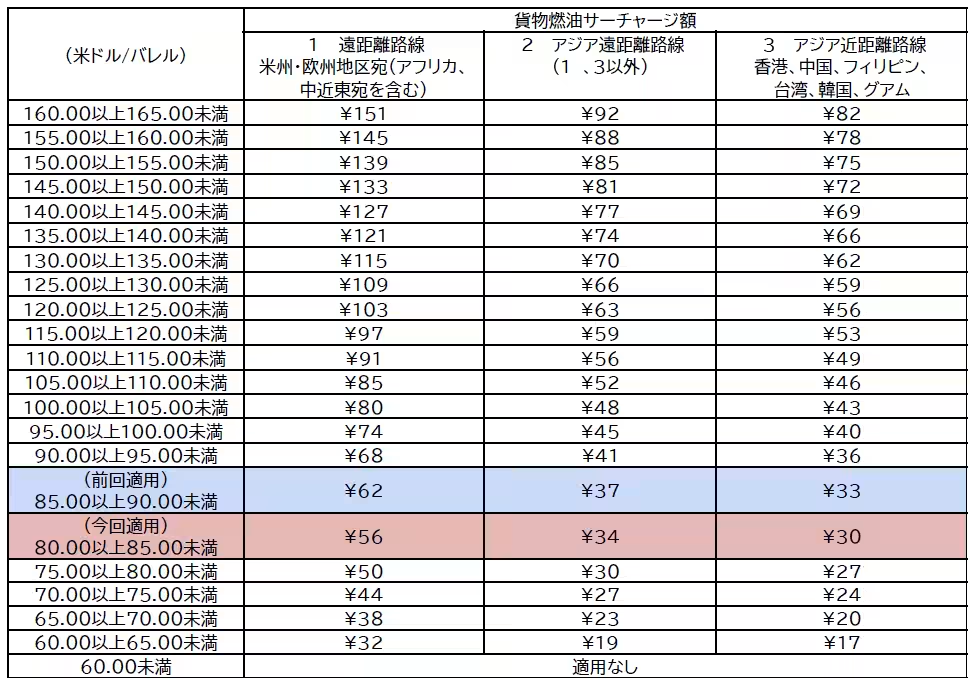
According to the application, the average price of jet fuel in August 2025 was recorded at $84.50 per barrel. Based on this figure, JAL has established a fuel index price range between 80.00 and 85.00 USD. Consequently, the proposed surcharge rates will be as follows:
- - 56 yen per kilogram for long-distance routes to North America and Europe
- - 34 yen per kilogram for long-distance routes to Asia
- - 30 yen per kilogram for short-distance routes within Asia
One of the remarkable aspects of this surcharge is that JAL conducts revisions to their international cargo fuel surcharge on a monthly basis, with updates planned for twelve times each year. This regular adjustment is designed to reflect the ongoing changes in fuel prices, essential for maintaining the competitive nature of their air freight services.
Starting from April 2024, JAL will base the monthly surcharge rates on the average jet fuel prices traded in Singapore two months prior. This approach aims to establish more transparency and reliability in the surcharges, allowing customers to understand the cost implications effectively.
The new surcharge framework is outlined in a detailed table that will be utilized to guide the pricing structure for cargo fuel. This systematic method not only assists JAL in managing operational costs but also provides customers with predictable pricing, which is crucial for their planning and budgeting.
As international trade continually evolves, the flexibility of JAL’s fuel surcharge implementation demonstrates the airline's dedication to aligning its pricing strategies with market conditions. With this move, JAL aims to ensure that customers remain informed about potential cost variations stemming from jet fuel price fluctuations.
Overall, this decision reflects JAL's proactive approach in maintaining transparency and competitiveness in the international cargo market, positioning itself as a reliable partner for businesses engaged in global trade. As JAL continues to adapt to the changing economic landscape, stakeholders in the industry are advised to stay vigilant regarding future developments related to fuel pricing and surcharges.
In conclusion, the introduction of the new fuel surcharge rates by Japan Airlines signifies an essential step towards stabilizing the airline’s pricing strategy in a volatile market. By providing clear guidelines and regular adjustments, JAL is reinforcing its commitment to excellence in the aviation sector and ensuring that it meets the cargo demands of its customers efficiently.
This initiative will not only impact operational costs for JAL but also set a standard for how fuel surcharges are managed in the aviation industry moving forward.
Topics Travel)
【About Using Articles】
You can freely use the title and article content by linking to the page where the article is posted.
※ Images cannot be used.
【About Links】
Links are free to use.