



Overcoming the AI Utilization Gap: Strategies for Reskilling in Japanese Companies
Closing the AI Utilization Gap in Japanese Companies
In today's fast-paced digital world, the integration of artificial intelligence (AI) into businesses is no longer optional but essential. However, many Japanese companies face significant hurdles in fully leveraging AI technologies. Lightworks, a consultancy specializing in learning management systems (LMS) and e-learning content, has identified key solutions to tackle these challenges, including the necessary shift from knowledge accumulation to redefining operations around AI utilization.
Understanding the AI Landscape in Japan
The Japanese labor market is experiencing a fierce competition for AI talent, leaving many companies feeling helpless. A prevalent sentiment according to industry insiders is, "We want to utilize generative AI, but we lack the personnel to drive this initiative." This challenge stems from a shortage of qualified individuals with the right skills, compelling organizations to reconsider their strategies and invest in the reskilling of their existing workforce. Nonetheless, traditional AI training programs often fail to make a lasting impact, leading to a frustrating disconnect between classroom knowledge and workplace application.
Identifying the Barriers
Several walls obstruct the effective application of AI in business settings today:
1. Knowledge Wall
Many employees do not understand what AI can realistically achieve due to a lack of awareness and skills. This gap in knowledge acts as a barrier to utilization.
2. Psychological Wall
The complexity of AI terminology fosters a sense of intimidation among staff. Feelings of inadequacy often discourage them from asking questions or seeking help, creating a psychological block.
3. Environmental Wall
A vague understanding of AI's applicability within the organization's framework causes hesitancy. Employees are often unsure about what constitutes acceptable use of AI tools in their jobs.
Moreover, as companies lag in providing adequate resources and training, a dangerous trend known as "shadow AI" emerges, where employees seek out personal solutions outside of organizational guidelines, leading to potential security risks.
Potential Solutions
Lightworks proposes a transformative approach that prioritizes operational change over mere education. Rather than sticking with conventional workshops or lengthy classroom sessions, the focus needs to shift towards habitual practice in the work environment. Here’s a summary of the new strategy based on years of e-learning insight:
1. Micro-Learning Opportunities: Shift from hours-long lectures to short, targeted learning sessions, such as 3-5 minute videos that allow employees to immediately apply concepts like email creation or summarization techniques.
2. The “With AI Series”: This collection of educational materials will be regularly updated by experts to reflect the evolving AI landscape, ensuring that the content remains current and relevant for learners, while freeing up training professionals from the burdens of content creation.
3. Defined Guidelines and Practical Steps: Organizations should establish clear guidelines for AI use and redefine roles around AI to address how to command and assess AI tools effectively. This not only clarifies expectations but also reduces the psychological barrier to entry for employees.
A Call to Action
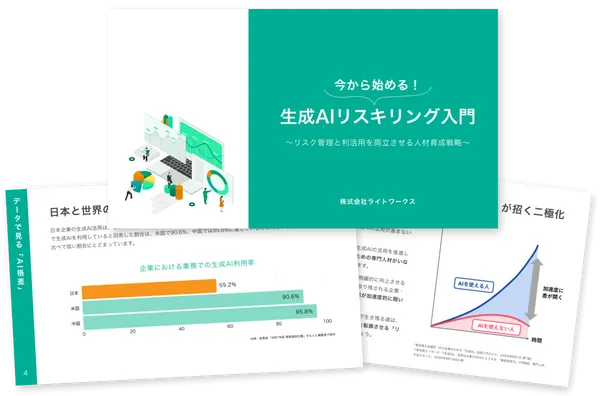
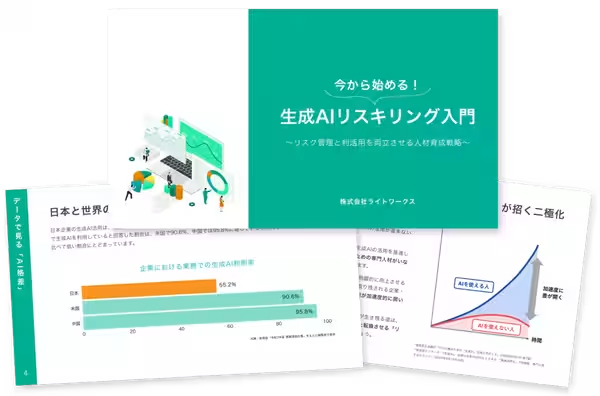
Lightworks has released a comprehensive white paper titled “Introduction to Generative AI Reskilling: A Training Strategy Balancing Risk Management and Utilization”. This document outlines the stark disparity in AI adoption across Japan, the U.S., and China, delving into the underlying reasons for resistance against AI application in local businesses, and offering actionable strategies to bridge these gaps. For those interested in tackling these issues, the white paper is available for free download here: Download the White Paper.
About Lightworks
Based in Chiyoda, Tokyo, Lightworks is dedicated to empowering organizations to grow collaboratively through cutting-edge ICT solutions and innovative educational methods. By implementing their LMS, CAREERSHIP, and bespoke e-learning content, they aim to enhance organizational capabilities, accelerate workforce development, and elevate service quality across sectors.
Topics Business Technology)
【About Using Articles】
You can freely use the title and article content by linking to the page where the article is posted.
※ Images cannot be used.
【About Links】
Links are free to use.