



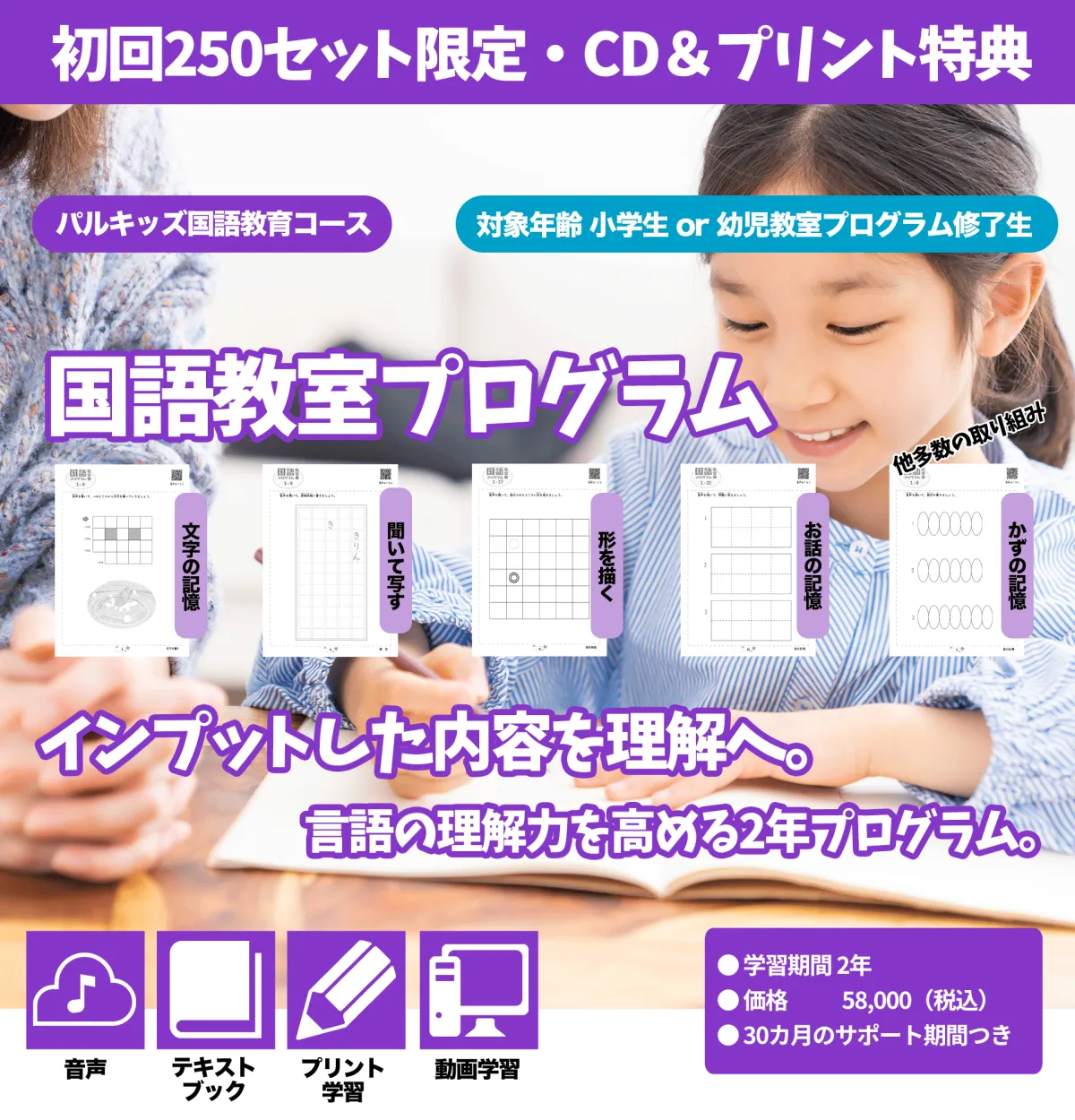
Introducing the New 'Kokugo Classroom Program' to Enhance Children's Comprehension Skills Starting July 2025
Enhancing Comprehension Skills: The New Kokugo Classroom Program
In recent times, it has become increasingly evident that a strong command of the Japanese language, or Kokugo ryoku, is a common trait among academically successful children. More than mere proficiency in reading comprehension tasks, Kokugo ryoku forms a foundation for a variety of competencies, including logical thinking, understanding subjects across the curriculum, problem-solving abilities, and expressive skills.
Traditionally, education has heavily focused on rote memorization. However, as societal and educational models evolve, there is a growing emphasis on the importance of 'thinking independently.' Meanwhile, reports indicate that a rising number of children struggle to grasp the meaning behind the texts they read, thereby underscoring the urgency of reevaluating Kokugo ryoku.
In response to these challenges, the Children's English Research Institute is set to introduce the Kokugo Classroom Program, aiming not only to facilitate reading but also to develop the capability to visualize read content, thereby enhancing comprehension skills.
A Structured Weekly Learning Plan
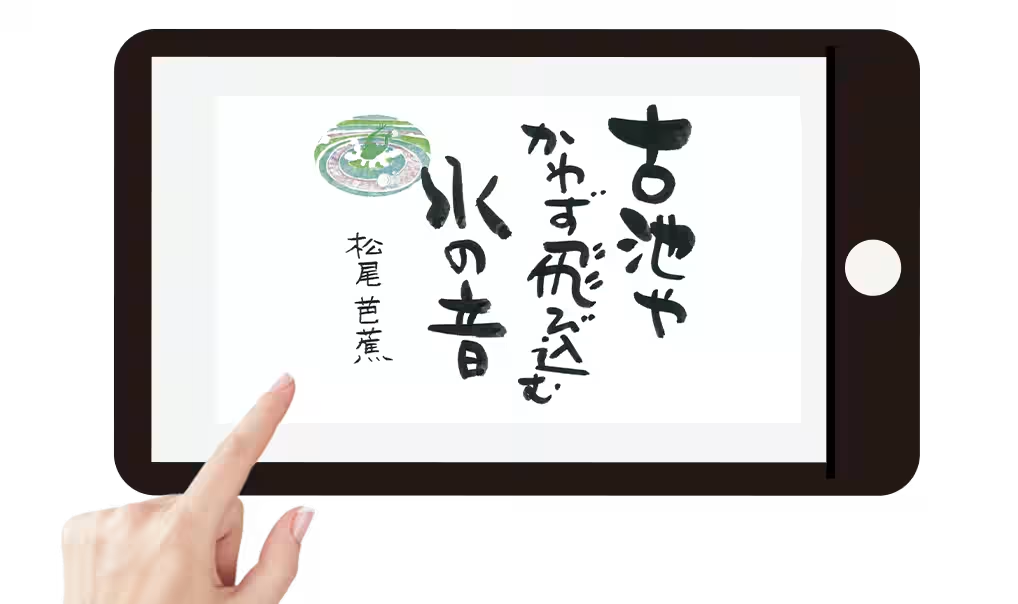
The Kokugo Classroom Program is designed around a weekly learning schedule. During the first two days, students will immerse themselves in enjoyable videos that teach haiku, proverbs, and essential knowledge of the Japanese language. The third to fifth days involve workbook activities supplemented with audio to reinforce what they have learned and ensure comprehension. The sixth and seventh days are dedicated to review and relaxation, creating a sustainable learning pace.
Each month, participants will receive a new video and audio materials for their workbooks, along with PDF workbooks and texts, covering a total of twenty-four months. This program is targeted at elementary students or those who have completed the Yōji Kyōshitsu Program. Furthermore, additional support is provided for thirty months, ensuring sustained educational growth.
Focusing on Cognitive Abilities: Building the Foundation of Intelligence
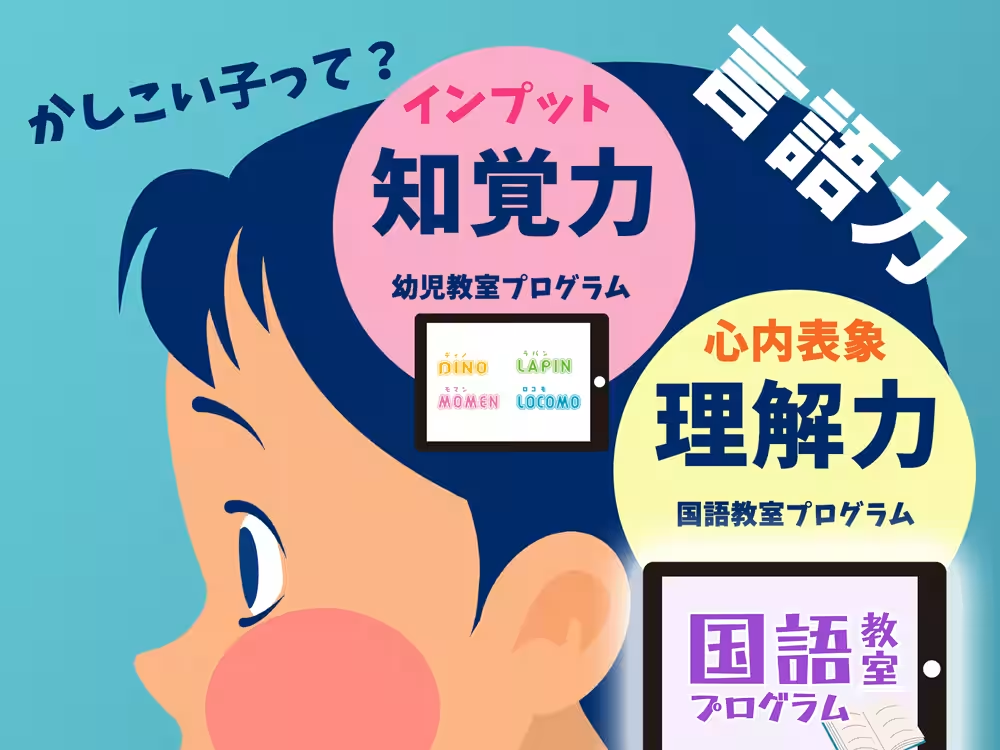
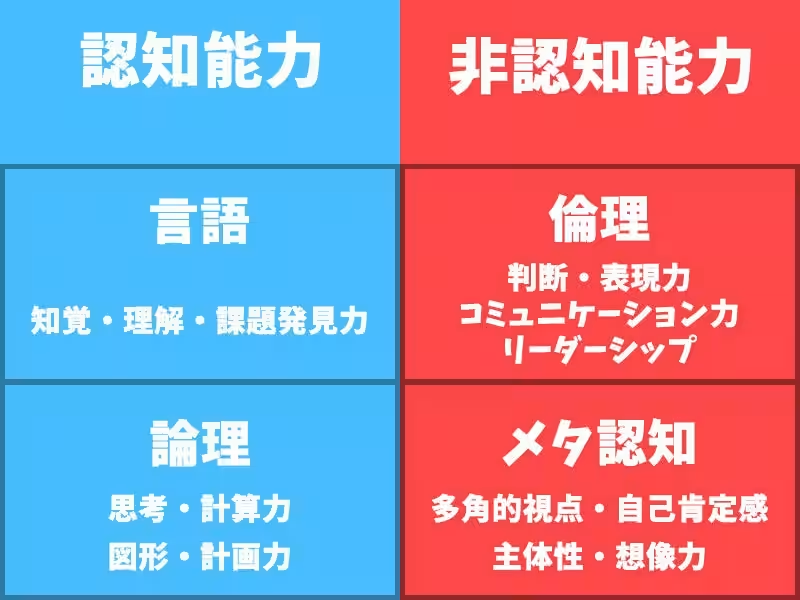
Educational institutions have recently prioritized fostering capacities such as 'thinking ability', 'judgment', and 'expressiveness'. Guidance from Japan's Ministry of Education and the Ministry of Economy, Trade and Industry emphasizes that these skills should be anchored in a balance of 'knowledge, emotion, and will'.
Here, 'knowledge' refers to cognitive abilities such as understanding, thinking, and logical structuring. On the other hand, 'emotion' and 'will' relate to judgment, self-agency, and cooperativeness, all deemed essential for human development.
Typically characterized by its focus on enhancing cognitive abilities, the Kokugo Classroom Program stands out by encouraging processes that involve understanding, thinking, and expressing oneself in one's own words instead of rote learning. This approach is designed to support the development of children’s intelligence.
Product Overview
- - Product Name: Kokugo Classroom Program
- - Release Date: Tuesday, July 8, 2025
- - Price: 58,000 yen (including tax)
- - Format: Downloadable materials + Video streaming
- - Learning Duration: 2 years
- - Target Audience: Elementary school students or graduates of the Yōji Kyōshitsu Program
- - Device Compatibility: Compatible with various PCs, tablets, and smartphones
- - Product URL: Kokugo Classroom Program
Contact Information
For inquiries regarding this product, please visit: Contact Us
About the Children's English Research Institute
With over 40 years of experience, our institute has provided bilingual educational content to more than 100,000 parent-child pairs.
- - Company Name: Children's English Research Institute
- - Location: 3F, Caterina Yanagidori Building, Shinjuku 1-18-10, Tokyo
- - Director: Hiroshi Funatsu
- - Established: June 9, 1983
- - Website: Children's English Research Institute
Topics Other)
【About Using Articles】
You can freely use the title and article content by linking to the page where the article is posted.
※ Images cannot be used.
【About Links】
Links are free to use.