




Exploring the Implementation of Generative AI in Japan and China’s Gaming Industries
The landscape of the gaming industry is undergoing a transformation as generative AI technology integrates into game development processes across various regions. SpiceSmart, a leading research company, has published the second part of its study on the implementation of generative AI in the gaming sector, focusing on Japan and China. This follow-up report builds on findings from the United States, published in July 2025, providing a comparative analysis of the attitudes and trends in each country regarding AI adoption.
The research, which commenced in 2022, includes an analysis of games released not only on mobile platforms but also on PC, Steam, and consoles, highlighting instances where AI technologies were utilized in their development. The study gathered data through official announcements about AI usage as well as reports from related media covering presentations by companies at various events and seminars.
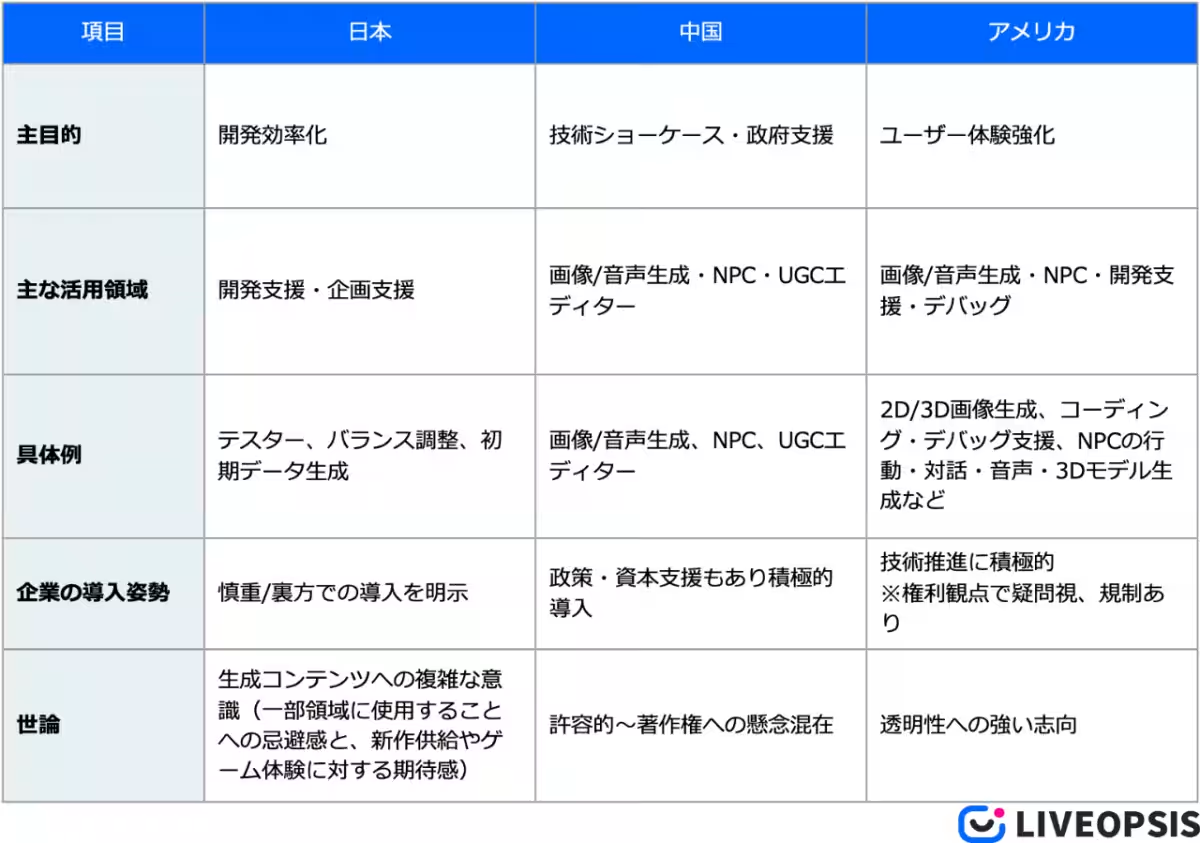
The findings of the study indicated distinct trends in the use of generative AI across the United States, Japan, and China:
In the U.S., the application of generative AI is largely confined to development support roles such as coding, debugging, and operational optimization. Companies are cautious about deploying AI in creative areas due to concerns over copyright and labor issues. However, there is significant progress in adopting AI for NPC creation and dialogue generation, enhancing natural interactions between players and NPCs, which has garnered considerable attention in the gaming community.
Major players in China’s market, like Tencent and NetEase, are leveraging their AI labs and large-scale models to implement generative AI across various areas, including image, audio, video, NPC, and user-generated content. The introduction of AI-powered NPCs, capable of autonomously generating dialogue and actions, has led to a heightened level of player experience. AI's role is becoming central to the industry, with some companies receiving external investments to bolster their AI-related initiatives, thus enhancing their competitive edge in the market.
In contrast, Japanese gaming companies tend to view AI primarily as a tool to enhance development efficiency rather than a direct contributor to user-facing elements of games. This cautious approach stems from cultural values that question whether AI can produce creations imbued with 'soul.' Nevertheless, there is a notable expectation among users for generative AI to improve gaming experiences and increase the release of new titles, indicating a potential shift in perception.
The report also includes insights from a survey conducted by Game8, a joint partner in this research, targeting Japanese game users. It revealed that 66% of respondents were positive about the integration of generative AI, particularly in creating new gaming experiences and increasing the release rates of games due to improved development efficiency. However, regarding AI-generated in-game voice, many users expressed hesitations, particularly among teenagers, where more than half were against its adoption. This indicates notable variations in acceptance based on age and specific areas of AI integration.
The findings of the generative AI implementation in gaming across Japan, China, and the United States shed light on a rapidly evolving industry. While differing cultural perspectives shape the adoption of AI technologies, the interplay between innovation and user acceptance is crucial in defining the future of gaming. For more detailed insights and data from this study, please refer to the Liveopsis portal or contact SpiceSmart directly.
The comprehensive report on generative AI in gaming across Japan, China, and the U.S. is available for industry professionals through SpiceSmart's platform, Liveopsis. For inquiries, please refer to the contact below:
Inquiries: LIVEOPSIS
For the detailed user survey results, please visit the special page set up by Game8, which will be live on the 14th.
Joint Planning Partner:
Game8 Inc. Overview
SpiceSmart Inc. Overview
SpiceSmart focuses on research and analysis within the mobile gaming market, while also supporting business initiatives utilizing Japanese IP creations. Their services extend globally, providing research reports through their Liveopsis platform.
For further questions regarding this matter, please contact the PR department via email at [email protected], available in Japanese, English, Chinese (simplified and traditional), and Korean.

Overview of the Study
The research, which commenced in 2022, includes an analysis of games released not only on mobile platforms but also on PC, Steam, and consoles, highlighting instances where AI technologies were utilized in their development. The study gathered data through official announcements about AI usage as well as reports from related media covering presentations by companies at various events and seminars.
Clear Differences in AI Implementation Policies Among Countries
The findings of the study indicated distinct trends in the use of generative AI across the United States, Japan, and China:
United States:
In the U.S., the application of generative AI is largely confined to development support roles such as coding, debugging, and operational optimization. Companies are cautious about deploying AI in creative areas due to concerns over copyright and labor issues. However, there is significant progress in adopting AI for NPC creation and dialogue generation, enhancing natural interactions between players and NPCs, which has garnered considerable attention in the gaming community.
China:
Major players in China’s market, like Tencent and NetEase, are leveraging their AI labs and large-scale models to implement generative AI across various areas, including image, audio, video, NPC, and user-generated content. The introduction of AI-powered NPCs, capable of autonomously generating dialogue and actions, has led to a heightened level of player experience. AI's role is becoming central to the industry, with some companies receiving external investments to bolster their AI-related initiatives, thus enhancing their competitive edge in the market.
Japan:
In contrast, Japanese gaming companies tend to view AI primarily as a tool to enhance development efficiency rather than a direct contributor to user-facing elements of games. This cautious approach stems from cultural values that question whether AI can produce creations imbued with 'soul.' Nevertheless, there is a notable expectation among users for generative AI to improve gaming experiences and increase the release of new titles, indicating a potential shift in perception.
User Awareness and Insights
The report also includes insights from a survey conducted by Game8, a joint partner in this research, targeting Japanese game users. It revealed that 66% of respondents were positive about the integration of generative AI, particularly in creating new gaming experiences and increasing the release rates of games due to improved development efficiency. However, regarding AI-generated in-game voice, many users expressed hesitations, particularly among teenagers, where more than half were against its adoption. This indicates notable variations in acceptance based on age and specific areas of AI integration.
Conclusion
The findings of the generative AI implementation in gaming across Japan, China, and the United States shed light on a rapidly evolving industry. While differing cultural perspectives shape the adoption of AI technologies, the interplay between innovation and user acceptance is crucial in defining the future of gaming. For more detailed insights and data from this study, please refer to the Liveopsis portal or contact SpiceSmart directly.
Further Information
The comprehensive report on generative AI in gaming across Japan, China, and the U.S. is available for industry professionals through SpiceSmart's platform, Liveopsis. For inquiries, please refer to the contact below:
Inquiries: LIVEOPSIS
For the detailed user survey results, please visit the special page set up by Game8, which will be live on the 14th.
Joint Planning Partner:
Game8 Inc. Overview
- - Head Office: Shibuya, Tokyo, Japan
- - CEO: Shunsuke Sawamura
- - Established: August 1, 2014
- - Website: Game8
SpiceSmart Inc. Overview
SpiceSmart focuses on research and analysis within the mobile gaming market, while also supporting business initiatives utilizing Japanese IP creations. Their services extend globally, providing research reports through their Liveopsis platform.
- - CEO: Masumi Kubo
- - Established: July 2015
- - Website: SpiceSmart
For further questions regarding this matter, please contact the PR department via email at [email protected], available in Japanese, English, Chinese (simplified and traditional), and Korean.
Topics Entertainment & Media)


【About Using Articles】
You can freely use the title and article content by linking to the page where the article is posted.
※ Images cannot be used.
【About Links】
Links are free to use.