



Akasaka Intercity AIR Achieves Top LEED Platinum Certification for Environmental Performance
Akasaka Intercity AIR Achieves LEED Platinum Certification
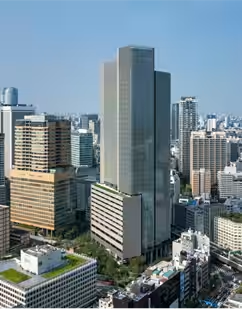
Akasaka Intercity AIR, developed by Nippon Steel Kowa Real Estate Co., Ltd. and operated by Akasaka Intercity Management Co., Ltd. in Minato-ku, Tokyo, has proudly announced its achievement of the highest rank, Platinum certification under the LEED rating system. This certification is awarded by the U.S. Green Building Council (USGBC) and affirms the building's outstanding environmental performance.
This marks a significant milestone as it is the first instance in Japan where a large-scale mixed-use building has acquired LEED Platinum under the existing buildings category, specifically LEED O+M (Operational and Maintenance) version 4.1. This achievement highlights the commitment of both companies to sustainable urban development and environmental stewardship.
What is LEED Certification?
LEED, which stands for Leadership in Energy & Environmental Design, is a globally recognized certification program developed by the U.S. Green Building Council (USGBC). It evaluates the environmental performance of buildings and urban areas across various categories. The LEED O+M category focuses on assessing the operational and maintenance aspects of existing buildings. It evaluates the following key areas:
- - Location and Transportation: Accessibility to public transportation and promotion of cycling.
- - Sustainable Site: Management of the site and preservation of green areas.
- - Water Efficiency: Use of water-saving fixtures and management of water consumption.
- - Energy and Atmosphere: Energy efficiency, incorporation of renewable energy, and measures for greenhouse gas reduction.
- - Materials and Resources: Waste reduction and promotion of recycling.
- - Indoor Environmental Quality: Ventilation, air quality, lighting, and occupant comfort.
Overview of Akasaka Intercity AIR
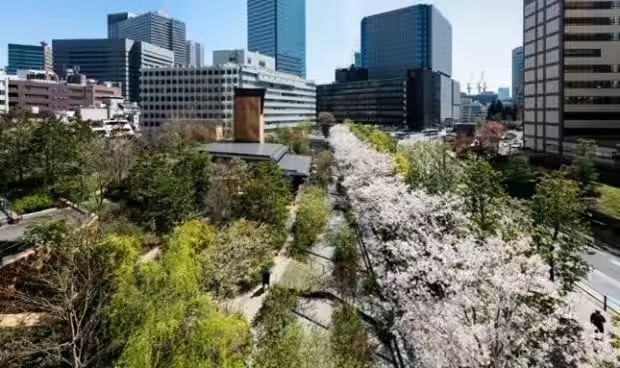
Akasaka Intercity AIR was designed with the concept of creating a comfortable and secure urban environment for workers, residents, and visitors alike. It emphasizes lush greenery and collaboration with the surrounding area while focusing on reducing environmental impact. The facility's inspiring approach combines smart technologies, Business Continuity Planning (BCP), and wellness principles. It employs high-efficiency equipment, superior energy management protocols, utilization of renewable energy sources, and recycled water.
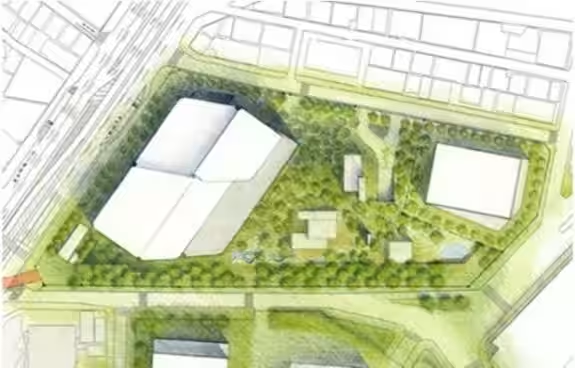
The expansive green space, with a greening ratio exceeding 50%, integrates beautifully with the surrounding urban environment, creating serene areas for relaxation. This not only enhances the urban landscape but also contributes to mitigating heat island effects and efficient rainwater management. The remarkable environmental initiatives and social considerations embodied by this project have also been recognized in the LEED certification process.
Facility Information
- - Name: Akasaka Intercity AIR
- - Location: 1-8-1 Akasaka, Minato-ku, Tokyo
- - Transportation: Directly connected to Tameike-Sanno Station on Tokyo Metro Ginza Line and Namboku Line
- - Main Uses: Offices, residential units, conference facilities, retail spaces
- - Site Area: 16,088.32 square meters
- - Total Floor Area: 178,328.01 square meters
- - Maximum Height: 205.08 meters
- - Structure: Steel frame, reinforced steel concrete
- - Scale: 38 floors above ground, 3 floors below ground, 1 level of attic
With this achievement, Akasaka Intercity AIR sets a benchmark for future developments in Japan, emphasizing the importance of sustainability, comfort, and community-oriented urban planning.
Topics Consumer Products & Retail)



【About Using Articles】
You can freely use the title and article content by linking to the page where the article is posted.
※ Images cannot be used.
【About Links】
Links are free to use.