



AIST Launches Manufacturing AX Hub to Revolutionize Japanese Manufacturing with AI and Data
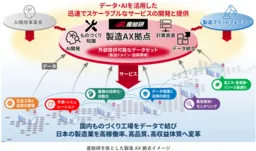
The National Institute of Advanced Industrial Science and Technology (AIST) has initiated an innovative project named the Manufacturing AX hub, a virtual platform aimed at facilitating the digital transformation (DX) of Japan's manufacturing sector. As part of this initiative, AIST will leverage artificial intelligence (AI) technologies to enhance data connectivity within the manufacturing landscape, achieving high operational efficiency, superior quality, and increased profitability for businesses.
The Manufacturing AX hub is a crucial component of a larger vision by Japan's Ministry of Economy, Trade and Industry (METI) to unify scattered operational and quality data from manufacturing sites across the country. The hub will serve as a comprehensive database, utilizing data to foster the development of diverse AI-driven services tailored for manufacturing environments. By collaborating with manufacturing platform developers and AI enterprises, the hub is set to spearhead a transformation termed AI Transformation (AX), thereby creating a sustainable ecosystem of manufacturing data.
The core aim of the Manufacturing AX hub is to facilitate a robust connection between Japan's manufacturing industry and AI applications. By doing so, it strives to generate factories characterized by high efficiency, outstanding quality, and high profitability. Additionally, these factories will be equipped to rapidly adapt to the challenges posed by shifts in international dynamics or disruptions from natural disasters. The hub promotes a cyclical model where the benefits derived from AI-enhanced manufacturing processes are fed back into the manufacturing sphere, thus enriching the ecosystem.
AIST is collaborating with machine manufacturers and corporations involved in the manufacturing process to create a supportive network for data circulation. This collaboration extends to the development of an advanced manufacturing platform, an essential foundation for operational excellence. AIST's initiatives have received the backing of the GENIAC project, led by METI and the New Energy and Industrial Technology Development Organization (NEDO), which focuses on enhancing the resources and capacity for generative AI in the industrial sector.
The urgency of these initiatives is amplified by the growing challenges faced by the manufacturing sector, including labor shortages and increasing international competition fueled by China's AI leadership, Europe’s efforts in data standardization, and the rapid digital transformation driven by major tech corporations in the United States. While the push for DX is critical, small and medium-sized enterprises (SMEs) often struggle to secure digital talent, facing limitations that inhibit singular corporate responses to these shifts.
Recognizing this landscape, the Manufacturing AX hub responds to a directive outlined in the 2026 White Paper on Manufacturing, which emphasizes the need for a unified approach to DX across the industry. The vision entails broad collection and integration of data generated in manufacturing settings, ultimately leading to the refinement and enhancement of production efficiency and labor reduction via collaborative platform development.
AIST's Manufacturing AX hub stands to act as a connecting hub for domestic manufacturers, AI developers, and manufacturing platform providers. By integrating diverse datasets sourced from manufacturing environments, the project aims to establish a robust data foundation capable of transcending traditional corporate confines. This foundation will then facilitate broader applications across the manufacturing landscape, promoting synergies among various players in the sector.
Collectively, the gathered datasets will drive AI development, contributing to the optimization of production conditions and anomaly detection while being directed towards the manufacturing platform for practical applications. The expectation is that the results will be channeled back into the manufacturing process, creating an advantageous cycle for value creation and innovation.
AIST's status as a comprehensive research institute positions it uniquely to integrate research capabilities in both manufacturing and AI. This partnership aims to encompass every aspect of the manufacturing process, from data gathering and anonymization to the creation of applicable datasets that facilitate technology-driven production. Support from AIST will also ensure an inclusive environment where various companies feel comfortable participating.
The partnership among AIST, DMG MORI Co., and WALC reflects a collaborative effort to leverage the GENIAC project to merge real-world data with advanced AI technologies. This cooperation will focus on machine tools and robotics, harnessing operational data to refine production methodologies further.
AIST's initiative also encompasses efforts to establish the Manufacturing Creation Consortium (MOCO) aimed at fostering technological networks geared towards enhancing the competitiveness and agility of Japanese manufacturing entities.
As data connectivity and AI applications evolve within the manufacturing sector, stakeholders anticipate improvements in production efficiency and new business models. Through the actions spearheaded by the Manufacturing AX hub and its integration with the MOCO, AIST is committed to expediting digital transformation and bolstering value creation in Japan’s manufacturing landscape.
With the Manufacturing AX hub, the stage is set for a groundbreaking evolution in Japan's manufacturing environments. Focused on unifying data and harnessing AI, this innovative project aims to enable a transformation that meets current challenges head-on while preparing the industry for future growth opportunities. Continuous efforts will ensure that progress is made towards seamless integration of data-driven methodologies, propelling Japan's manufacturing industry into a new era of excellence and adaptability.
Overview of the Manufacturing AX Hub
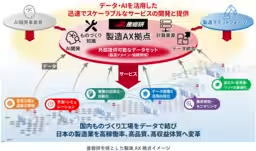
The Manufacturing AX hub is a crucial component of a larger vision by Japan's Ministry of Economy, Trade and Industry (METI) to unify scattered operational and quality data from manufacturing sites across the country. The hub will serve as a comprehensive database, utilizing data to foster the development of diverse AI-driven services tailored for manufacturing environments. By collaborating with manufacturing platform developers and AI enterprises, the hub is set to spearhead a transformation termed AI Transformation (AX), thereby creating a sustainable ecosystem of manufacturing data.
Objectives and Benefits
The core aim of the Manufacturing AX hub is to facilitate a robust connection between Japan's manufacturing industry and AI applications. By doing so, it strives to generate factories characterized by high efficiency, outstanding quality, and high profitability. Additionally, these factories will be equipped to rapidly adapt to the challenges posed by shifts in international dynamics or disruptions from natural disasters. The hub promotes a cyclical model where the benefits derived from AI-enhanced manufacturing processes are fed back into the manufacturing sphere, thus enriching the ecosystem.
AIST is collaborating with machine manufacturers and corporations involved in the manufacturing process to create a supportive network for data circulation. This collaboration extends to the development of an advanced manufacturing platform, an essential foundation for operational excellence. AIST's initiatives have received the backing of the GENIAC project, led by METI and the New Energy and Industrial Technology Development Organization (NEDO), which focuses on enhancing the resources and capacity for generative AI in the industrial sector.
Response to Societal Challenges
The urgency of these initiatives is amplified by the growing challenges faced by the manufacturing sector, including labor shortages and increasing international competition fueled by China's AI leadership, Europe’s efforts in data standardization, and the rapid digital transformation driven by major tech corporations in the United States. While the push for DX is critical, small and medium-sized enterprises (SMEs) often struggle to secure digital talent, facing limitations that inhibit singular corporate responses to these shifts.
Recognizing this landscape, the Manufacturing AX hub responds to a directive outlined in the 2026 White Paper on Manufacturing, which emphasizes the need for a unified approach to DX across the industry. The vision entails broad collection and integration of data generated in manufacturing settings, ultimately leading to the refinement and enhancement of production efficiency and labor reduction via collaborative platform development.
Hub Functionality
AIST's Manufacturing AX hub stands to act as a connecting hub for domestic manufacturers, AI developers, and manufacturing platform providers. By integrating diverse datasets sourced from manufacturing environments, the project aims to establish a robust data foundation capable of transcending traditional corporate confines. This foundation will then facilitate broader applications across the manufacturing landscape, promoting synergies among various players in the sector.
Collectively, the gathered datasets will drive AI development, contributing to the optimization of production conditions and anomaly detection while being directed towards the manufacturing platform for practical applications. The expectation is that the results will be channeled back into the manufacturing process, creating an advantageous cycle for value creation and innovation.
AIST's Central Role
AIST's status as a comprehensive research institute positions it uniquely to integrate research capabilities in both manufacturing and AI. This partnership aims to encompass every aspect of the manufacturing process, from data gathering and anonymization to the creation of applicable datasets that facilitate technology-driven production. Support from AIST will also ensure an inclusive environment where various companies feel comfortable participating.
The Way Forward with GENIAC
The partnership among AIST, DMG MORI Co., and WALC reflects a collaborative effort to leverage the GENIAC project to merge real-world data with advanced AI technologies. This cooperation will focus on machine tools and robotics, harnessing operational data to refine production methodologies further.
AIST's initiative also encompasses efforts to establish the Manufacturing Creation Consortium (MOCO) aimed at fostering technological networks geared towards enhancing the competitiveness and agility of Japanese manufacturing entities.
As data connectivity and AI applications evolve within the manufacturing sector, stakeholders anticipate improvements in production efficiency and new business models. Through the actions spearheaded by the Manufacturing AX hub and its integration with the MOCO, AIST is committed to expediting digital transformation and bolstering value creation in Japan’s manufacturing landscape.
Conclusion
With the Manufacturing AX hub, the stage is set for a groundbreaking evolution in Japan's manufacturing environments. Focused on unifying data and harnessing AI, this innovative project aims to enable a transformation that meets current challenges head-on while preparing the industry for future growth opportunities. Continuous efforts will ensure that progress is made towards seamless integration of data-driven methodologies, propelling Japan's manufacturing industry into a new era of excellence and adaptability.
Topics Other)








【About Using Articles】
You can freely use the title and article content by linking to the page where the article is posted.
※ Images cannot be used.
【About Links】
Links are free to use.