



Okayama University Unravels Mechanisms of Umami Formation in Poultry Aging
Understanding Umami Formation in Aged Chicken Breast
Recent findings from Okayama University unveil the science behind umami flavor enhancement during the aging of chicken meat. This breakthrough, led by Dr. Sachi Katsumata of the Faculty of Agriculture, in collaboration with Associate Professor Daichi Ijiri from Kagoshima University, investigates how protein degradation in broiler chickens elevates the levels of free glutamic acid—a key component responsible for umami taste—in aged chicken breast.
Key Findings
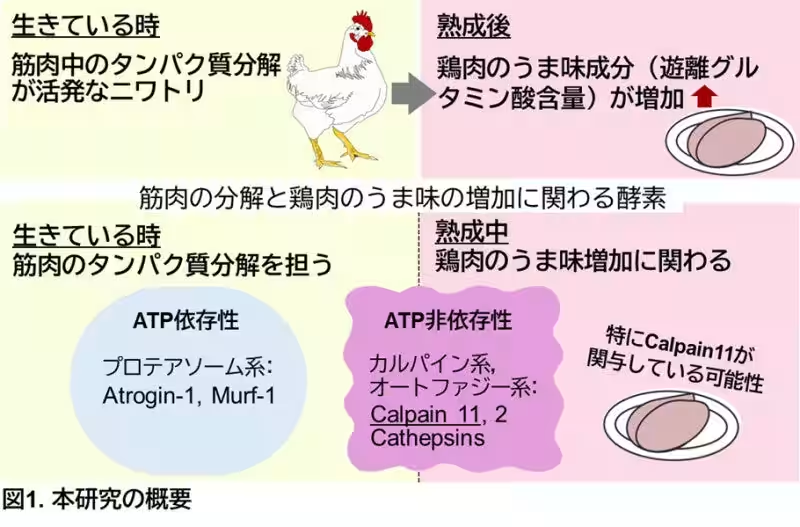
The study revealed that the degradation levels of protein in chicken muscles correlate with an increase in free glutamic acid after aging. Notably, the protein degradation enzyme Calpain 11 was identified as a potential contributor to this flavor enhancement.
Protein Breakdown Promoting Flavor
During poultry processing, fasting is required for sanitary management, which consequently promotes protein breakdown within the chickens' muscles. Previous research indicated that this breakdown results in higher levels of free glutamic acid in aged chicken breast. The current study builds upon this knowledge by revealing the significant role of Calpain 11 in enhancing the accumulation of glutamic acid.
The researchers identified a correlation between the gene expression of Calpain 11 in the muscles of chickens and the increased levels of free glutamic acid found in aged breast meat. Furthermore, the research indicated the presence of specific low molecular weight myofibrillar proteins that are markedly evident in chickens that develop a robust umami flavor.
Research Implications
These insights are significant for the poultry industry, as understanding the underlying mechanisms of flavor formation can lead to improved processing methods. The findings were published in Poultry Science on February 11, 2026, and have yet to draw attention from culinary professionals who may leverage this knowledge to enhance flavor in restaurant settings.
Reflections from Dr. Katsumata
Dr. Katsumata expressed gratitude to her research team and highlights the importance of collaboration. She mentioned that sharing meals with the team before and after experiments fostered a positive environment contributing to the research outcomes.
The Scientific Community’s Interest
The research was conducted with support from the Japan Society for the Promotion of Science (JSPS), demonstrating its significance in the scientific community. The findings not only highlight the intricate relationship between muscle protein breakdown and flavor enhancement but also pave the way for potential innovations in meat processing.
Conclusion
This pivotal research not only contributes to a deeper understanding of meat aging processes but also emphasizes the role of academic collaboration in scientific advancements. As culinary sciences evolve, the implications of such discoveries may resonate with chefs and food enthusiasts looking for ways to enhance culinary experiences through science.
For those interested in further exploration of this subject, access to the full research paper can be found here.

Topics Other)
【About Using Articles】
You can freely use the title and article content by linking to the page where the article is posted.
※ Images cannot be used.
【About Links】
Links are free to use.