



Toyota Tops SDGs Evaluation Amidst Consumer Expectations and Changes
Overview of SDGs Evaluation
The results from the sixth Corporate SDGs Survey have been released, showing a nuanced landscape in corporate sustainability efforts among Japan's prominent companies. Toyota holds the top spot yet again, but its score reflects a notable decrease from the previous year. The survey gathered responses from 30,000 consumers across various age and gender demographics, illustrating changing perceptions towards corporate commitment to the Sustainable Development Goals (SDGs).
Key Findings
Toyota's Position
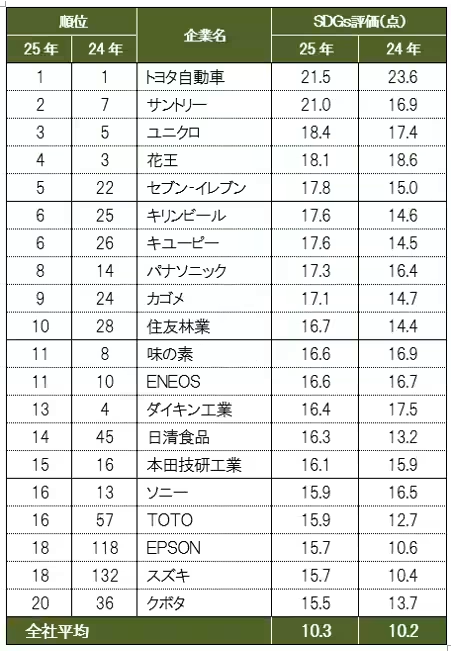
For six consecutive years, Toyota has maintained its leadership in SDGs evaluation, yet the percentage of respondents believing in the company's substantial efforts has dropped from 17.9% to 15.0%. In contrast, those perceiving Toyota as making some effort rose from 18.6% to 20.1%. Consequently, the automotive giant's SDGs evaluation score decreased from 23.6 to 21.5.
Trends Among Other Companies
Suntory, ranking second with a score of 21.0, significantly improved from last year's 16.9, reflecting a growing recognition of its proactive measures, especially with 15.6% of respondents affirming substantial engagement. Uniqlo climbed to third place with a score of 18.4, up from 17.4, highlighting its increasing reputation in sustainable practices.
Additionally, several companies, including Seven-Eleven and Sumitomo Forestry, showed marked improvements in their scores, illustrating a shift towards more favorable consumer evaluations of corporate sustainability.
Detailed Analysis of SDGs Goals
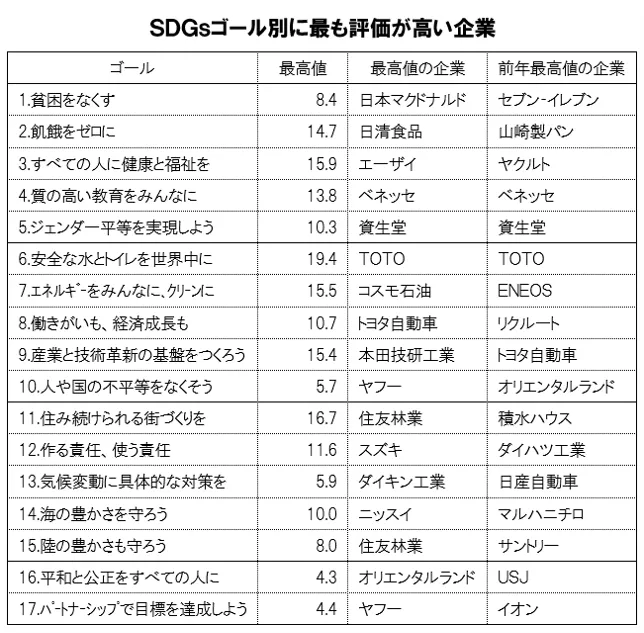
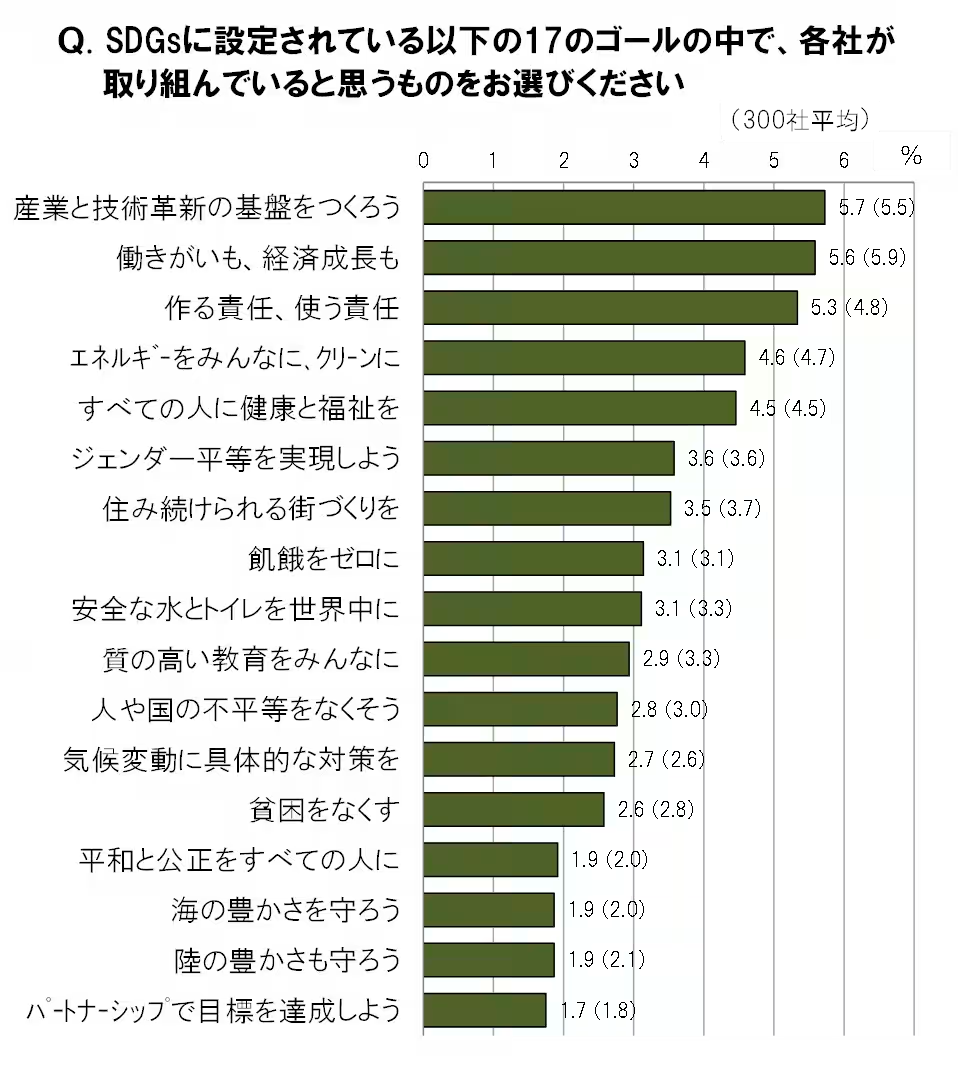
Respondents were asked to select which of the 17 SDGs each company was actively addressing. The highest-rated goal was ‘Industry, Innovation and Infrastructure’ (Goal 9), with 5.7% of the average responses. Honda, in particular, received the highest acknowledgment for this goal, affirming its commitment to innovation.
Following closely was Goal 8, which emphasizes decent work and economic growth, rated highest by Toyota at 10.7%. Goal 12, focusing on responsible consumption and production, showed improvement as well, rising to 5.3%.
Consumer Influence on Corporate Actions
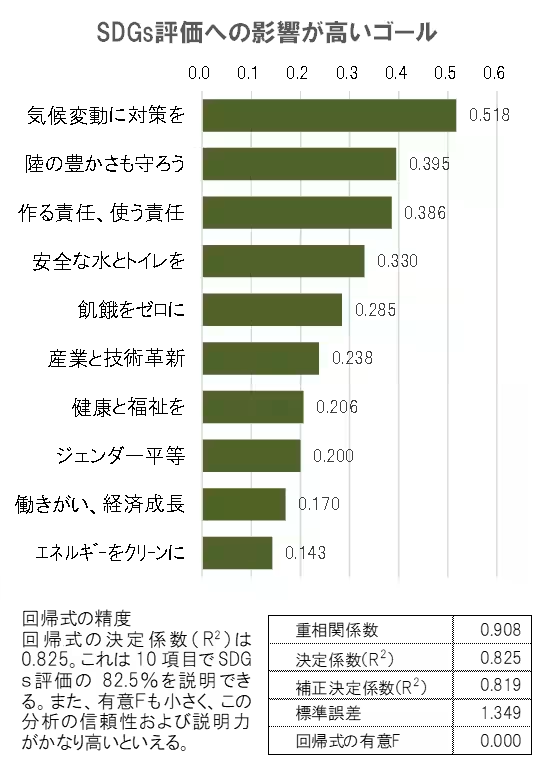
The analysis signifies that consumer expectations are escalating; while the percentage of companies identified as making substantial efforts remains below 10%, there’s a growing call for transparency and action in combating climate change and other significant issues. The evaluation of companies in relation to climate change particularly stood out, revealing that specific actions in this area greatly influence overall perceptions of corporate responsibility, particularly among consumers.
Positive Implications for Corporate Engagement
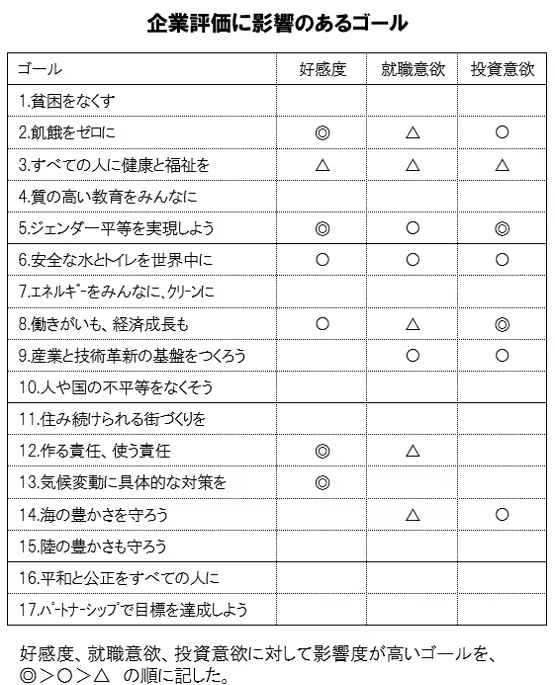
Notably, the conclusions drawn from the survey also highlight that companies actively engaging in sustainable practices tend to enjoy a boost in their overall favorability among consumers as well as increased interest from potential employees and investors. Critical goals such as Gender Equality (Goal 5) and Zero Hunger (Goal 2) were identified as having significant positive impacts on consumer sentiment and investment willingness.
Conclusion
In summary, the sixth Corporate SDGs Survey conveys vital insights into the evolving relationship between consumers and corporations concerning sustainability practices. Companies like Toyota must recalibrate their approaches and engage more thoroughly with sustainable initiatives to meet rising consumer expectations, while others like Suntory and Uniqlo can serve as case studies for successful corporate responsibility in the SDGs context. As the landscape continues to evolve, it beckons a more proactive and engaged corporate response to sustainability challenges.
Topics General Business)
【About Using Articles】
You can freely use the title and article content by linking to the page where the article is posted.
※ Images cannot be used.
【About Links】
Links are free to use.