



Survey Reveals 87% of Engineers Embrace AI Changes Positively
Embracing Change: How AI is Shaping Development Engineering
A recent survey conducted by TWOSTONE&Sons, a Tokyo-based company, sought to understand the impact of AI integration on development engineers. With 108 engineers participating—who have utilized AI tools such as GitHub Copilot, Claude, and ChatGPT in their work within the last six months—the findings reveal a significant shift in job roles and expectations in the tech industry.
Key Findings
The results indicate that AI is not only a tool to optimize workflows but also a catalyst for creating new roles and responsibilities. Here are some highlights from the survey:
1. Reduction in Time Spent on Routine Tasks:
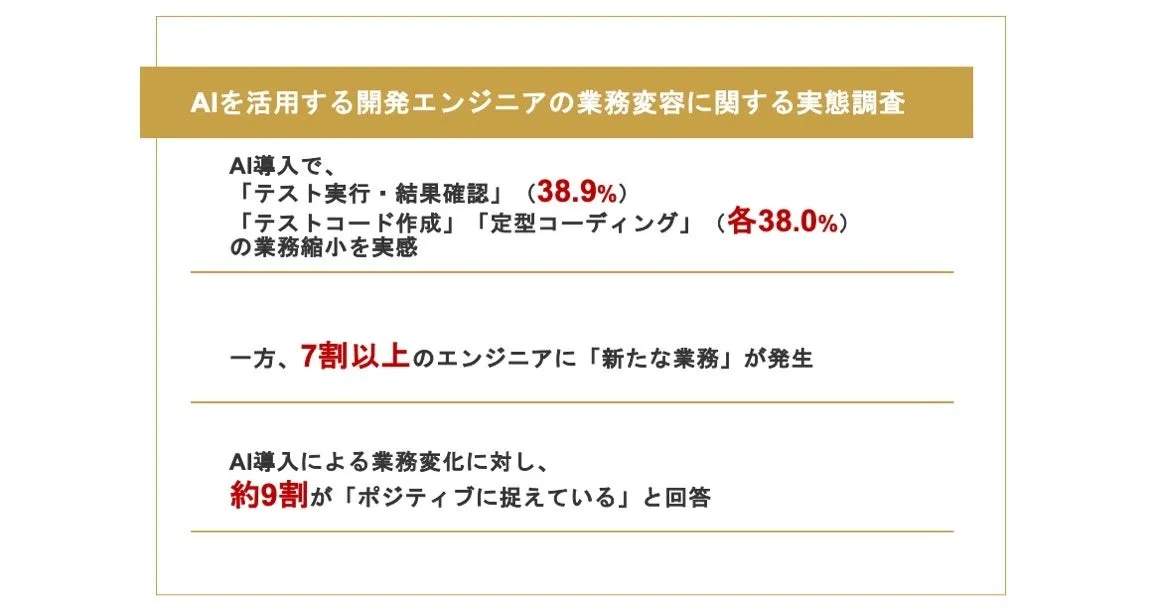
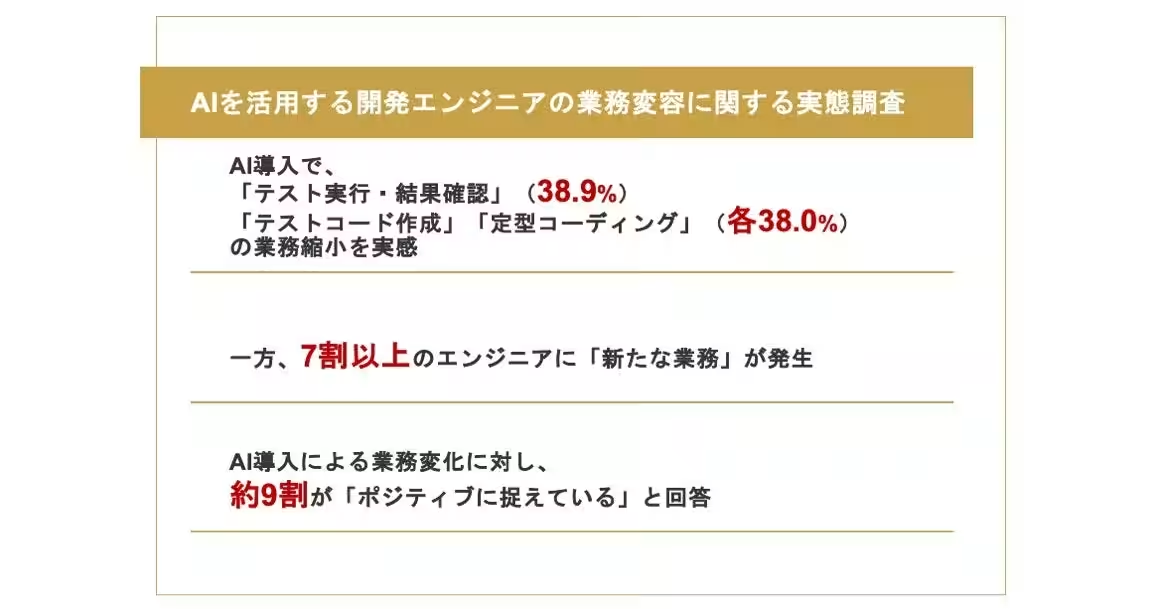
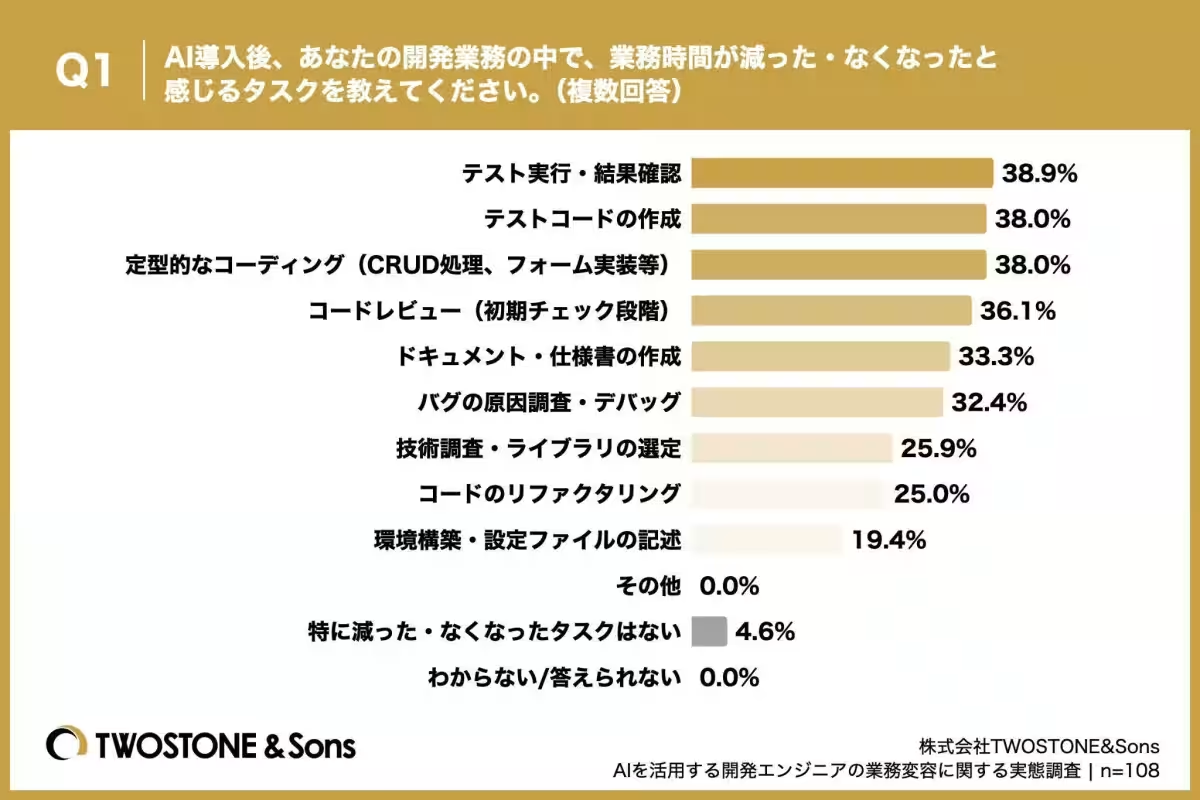
- Almost 39% of respondents felt that the time spent on testing and verification activities had decreased. Specifically, 38.9% noted reductions in tasks like test execution and results confirmation.
- Traditional tasks such as test code creation and standard coding activities saw a similar decline, with both cited by 38.0% of participants.
2. Creation of New Responsibilities:
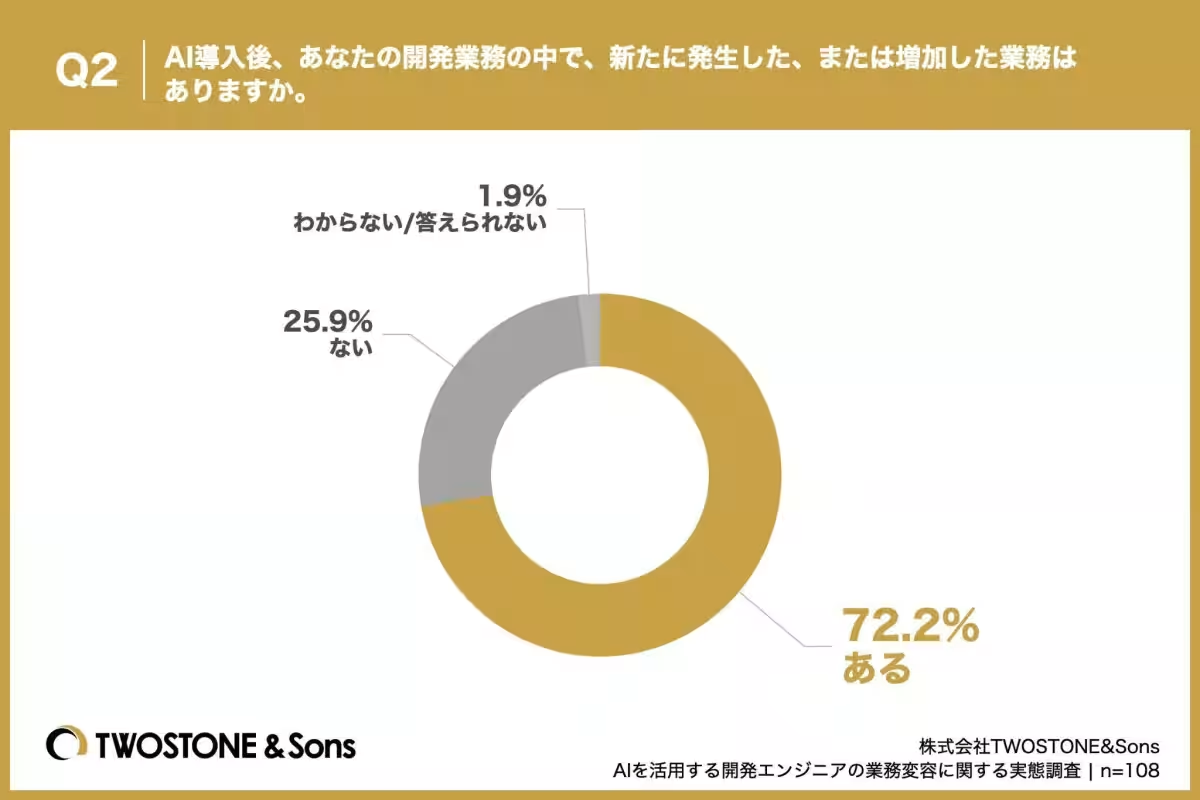
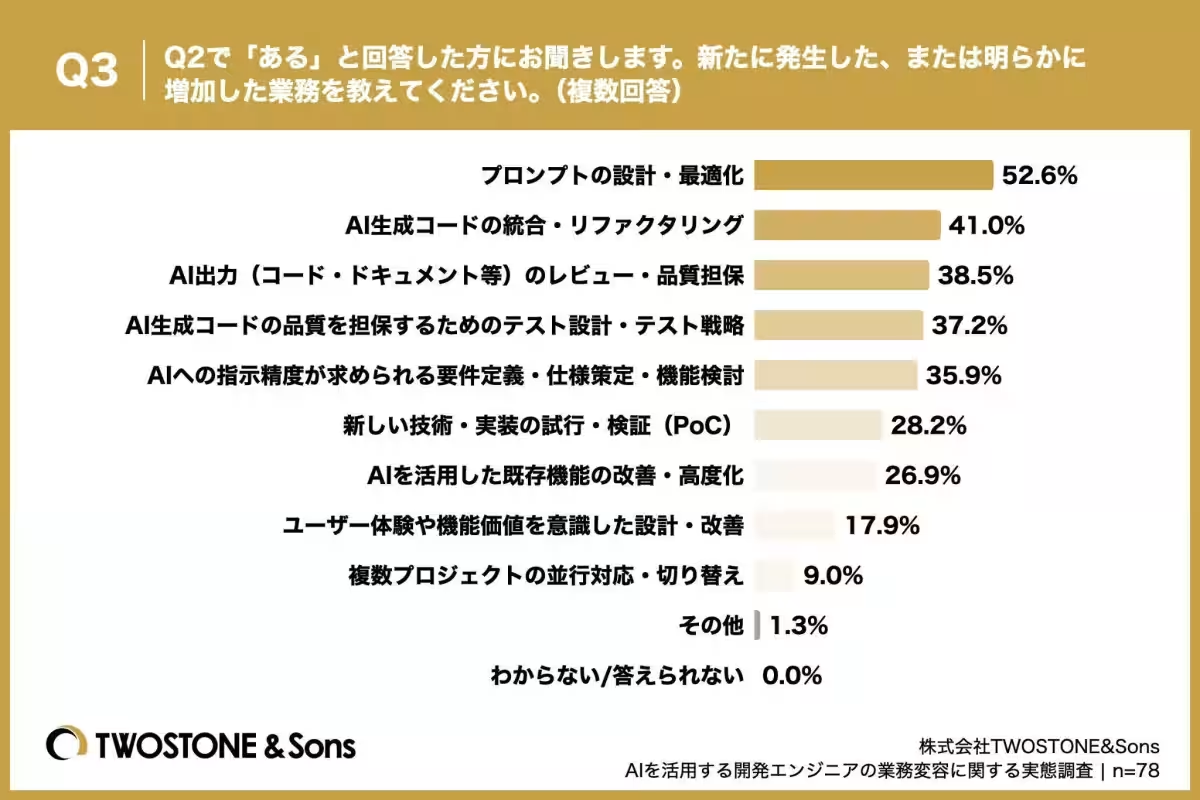
- The survey also revealed that over 72% of the engineers reported the emergence of new tasks as a result of AI integration. This was notably highlighted by the design and optimization of prompts (52.6%) and the integration and refactoring of AI-generated code (41.0%).
3. Positive Perception of Job Changes:
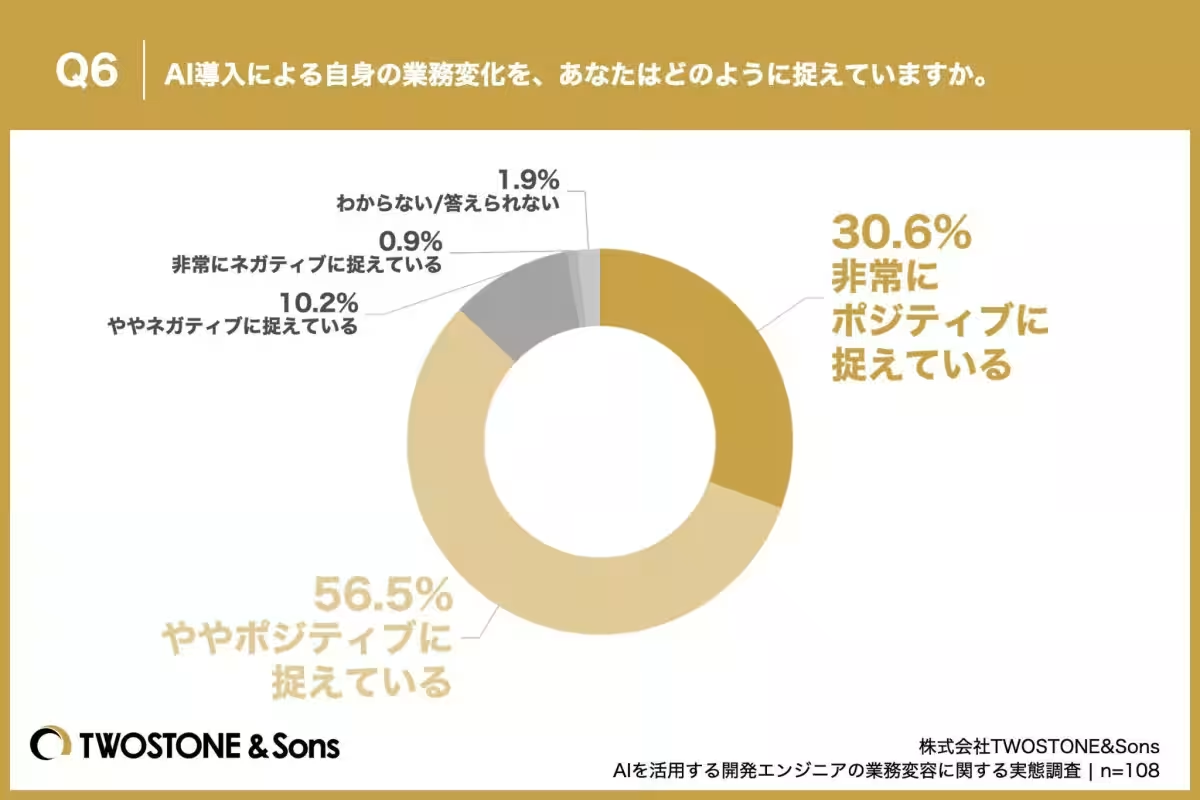
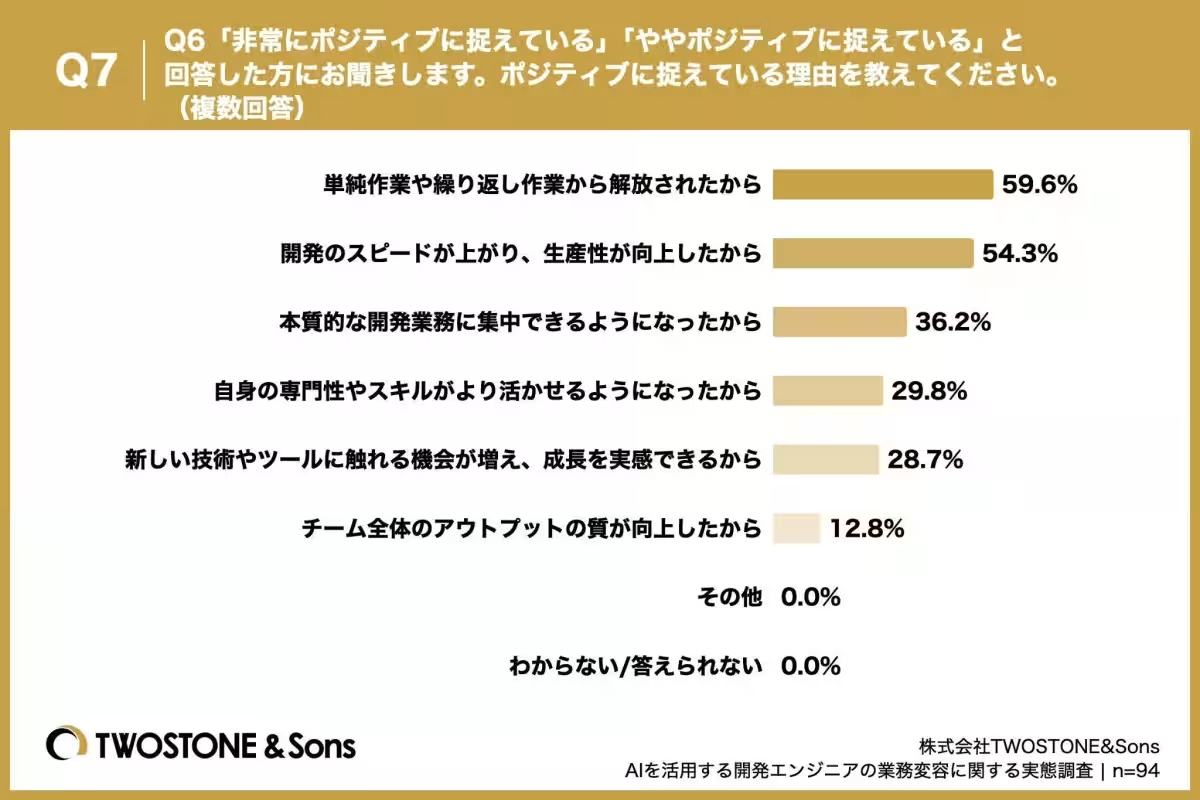
- Notably, an impressive 87.1% of engineers view these changes positively. Approximately 30.6% described their viewpoint as “very positive,” while 56.5% leaned towards “somewhat positive.” Factors contributing to this positive reception include liberation from repetitive tasks (59.6%) and enhanced productivity (54.3%).
4. Emerging Skills in Demand:
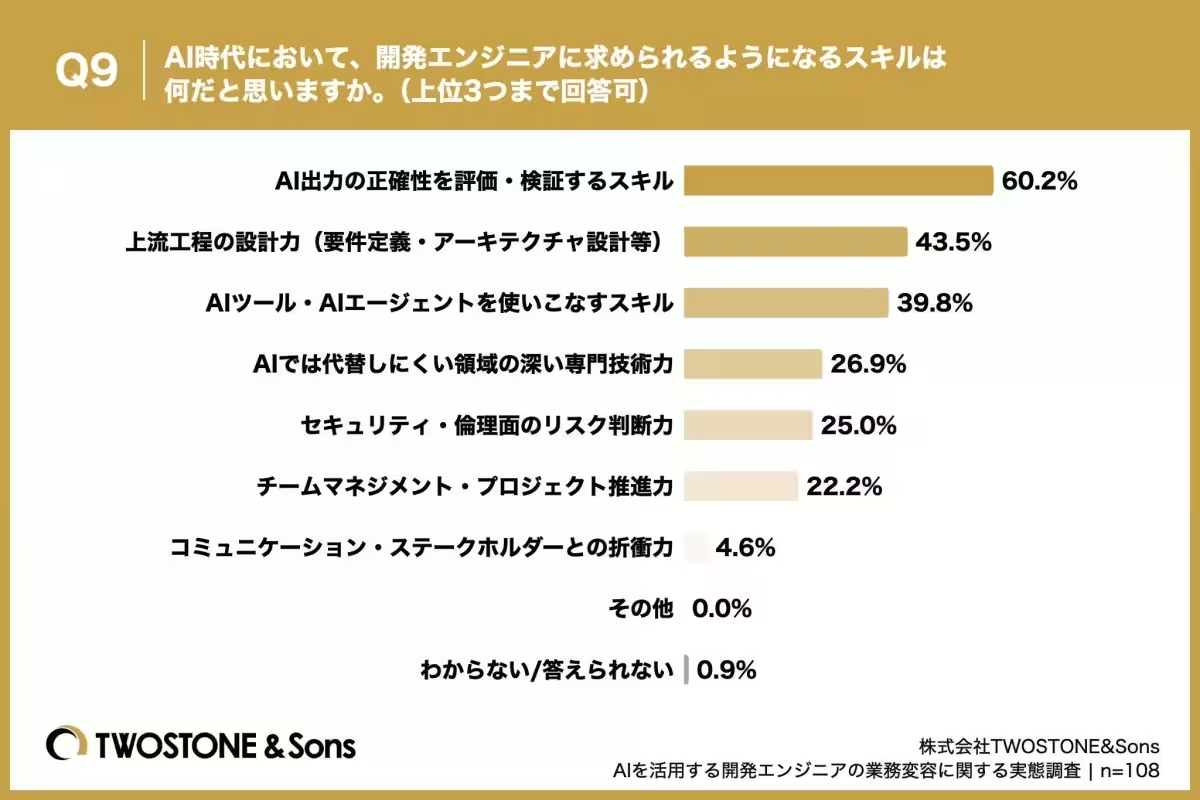
- Respondents identified critical skills necessary for the AI era, with 60.2% highlighting the need to evaluate and verify AI output’s accuracy. Other essential skills included design capabilities in upstream processes and proficiency in AI tools.
The Changing Landscape of Engineering Jobs
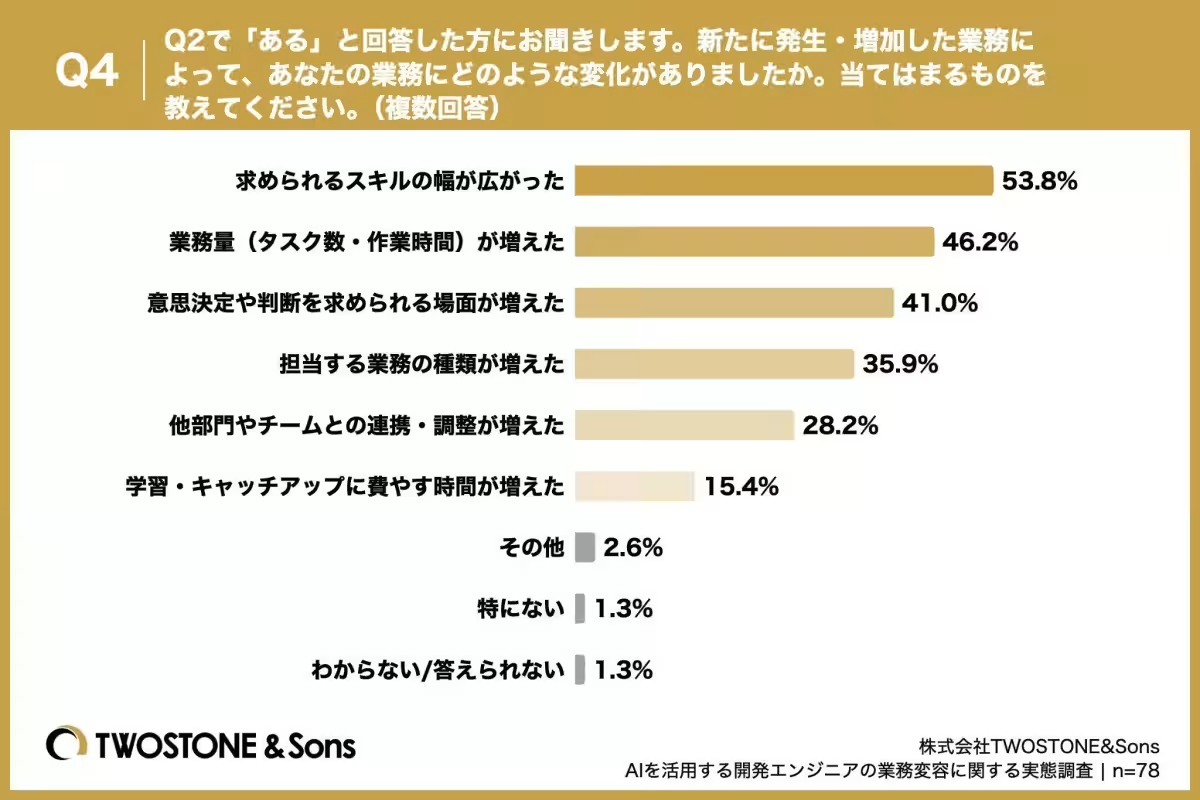
The implications of these changes are profound. For many, AI has not just changed their working methods but has also expanded the skill sets required for their jobs. Amongst those who noticed changes, 53.8% acknowledged that the breadth of skills needed has increased due to AI tools, while 46.2% noted an increase in workload, and 41.0% indicated more frequent scenarios requiring decision-making.
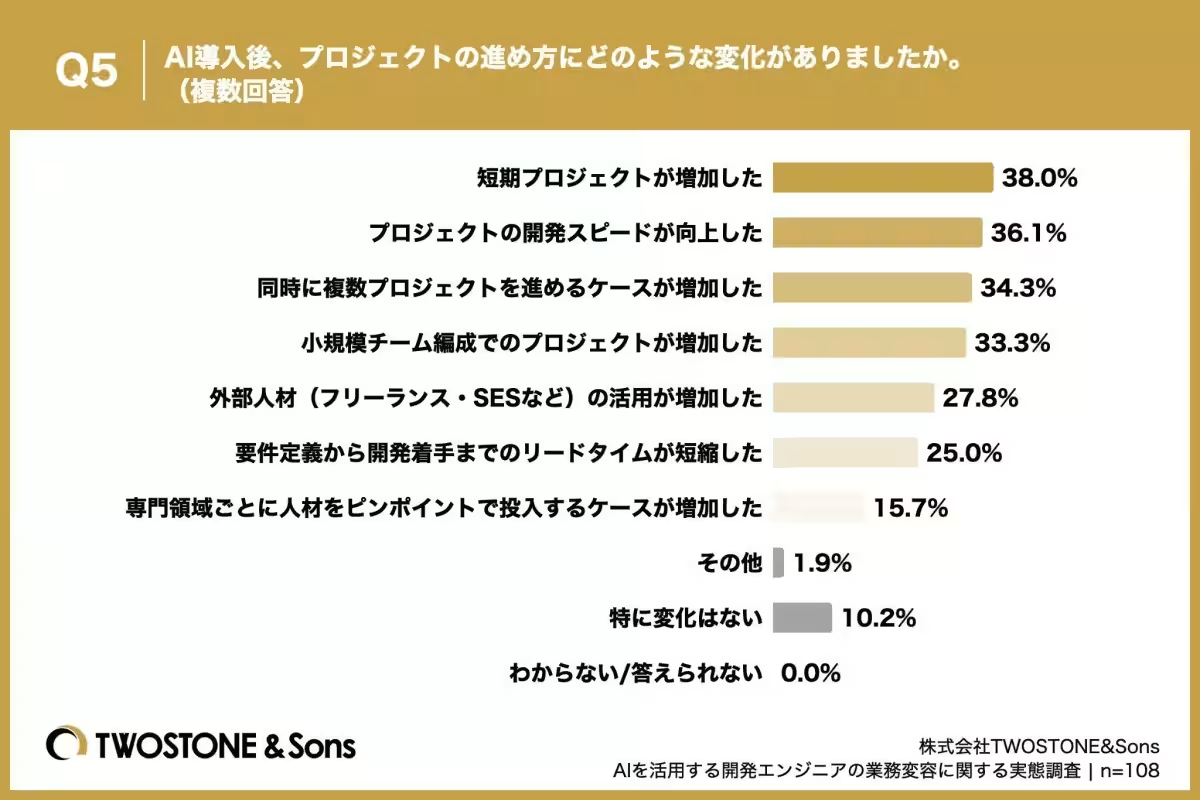
As project management also evolves, nearly 38.0% reported an increase in shorter projects. The overall pace of development has accelerated significantly, with 36.1% witnessing improvements in project timelines. This reflects a fundamental shift towards a more dynamic and demanding work environment.
Challenges Ahead
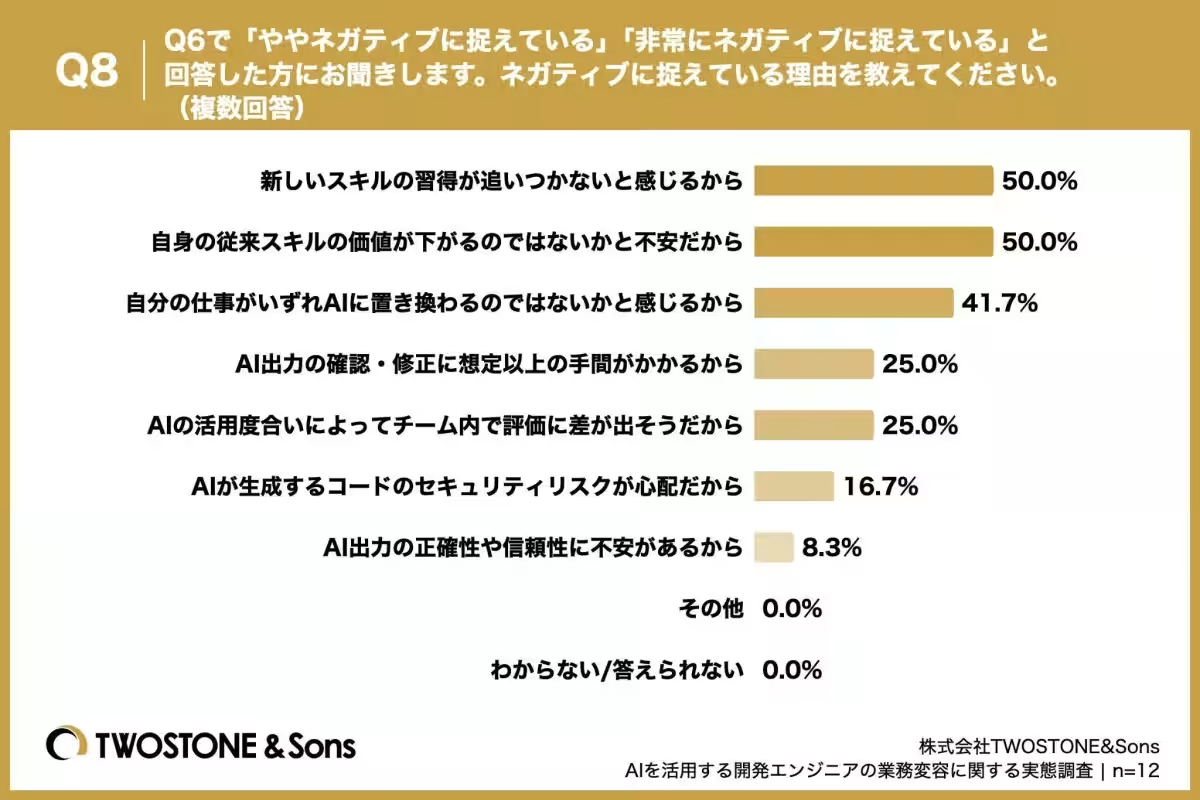
Despite the beneficial changes, some engineers express concerns about their futures in this AI-driven landscape. About 50% of those with negative perceptions fear that their current skills may diminish in value and struggle to keep up with new capabilities. Additionally, a significant portion worries about possible job displacement by AI.
Looking to the Future
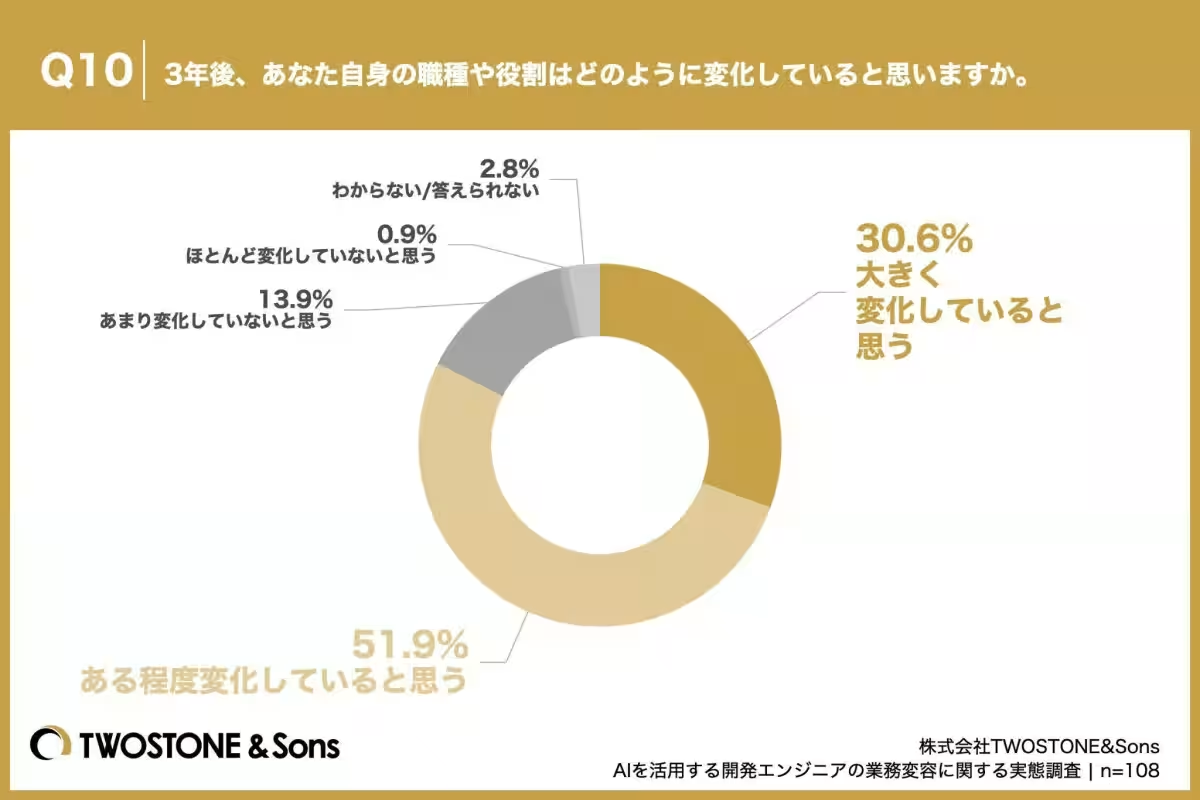
With an overwhelming 82.5% of engineers anticipating changes to their roles within the next three years, it's evident that the integration of AI will only continue to grow. This evolution prompts not only a reevaluation of individual roles but also a broader commitment from companies to provide ongoing training and support for their teams.
TWOSTONE&Sons is committed to addressing these challenges and pioneering the shift into the AI era. By fostering an environment that encourages upskilling and adaptation, companies can ensure that their engineers remain vital contributors in a rapidly evolving technological landscape.
Visit TWOSTONE&Sons for more insights and the latest news on tech industry developments.
Topics Business Technology)
【About Using Articles】
You can freely use the title and article content by linking to the page where the article is posted.
※ Images cannot be used.
【About Links】
Links are free to use.