



OfficeBusters Reports Rise in Used Office Furniture Index Amid Low Vacancy Rates
OfficeBusters Reports Significant Changes in the Used Office Furniture Market
In a recent announcement, OfficeBusters, a Tokyo-based company that specializes in the buying and selling of used office furniture, revealed the results of their July 2026 Used Office Furniture Index. The current index stands at 2.0862, showcasing a 2.0% rise from the previous month and a notable 9.5% increase compared to the same month last year. These statistics reflect a relatively stable office market, with only minor fluctuations noted, despite ongoing efforts to create a more appealing work environment that encourages employees to return to the office.
Vacancy Rates and Office Investment Trends
For July 2026, the vacancy rate in Tokyo's central five districts has dropped to 1.95%, decreasing by 0.04 points from the previous month. Rental prices have also seen a jump, with an increase of 294 yen compared to June. The decline in vacancy rates has been particularly pronounced in large office spaces, fostering a competitive landscape where securing new locations that meet the desired specifications is increasingly challenging.
In response, businesses have shifted their focus from relocating to investing in their current office setups. This strategic pivot allows companies to enhance both functionality and attractiveness, making the workplace more conducive for employees. Investment in office designs and equipment that fosters collaboration and ease of work has become a focal point for many organizations.
Continued Demand for Specific Office Products
Certain categories of office furniture are witnessing sustained demand. High-end chairs continue to perform well in sales, alongside rise in height-adjustable desks, free-address desks, personal lockers, and various types of tables. The emphasis is not merely on replacing old furniture but on rethinking how offices are configured to improve work dynamics and interactions among employees.
For example, there is a clear trend of transitioning from fixed seating to free-address systems, optimizing work areas to promote communication through casual seating arrangements, such as family-style sofas. This evolution reflects a broader movement towards creating environments that are not only functional but also inviting and conducive to productive collaboration.
Breakdown of Furniture Trends
Chairs
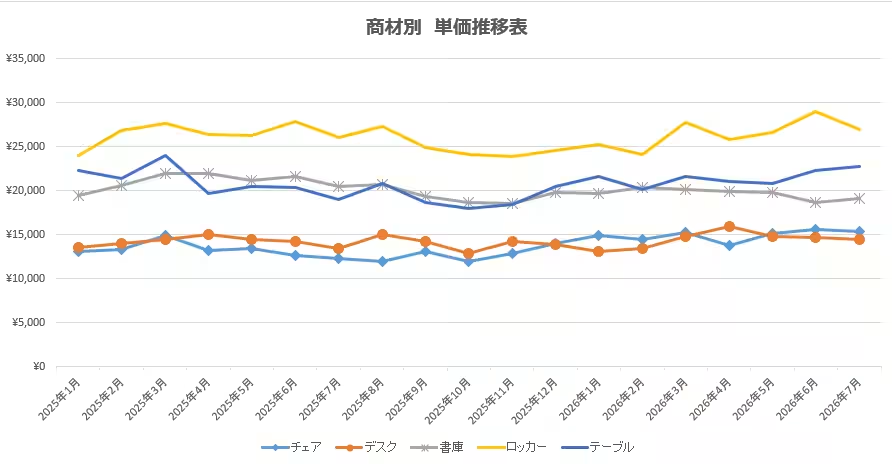
While chair sales prices have slightly dipped by 229 yen compared to the previous month, demand for high-end models has boosted average prices by 3,057 yen when compared to the same period last year. Companies are increasingly prioritizing ergonomic features and comfort in their chair selections, recognizing the importance of these factors on employee productivity and well-being.
Desks
Desk prices have also decreased by 203 yen compared to last month, but there has been a 994 yen increase year-on-year. This is largely attributed to an influx in sales of height-adjustable and free-address desks, reflecting a change in work philosophy and greater flexibility in office layouts.
Lockers and Tables
Sales of lockers have seen a mixed performance, with prices dropping 2,022 yen compared to last month, but still rising by 917 yen year-on-year. Large tables and stackable tables, on the other hand, have had a strong month, showing increases of 417 yen from the previous month and a remarkable 3,717 yen from the previous year. Their versatility for various use-cases continues to drive demand.
Business Investment in Existing Offices
The trends observed in July indicate that while vacancy rates remain low and the competitive landscape for new office spaces intensifies, businesses are increasingly committing to improving their existing office environments. These investments aim at not just maintaining functionality but enhancing overall employee satisfaction and encouraging office attendance.
As companies look to adapt their spaces for optimal employee experience, focus areas include: high-functionality chairs and desks, adjustable setups that cater to different working styles, personal lockers to ensure individual storage, and collaborative spaces enhanced by large tables and inviting furniture.
Conclusion and Future Outlook
Going forward, it will be crucial to monitor how these office investment trends will evolve in the coming months, especially as Tokyo's vacancy rates show signs of stabilization. The crucial focus will remain on how businesses are modifying their office environments to accommodate evolving work styles, while ensuring that not just individual productivity but collective collaboration is fostered.
We at OfficeBusters are committed to periodically updating the dynamics of the used office furniture market, reflecting how companies' investments continue to adapt to changing workplace needs. As we delve further into August and beyond, we will be observing how these shifts towards creating more engaging office environments for employees can enhance overall operational effectiveness. As always, our mission is to blend cost-effectiveness with environmentally sustainable practices through the reusability of office furniture, contributing positively to both corporate and social environments.

Topics Consumer Products & Retail)
【About Using Articles】
You can freely use the title and article content by linking to the page where the article is posted.
※ Images cannot be used.
【About Links】
Links are free to use.