



Revolutionizing Decision Design in the AI Era: A Comprehensive Framework
A New Framework for Judgment Design in the Age of AI
Introduction
In the rapidly evolving landscape of work, driven by advancements in artificial intelligence (AI), understanding how to make effective decisions is crucial. Request Inc., headquartered in Shinjuku, Tokyo, has launched a revised framework known as the 'Comprehensive Framework for Judgment Design in the AI Era'. This initiative is rooted in research by Request Inc., which focuses on organizational behavior science (OBS®) based on data from 980 companies and 338,000 employees.
The Framework - Four Layers of Practical Application
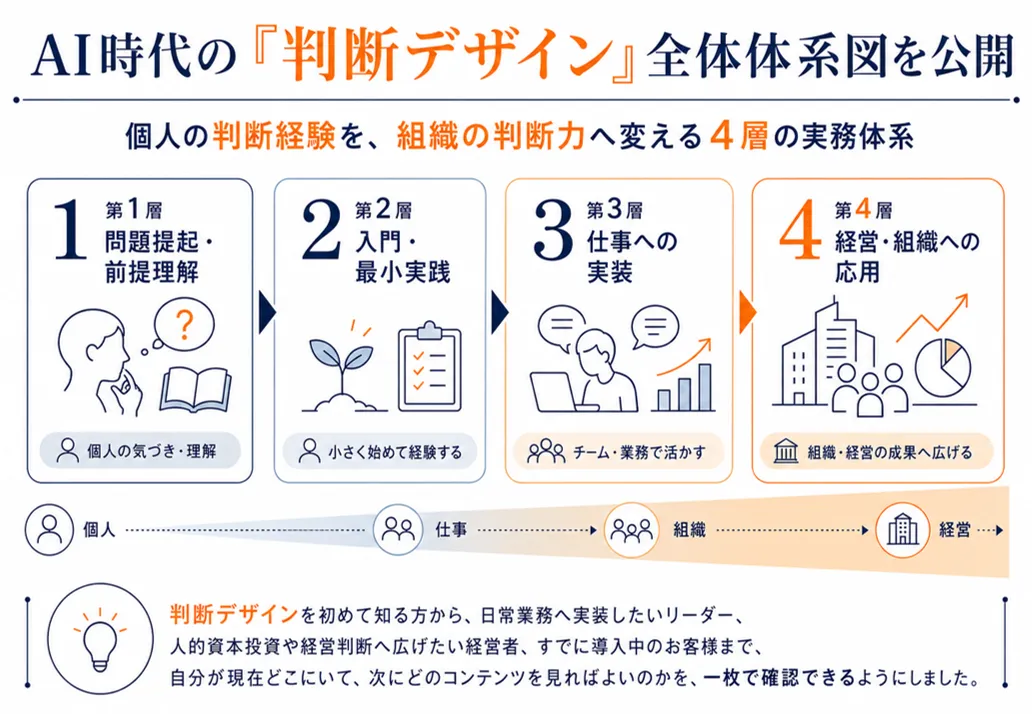
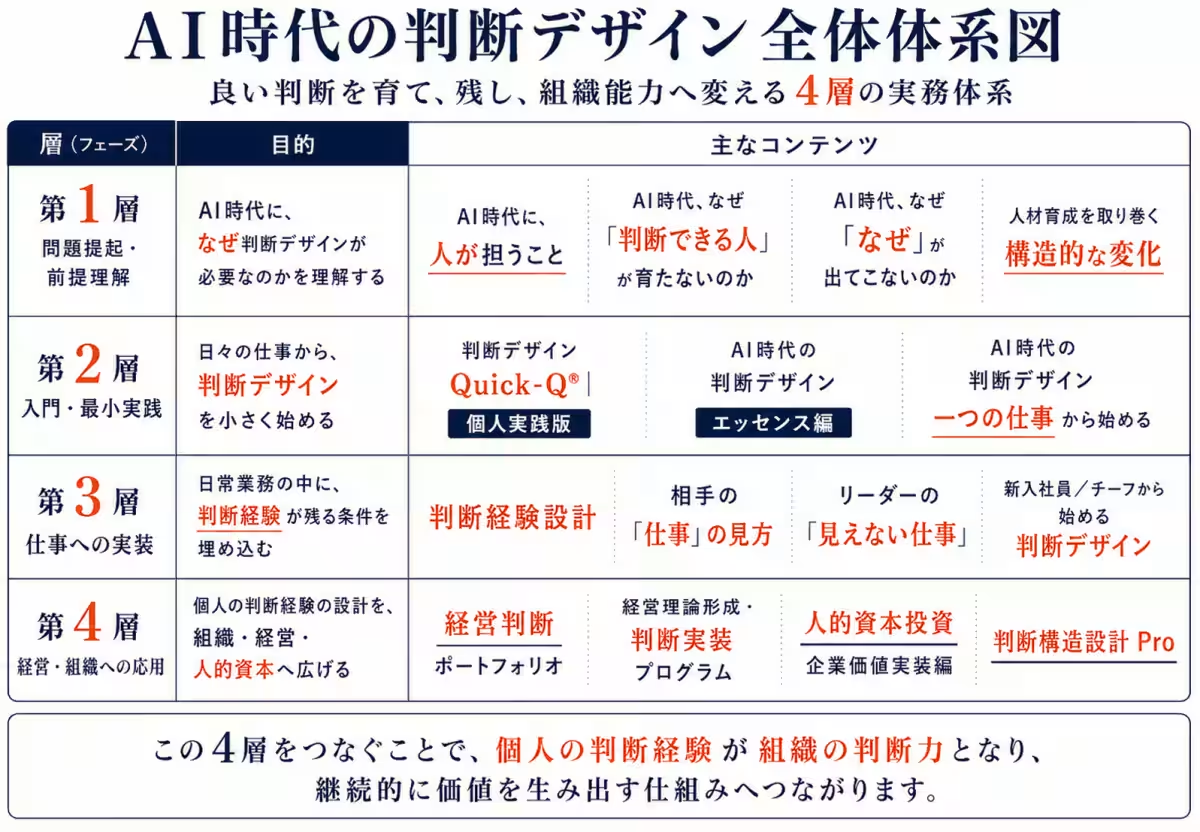
The newly released framework is not merely a list of previously published materials on judgment design; rather, it's a carefully structured guide divided into four distinct layers:
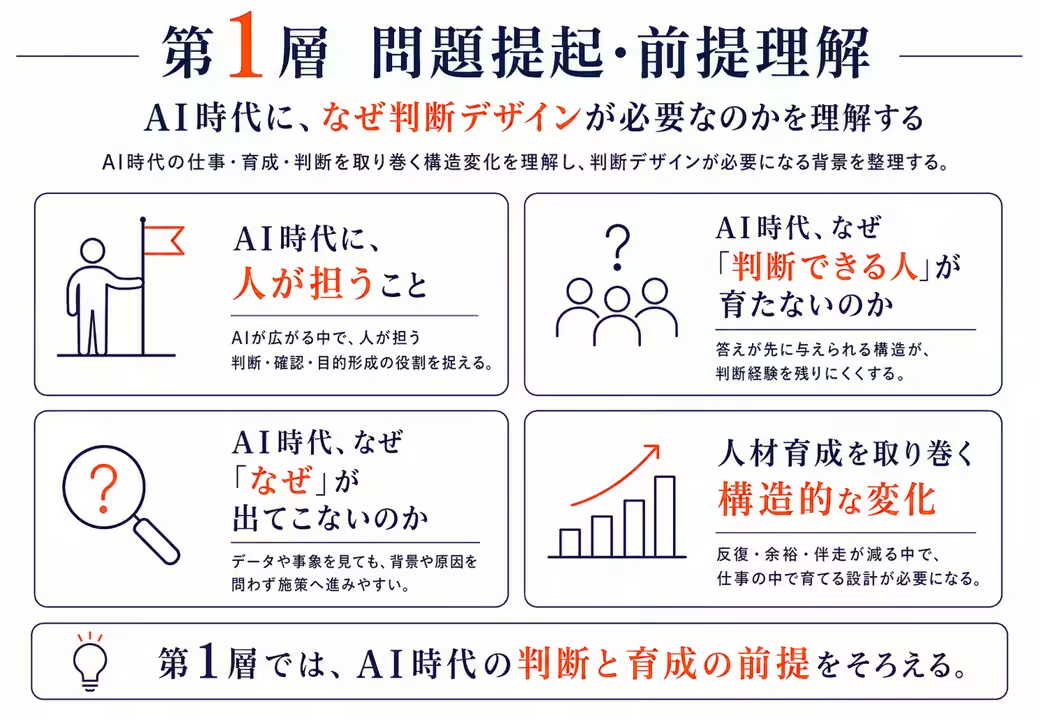
1. Problem Presentation and Understanding
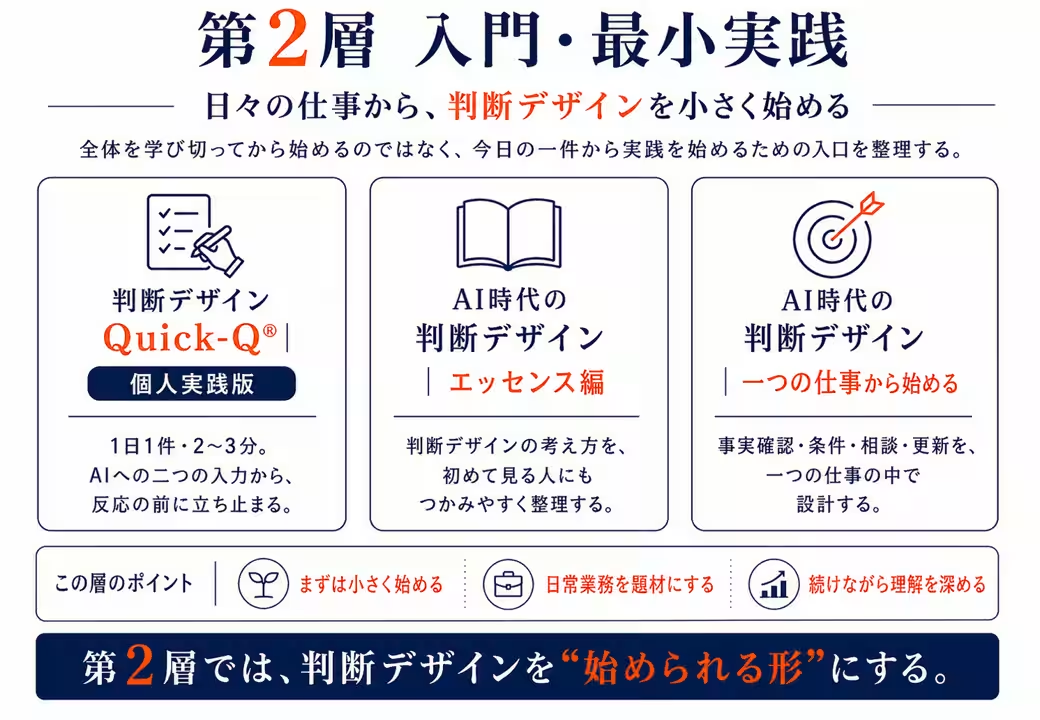
2. Introduction and Minimal Practice
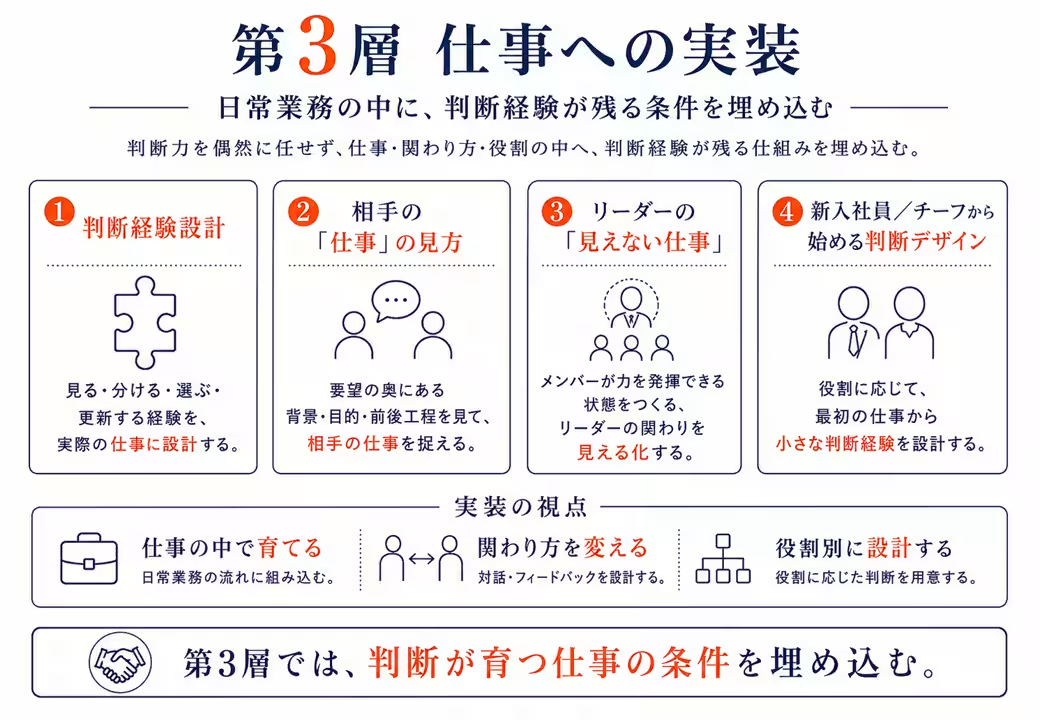
3. Implementation into Work
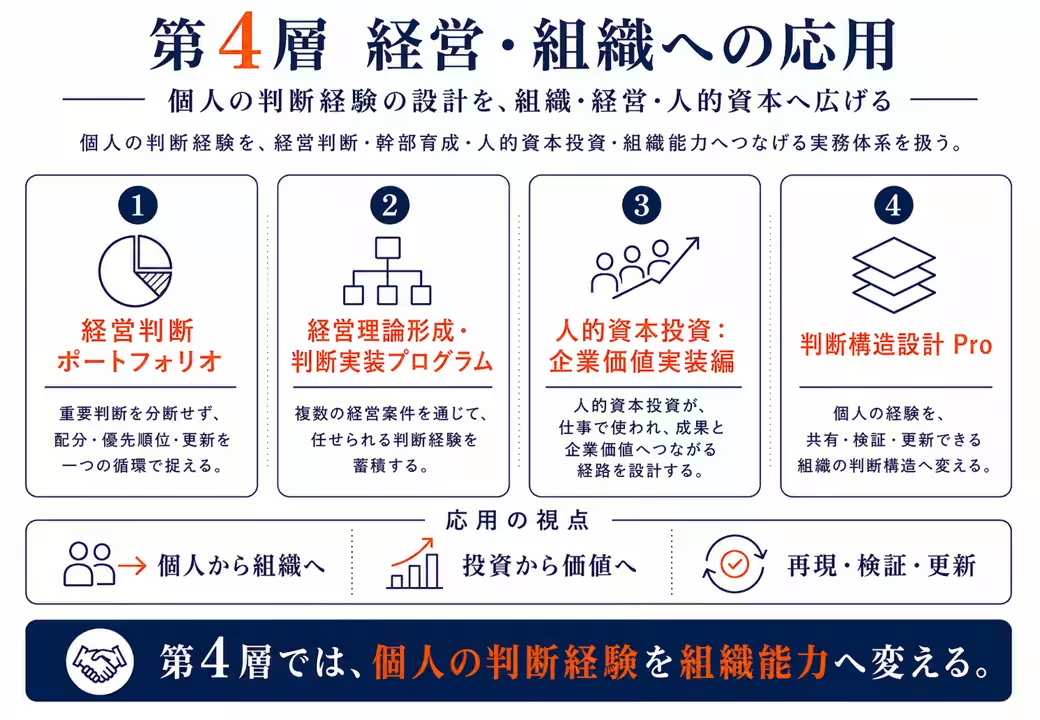
4. Application in Management and Organizations
This structured approach is designed to help individuals—from newcomers to experienced leaders—identify where they currently stand concerning judgment design and what content to explore next.
Why Judgment Design Matters in the AI Era
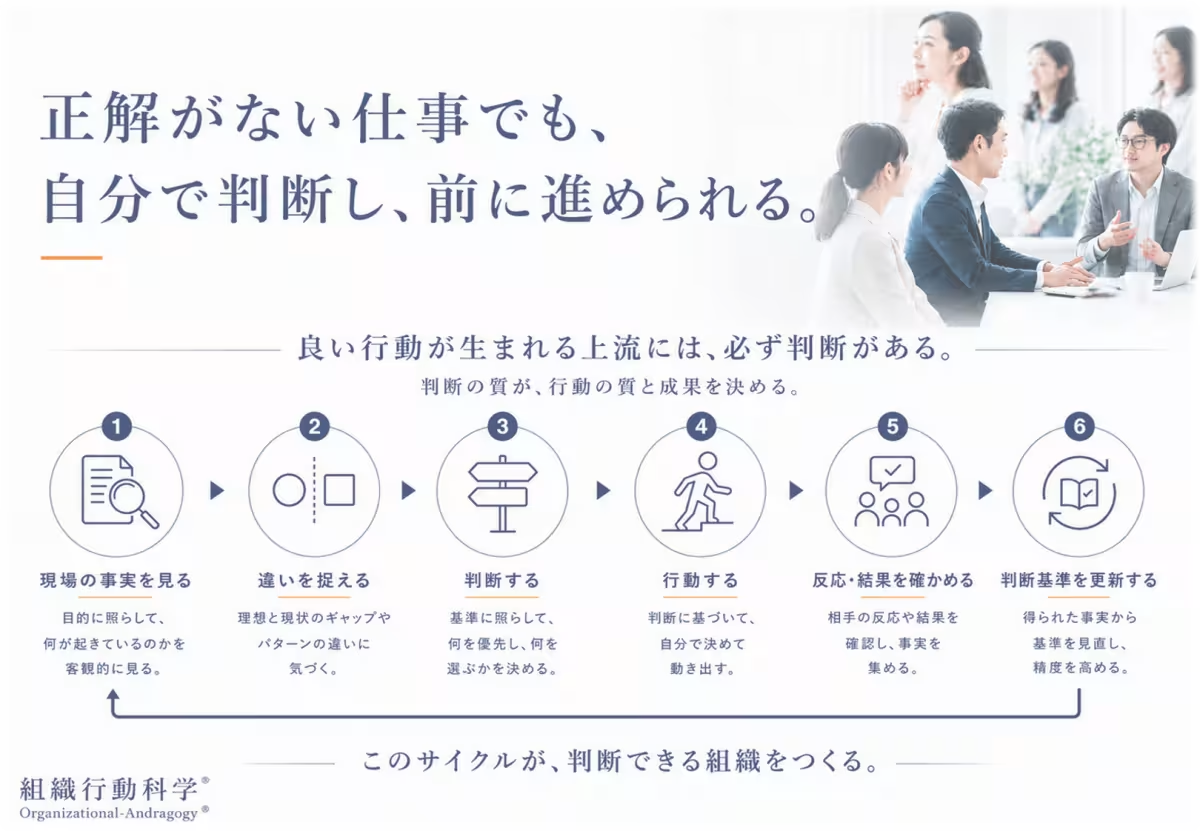
While AI can significantly speed up the work process by organizing information and generating options, it doesn't automatically provide individuals with the necessary decision-making experience. As such, mere consumption of AI-generated solutions does not ensure that individuals grasp the underlying facts, consider the background and reasons, or understand the objectives of their decisions.
It is imperative to cultivate an environment where factual verification, intentional questioning, and ultimate choices are integral parts of the work design. Thus, in this era of AI, the focus is on creating structured opportunities for experience that lead to informed choices.
Layer Overview
The four layers of the judgment design framework are intended to convey a range of implementation, not a hierarchy of skills or complexity. They guide participants through understanding the necessity of judgment design, starting small in practical applications, embedding judgment experiences into daily tasks, and ultimately expanding personal decision-making into organizational frameworks.
- - First Layer: Understanding the Need for Judgment Design
- - Second Layer: Introductory and Minimal Practice
- - Third Layer: Implementing Into Work
- - Fourth Layer: Expanding into Management and Organizations
Target Audience for the Framework
This comprehensive framework is designed for various stakeholders, including those who are new to judgment design, managers aiming to develop their team's decision-making abilities, HR professionals reconsidering training methodologies, and executives wishing to plan for future leadership.
Conclusion
As organizations navigate the complexities posed by AI integration, this framework aims to ensure that decision-making is not solely reliant on technology but also nurtures human capability. By focusing on how individuals can build upon their judgment experiences, Request Inc. intends to facilitate a cycle of continuous improvement and wisdom that benefits both personal development and organizational growth.
The goal is not just to increase the volume of content available but to connect practical applications in real-world scenarios, creating a sustainable model for judgment design that aligns with the opportunities and challenges of the AI epoch.


Topics Business Technology)
【About Using Articles】
You can freely use the title and article content by linking to the page where the article is posted.
※ Images cannot be used.
【About Links】
Links are free to use.