



November 2025 Rental Apartment Prices Across Major Cities in Japan
Overview of Rental Apartment Trends in Japan (November 2025)
The rental landscape in Japan has seen notable changes in 2025, particularly in major urban centers. According to At Home, a leading real estate information service, a comprehensive study conducted by At Home Lab reveals that rental prices for residential apartments are on the rise in several key areas across the country.
General Trends
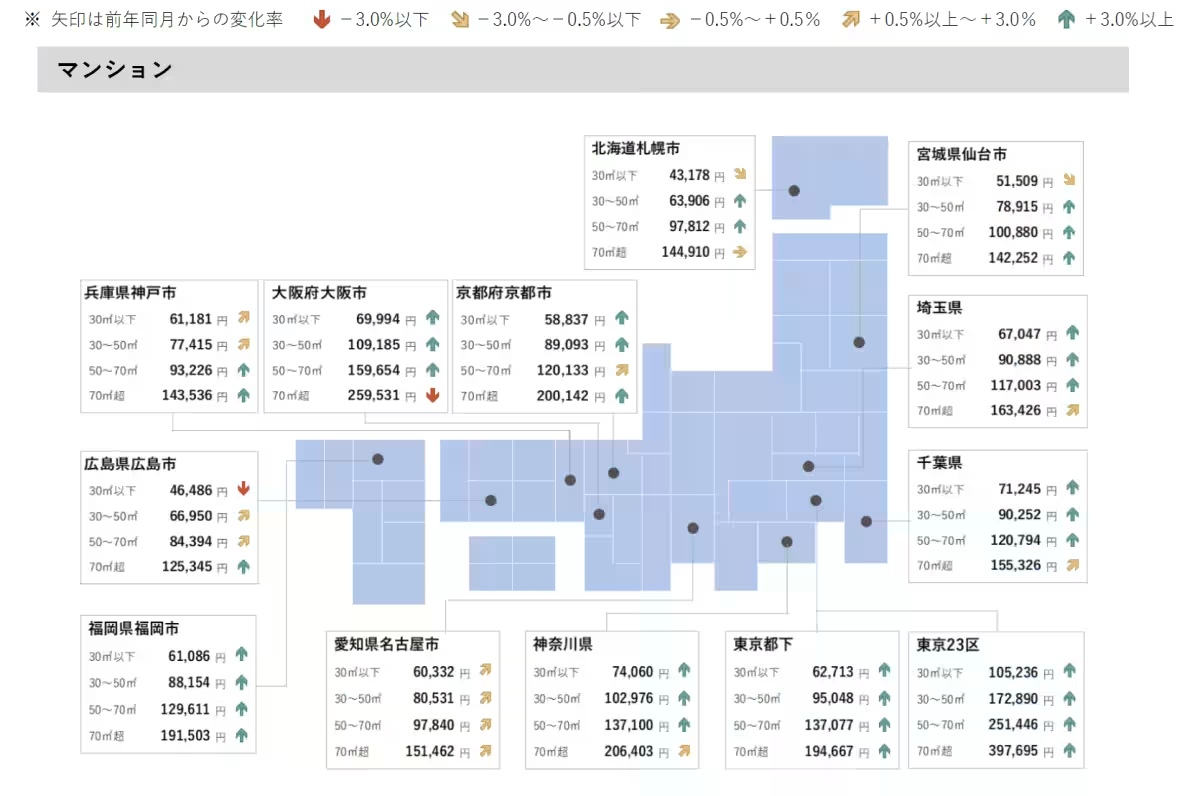
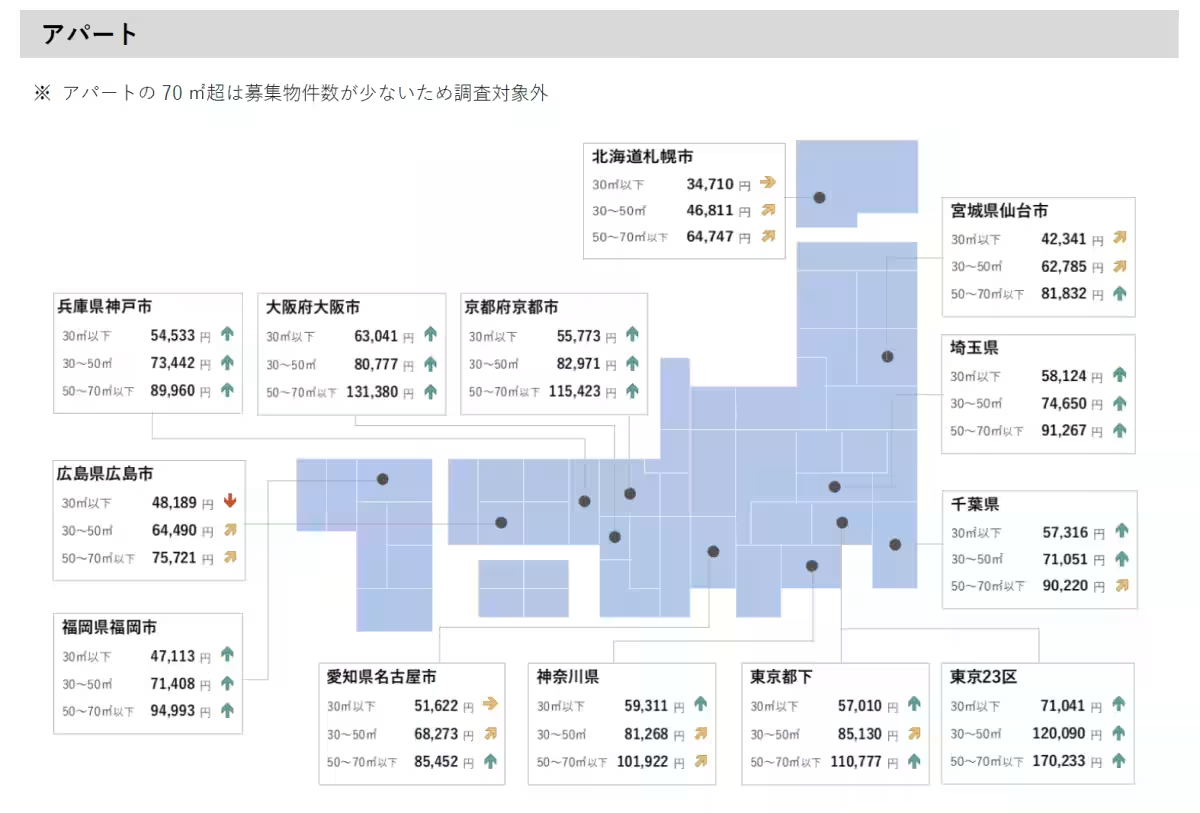
As of November 2025, the average asking rent for apartments in nine metropolitan regions—Tokyo's 23 wards, suburban Tokyo, Kanagawa, Saitama, Chiba, Nagoya, Kyoto, Kobe, and Fukuoka—has surpassed the figures from the previous year. This upward trend can be attributed to multiple factors, including strong demand for housing in urban regions.
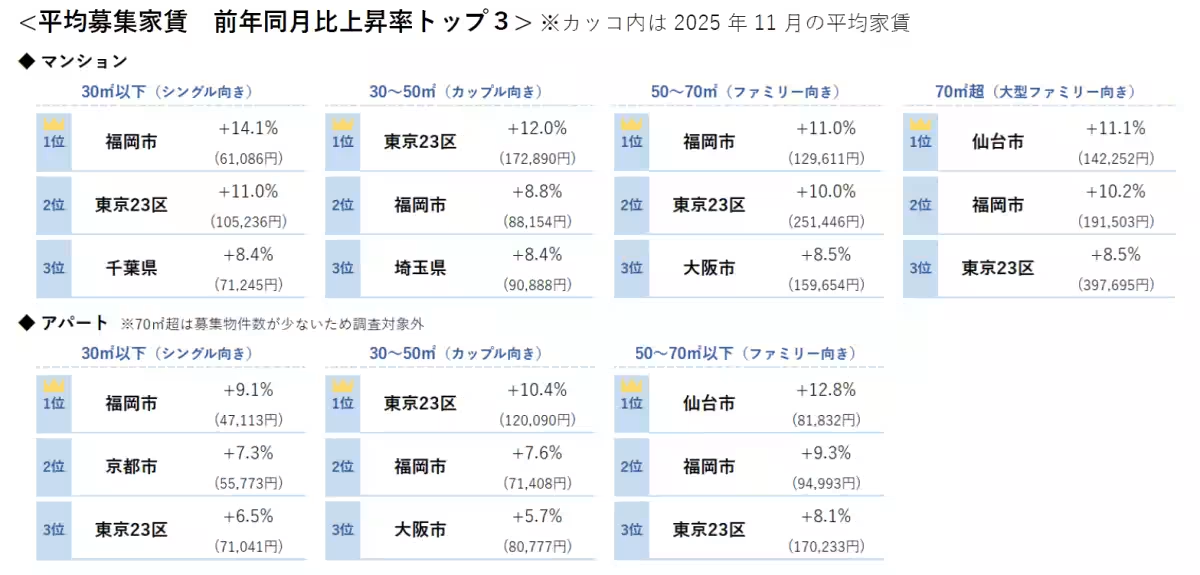
When looking at specific demographics, apartments suitable for couples and families have recorded increases across all 13 analyzed areas when compared to the same month last year. Interestingly, the areas of Tokyo's 23 wards and Osaka have shown remarkable resilience, with the former having achieved a record high for 18 consecutive months for single-person apartments and Osaka following closely with a 16-month record.
More specifically, throughout five consecutive months, Tokyo's 23 wards have reported their entire area rental market at record highs, with average rents for family-oriented apartments rising to over 250,000 yen. The trend for apartments similarly reflects a positive growth pattern, as they too have seen continuous price increases for both couples and family segments in all 13 areas.
Detailed Area Insights
The survey covered 13 primary regions in Japan, including:
- - Tokyo: Notably, the 23 ward area displayed exceptional demand driving rental rates higher.
- - Sapporo: Demonstrating a steady increase in family-sized apartment prices.
- - Sendai: Exhibiting moderate growth in apartment rental prices, appealing to both couples and families.
- - Nagoya, Kyoto, and Osaka: Each city showcases competitive rental pricing strategies, reflective of urban housing demands.
- - Kobe, Hiroshima, Fukuoka: These cities also contributed to the overall trend of increasing rental rates, particularly in family-oriented apartments.
Market Analysis
The study, which categorizes apartments based on size—designating those under 30 square meters as 'single-person', 30 to 50 square meters as 'couple-oriented', 50 to 70 square meters as 'family-oriented', and those above 70 square meters as 'large family-oriented'—provides insight into how market demands fluctuate according to demographics. The average rent index established in the research utilizes January 2015 as the baseline (100). The reported growth rates have been rounded off to two decimal points for clarity.
The rise in rental prices reflects a crucial aspect of Japan's housing market, driven not only by economic conditions but also by shifting lifestyle preferences among the populace. Given the limited supply of available units in urban areas, potential renters may face increased competition.
For those interested in a more in-depth breakdown of rental prices and trends, detailed data can be accessed through the PDF linked below:
Download Full Report
In conclusion, the ongoing trend of increasing rental prices across Japan's major cities signifies a robust real estate market where demand consistently outstrips supply. As we advance into 2026, these patterns will provide crucial insight for potential renters, investors, and policymakers aiming to understand Japan's evolving housing landscape.
Topics Consumer Products & Retail)
【About Using Articles】
You can freely use the title and article content by linking to the page where the article is posted.
※ Images cannot be used.
【About Links】
Links are free to use.