



How Generative AI Influences Job Applications and Alters Candidate Engagement
The Rise of Generative AI in Job Seeking: A Study Exploration
In a recent investigation conducted by Strobolights, a Tokyo-based company led by CEO Keiichiro Haneda, students from the graduating years 2027 and 2028 were surveyed to analyze the influence of generative AI in job hunting. This research unearthed a striking trend: generative AI is not merely a tool for gathering information; it is acting as a silent gatekeeper that can effectively terminate application processes even before candidates and companies meet.
Key Findings
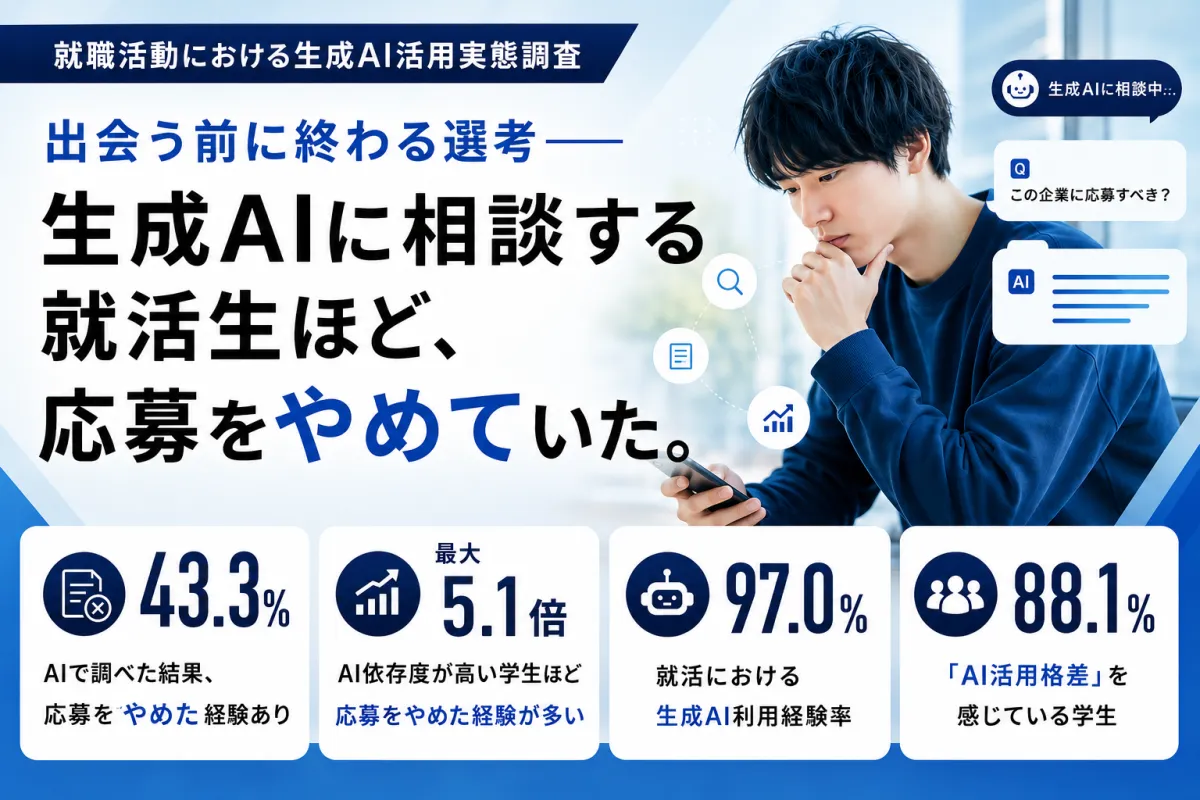
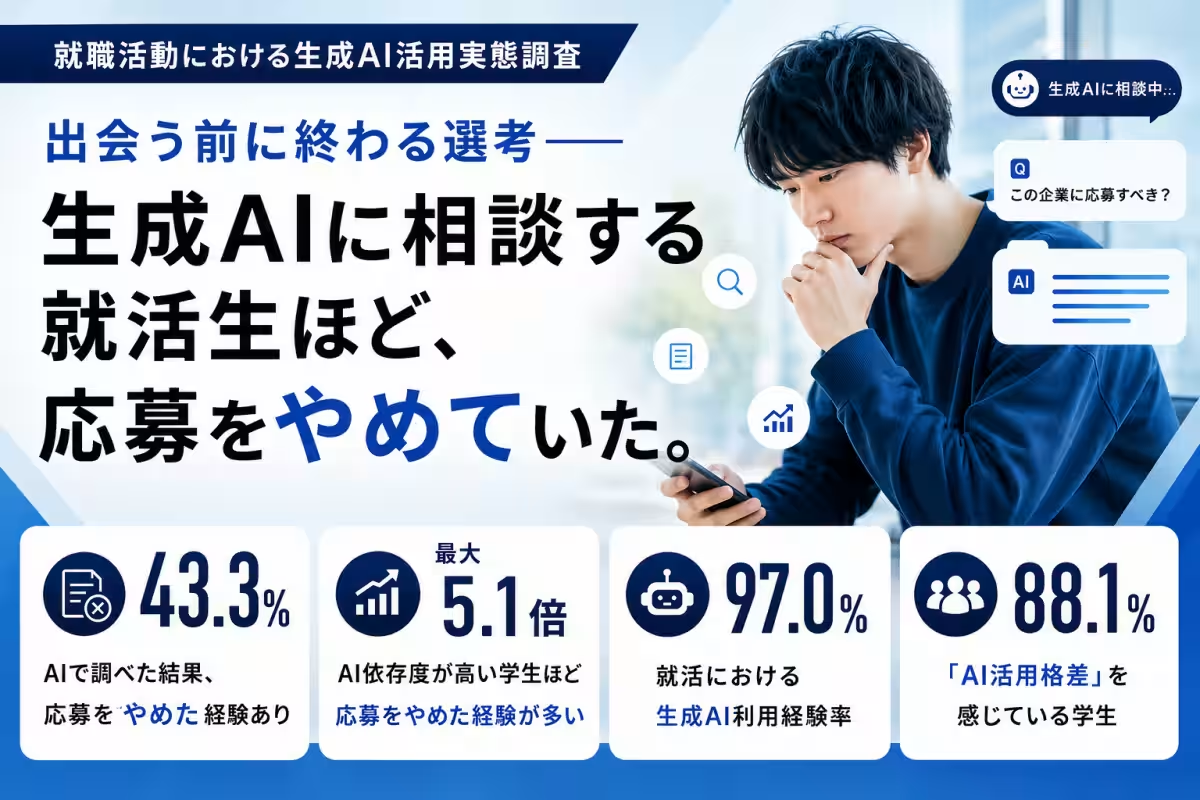
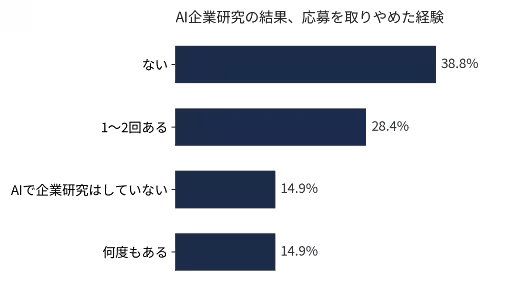
The standout finding of this study wasn’t the prevalence of generative AI use amongst job seekers—though that was notable at 97%—but rather the notion of “invisible withdrawal.” 43.3% of students reported having abandoned job applications due to the insights they received from their AI research. The frequency of AI usage for career advice directly correlated with this dropout rate, showing that those who frequently consult AI are 5.1 times more likely to withdraw their applications than those who do not.
Thus, it appears that the pool of candidates is being narrowed significantly even before employers get a chance to make contact. In simple terms, the quality and representation of information available to AI function as a filter, shaping whether students choose to pursue applications based on how they perceive the company.
Impacts on Candidate Perception
As the research highlights, the way AI summarizes information about a company can be pivotal in determining whether students feel inclined to apply or not. A further breakdown of the survey reveals that while nearly half of the respondents (46.3%) felt their range of application options expanded via AI insights, it also acts dissimilarly to limit opportunities, consolidating candidates’ choices.
The Shift to AI as a Trusted Advisor
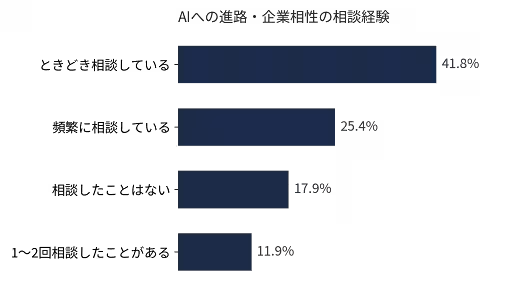
The way students relate to generative AI is noteworthy, as indicated by the finding that 79.1% have consulted AI regarding compatibility with companies or career path decisions. The underlying reasons for this reliance include the convenience of 24/7 accessibility and the ease of discussing sensitive topics that might be uncomfortable in traditional settings. This creates a new paradigm where students regard AI not just as a search tool, but as a reliable advisor, influencing their decisions significantly by deterring them from applying to companies deemed incompatible by the AI.
Specific Queries Students Ask AI
Students provided examples of the actual questions they input into AI during their job search, reflecting a deep level of engagement:
- - “Which of my experiences do you think fits with this company?”
- - “Can you suggest jobs that suit my skills?”
- - “What are my strengths based on our previous conversations?”
- - “Based on my interests, which industries should I consider?”
Trust Versus Skepticism in AI Responses
The study also revealed a divide in student sentiment towards AI. While 56.7% trust AI’s advice, 59.7% have been wary of its accuracy at times, exposing a landscape of both confidence and doubt. Further complicating this are the 71.6% of students who believe that while AI-driven evaluation methods are efficient, they also come with an element of unease about the human judgment component being lost.
Addressing the ‘Invisible Withdrawal’ in Recruitment
To counteract the phenomenon of invisible withdrawal, organizations must recognize how their presence is interpreted by generative AI. Clarity and robustness in how a company’s values and benefits are communicated can prevent negative perceptions from spreading. Direct engagement opportunities, such as interviews or company presentations, will become ever more critical as students develop relationships with AI.
In conclusion, as the dynamics of job searching evolve in the face of advanced technology, stakeholders must adapt their strategies. Companies ought to consider enhancing their narratives in ways that resonate with potential applicants, thereby ensuring they are not inadvertently pushing candidates away through unfavorable AI interpretations.
A Word from Strobolights' CEO
Keiichiro Haneda emphasized the growing importance of understanding how generative AI shapes student career perceptions, urging companies to rethink their communication approaches to better appeal to this tech-savvy generation.
The integration of AI into job searching reveals transformative shifts that both students and companies must navigate carefully. Ensuring that each party understands the stakes involved in AI-assisted recruitment could very well reshape the future of employment engagement.
Topics Business Technology)
【About Using Articles】
You can freely use the title and article content by linking to the page where the article is posted.
※ Images cannot be used.
【About Links】
Links are free to use.