



Breakthrough in Deep Ultraviolet LEDs: High-Efficiency Top-Emission Technology Unveiled
Breakthrough in High-Efficiency Top-Emission Deep Ultraviolet LEDs
Researchers at the National Institute of Information and Communications Technology (NICT) have made a groundbreaking achievement with the development of the world's first high-efficiency top-emission deep ultraviolet (UV-C) LED. This advancement not only promises enhanced power conversion efficiency but also significantly reduces manufacturing costs, paving the way for a new generation of UV-C LEDs.
Key Innovations
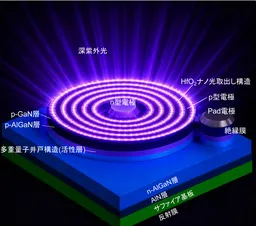
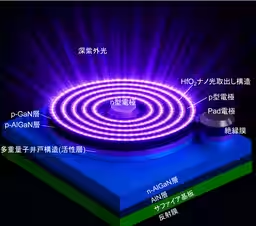
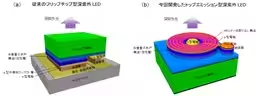
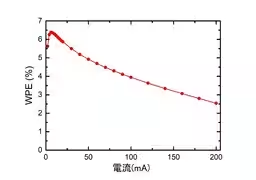
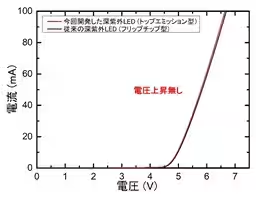
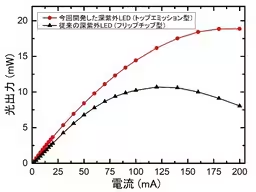
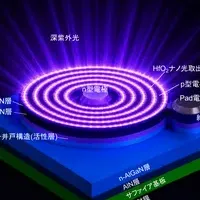
The innovative design features a unique light extraction structure combining micro-ring electrodes and nanostructured light extraction. This enables the direct extraction of UV light from the top surface of the chip, vastly improving efficiency compared to conventional flip-chip (bottom-emission) designs. As a result, the newly developed LEDs achieve approximately 35% higher power conversion efficiency (WPE).
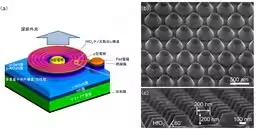
The success stems from the intricate processing of the p-type electrode and semiconductor contact layer into a concentric micro-ring structure. This configuration minimizes the absorption of deep UV light at the chip surface while maintaining high current injection efficiency. The introduction of a hafnium oxide (HfO₂) nanostructured light extraction further enhances the output by suppressing total internal reflection, allowing for a wider angular range of light extraction.
Addressing Industry Needs
The potential applications for deep UV LEDs are vast, spanning sanitation, medical technology, food hygiene, semiconductor manufacturing, and information communication. Traditional deep UV LEDs face challenges due to the reliance on the flip-chip structure, which complicates manufacturing and increases costs. The need for a simpler and more efficient approach is critical, particularly as society seeks alternatives to mercury lamps for hygiene and sterilization tasks.
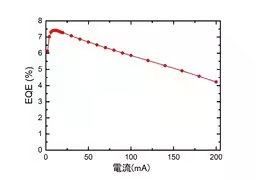
The enhanced top-emission design achieves high external quantum efficiency (EQE) of 7.5% and electrical efficiency of 85%, which reflects a significant leap toward practical applications. This technological leap makes substantial contributions toward a more cost-effective, high-performance UV-C solution.
A Step Toward Sustainability
As the demand for low-impact, small solid-state light sources increases, the advent of these high-efficiency deep UV LEDs could catalyze wider adoption across their prospective fields. By advancing this technology, NICT aims to drive the social implementation of deep UV devices to combat pathogens and enhance public health measures.
Future Perspectives
Looking ahead, NICT is committed to further research and development of deep UV light device technologies. The institute envisions a promising future where efficient, cost-effective UV solutions contribute significantly to a safe and sustainable society.
The results of this research have been published in the American Chemical Society's journal ACS Photonics, gaining recognition as a supplementary cover feature. Researchers hope this innovative approach will mark a significant turning point in deep UV LED technology.
Conclusion
The advancement of high-efficiency top-emission deep UV LEDs not only opens new avenues in LED technology but holds the promise to revolutionize sanitation practices globally. With expected wide-scale applications, this breakthrough positions the NICT at the forefront of this essential development.
Topics Consumer Technology)
【About Using Articles】
You can freely use the title and article content by linking to the page where the article is posted.
※ Images cannot be used.
【About Links】
Links are free to use.