



Survey Reveals Ideal Office Environments for Hybrid Workplaces
Understanding the Ideal Office in the Hybrid Work Era
As hybrid work continues to gain popularity, the demands from office spaces are shifting. No longer are employees satisfied with mere workplaces; they feel offices must also serve as hubs for communication and cultural interaction. A recent study conducted by Urban Plan, a company based in Shinjuku, Tokyo, focused on individuals aged 20 to 50 and explored their preferences regarding office environments.
Survey Overview
On March 24, 2026, Urban Plan conducted an online survey via PRIZMA, gathering feedback from 1,040 office workers categorized between the ages of 20 and 50. The survey aimed to investigate their ideal office types and the essential characteristics that could enhance their productivity within these workplaces.
What Do Workers Want?
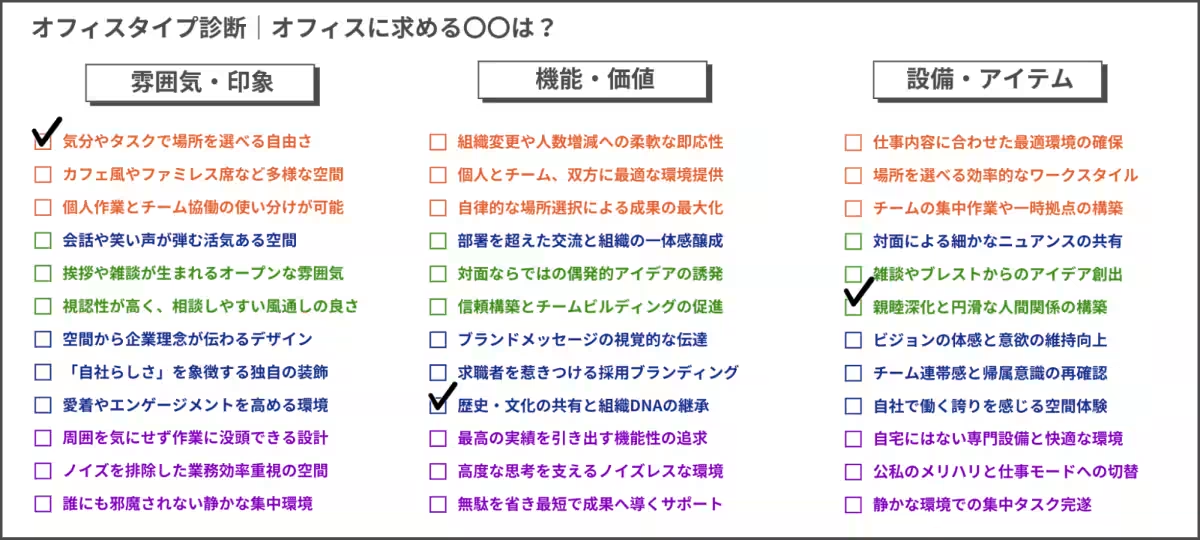
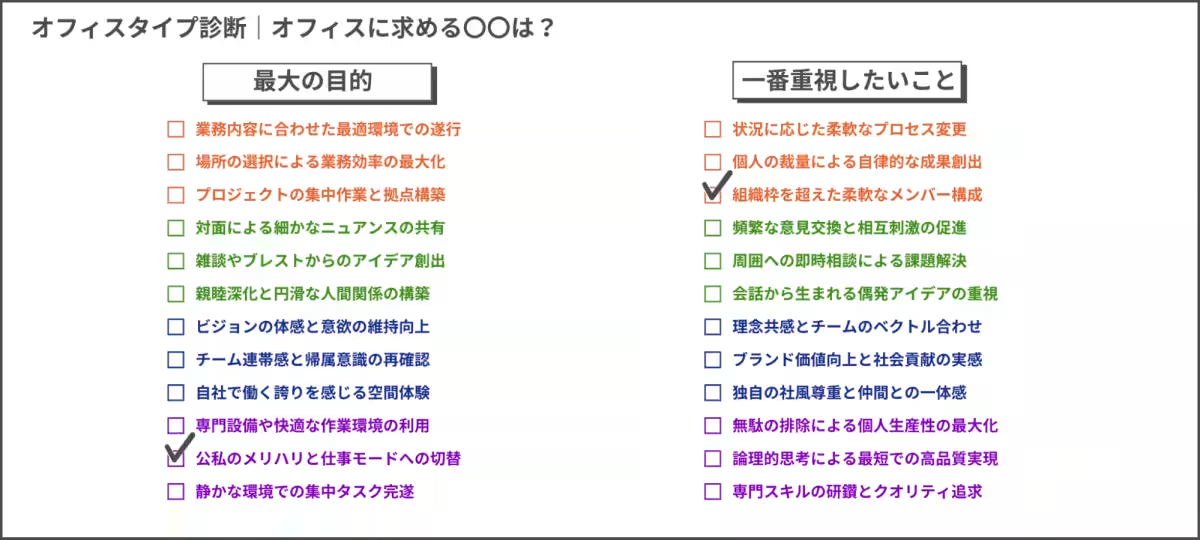
In a world where working from home has become a norm mixed with office presence, many employees are pondering what their most productive work environment looks like. The survey included a specially designed office type diagnostic test, revealing insights into the expectations of today's workforce.
Four main office types emerged from the responses, each identified by a specific color:
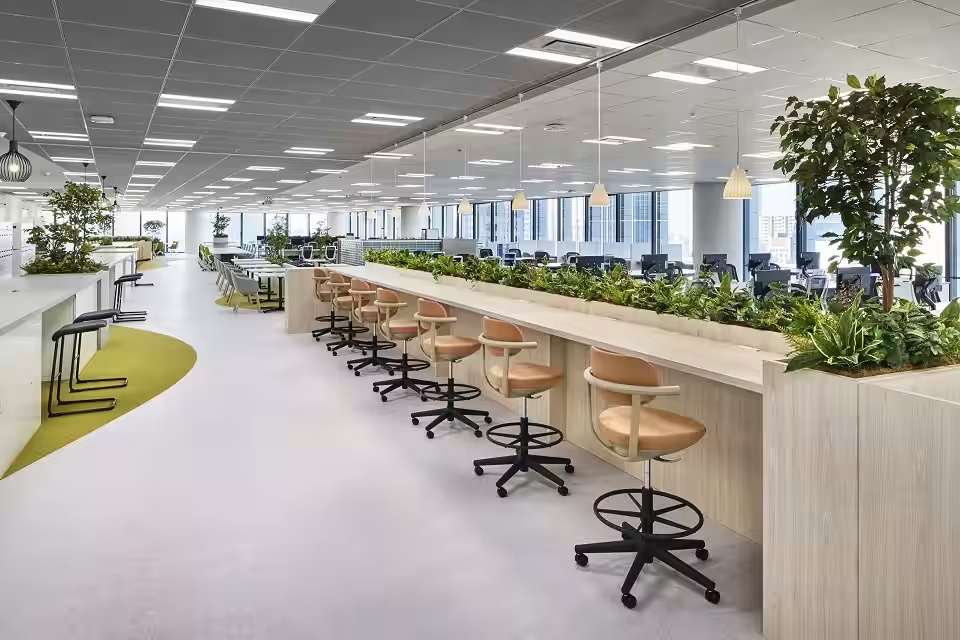
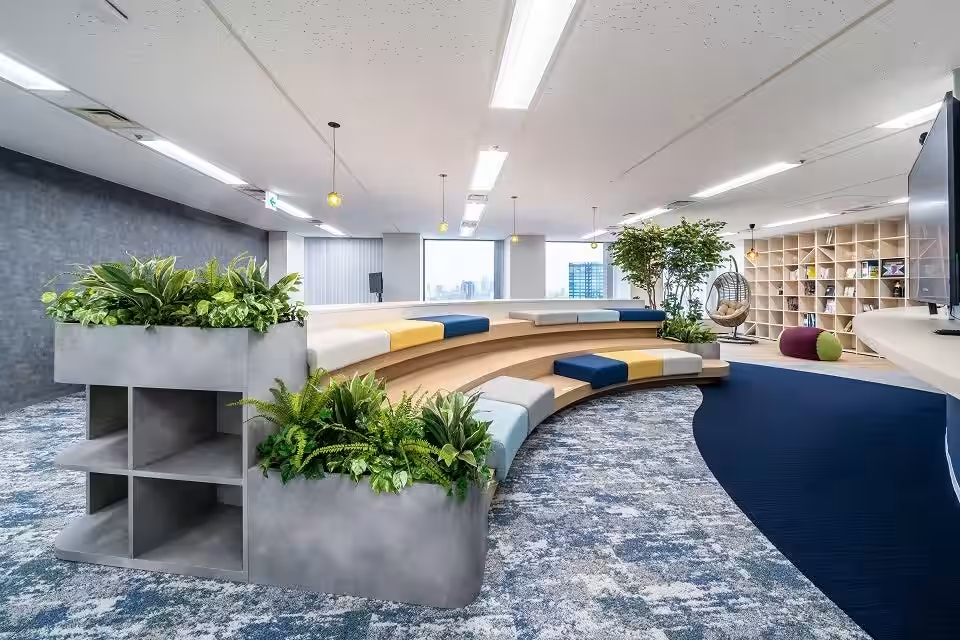
- - Orange (Type A): Flexible Office - This environment allows employees to choose their workspace according to tasks, integrating areas designed for collaboration, focus, and relaxation. It emphasizes autonomy in work habits, valuing the unique benefits of physically being in the office.
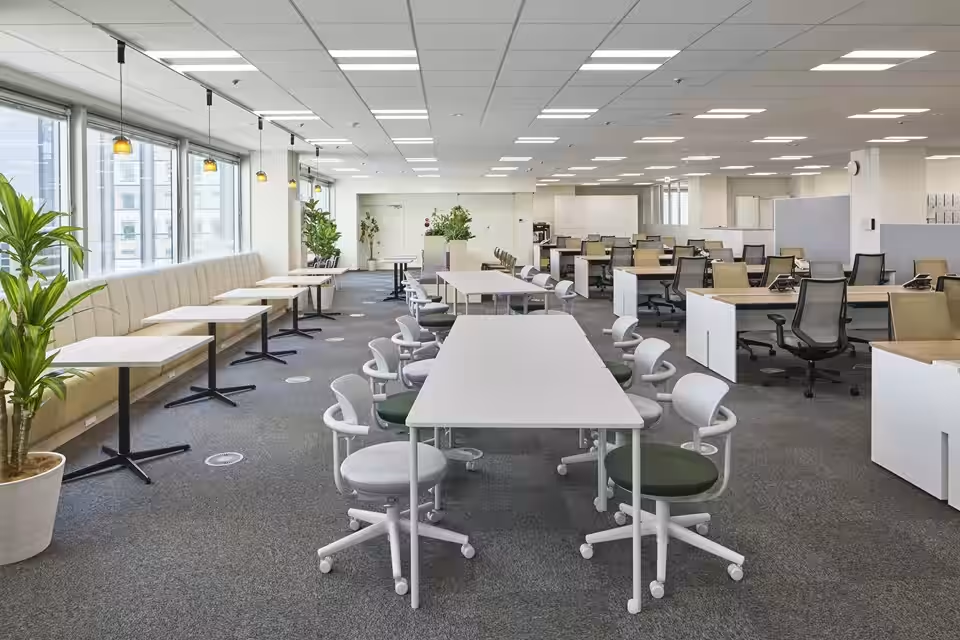
- - Green (Type B): Communicative Office - Featuring open desk arrangements and casual spaces that inspire spontaneous discussions and quick meetings, this type fosters a sense of team spirit while encouraging informal interactions among employees.
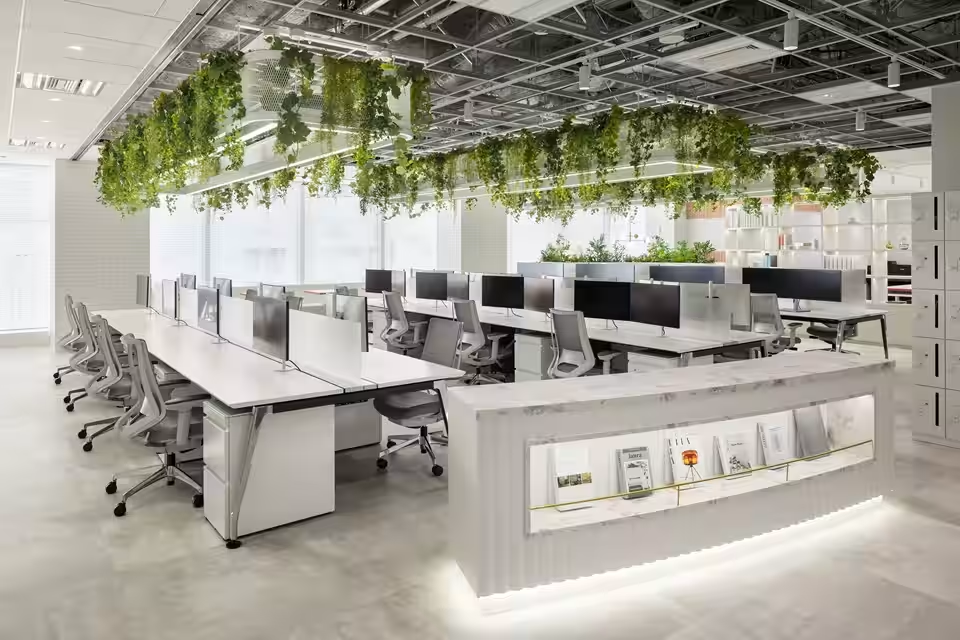
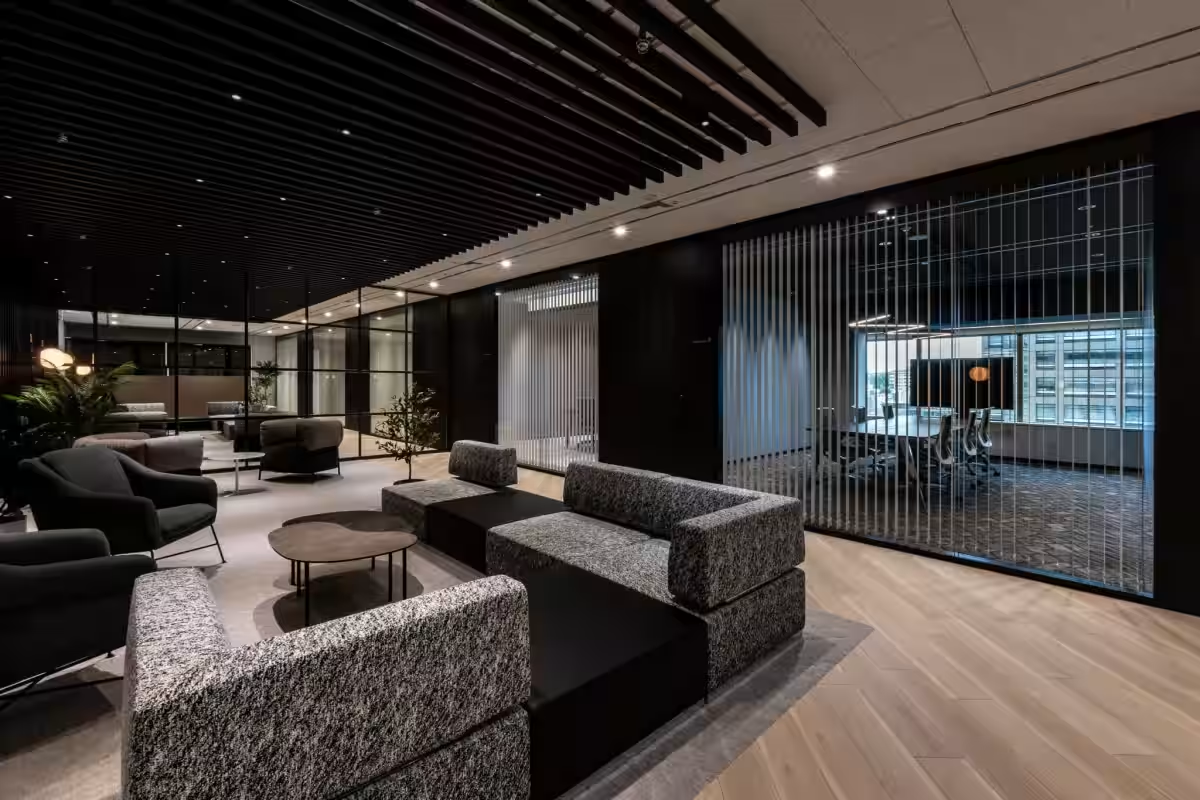
- - Blue (Type C): Branding Office - Here, a sophisticated design visually conveys the company's identity and values, enhancing the sense of belonging among employees and presenting a strong image to visitors.
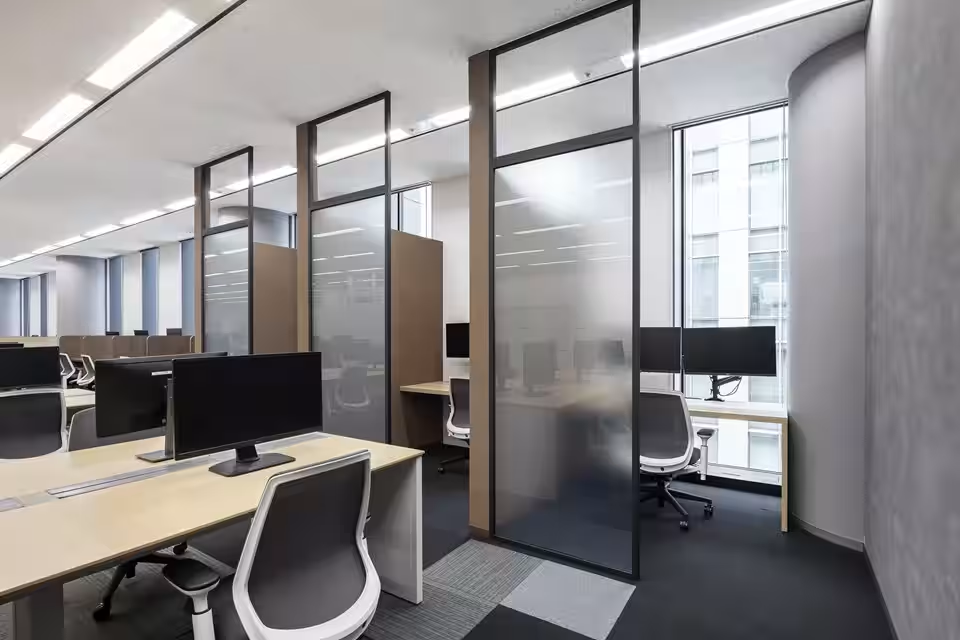
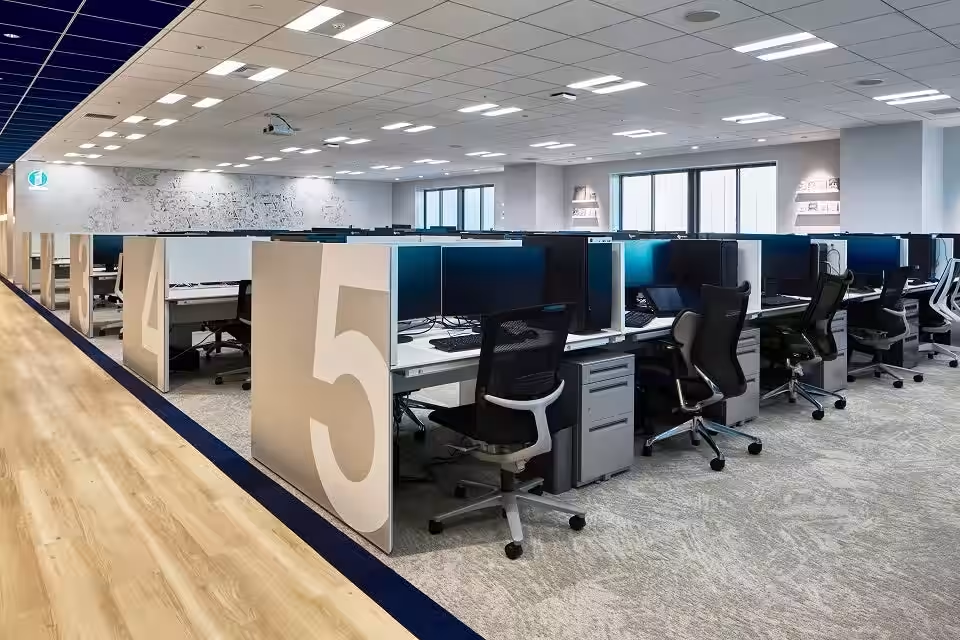
- - Purple (Type D): Focused Office - This type balances quiet areas for deep concentration with spaces designed to facilitate team discussions, thus enhancing both productivity and engagement.
Popularity Among Workers
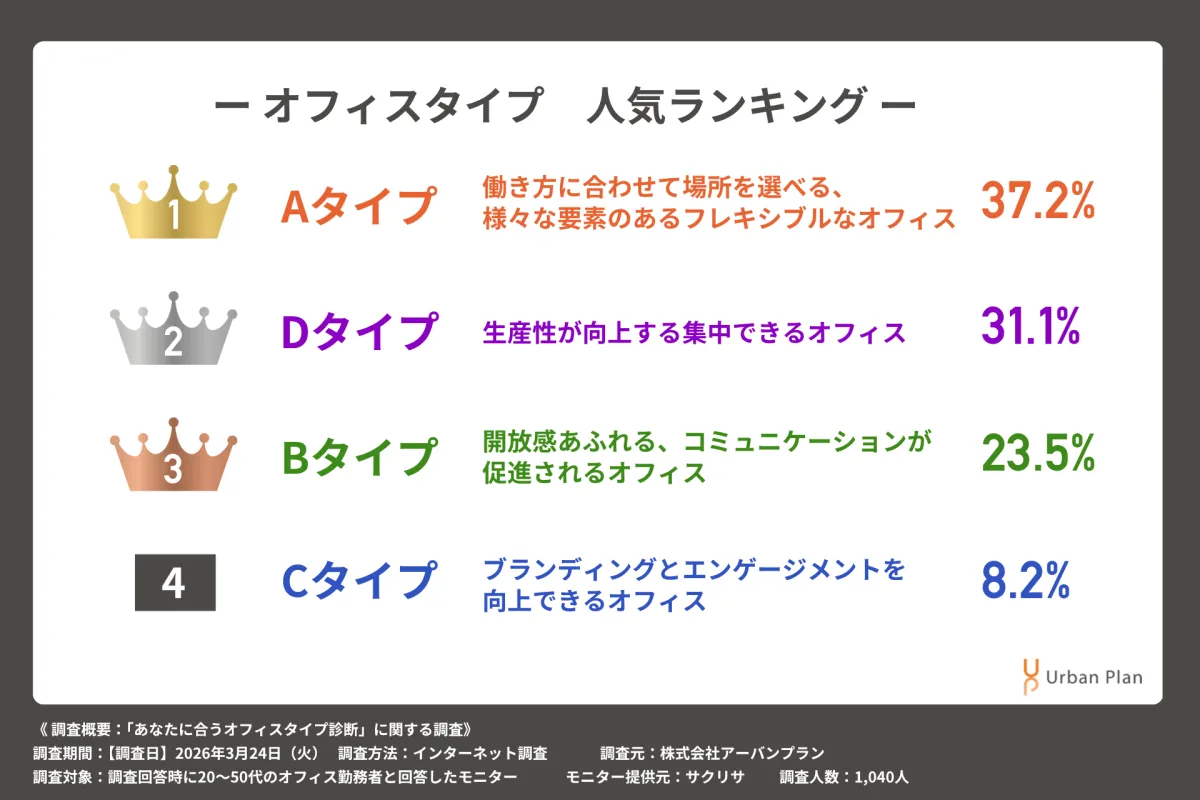
When analyzing which office types were preferred by the surveyed group, the results showcased a clear trend:
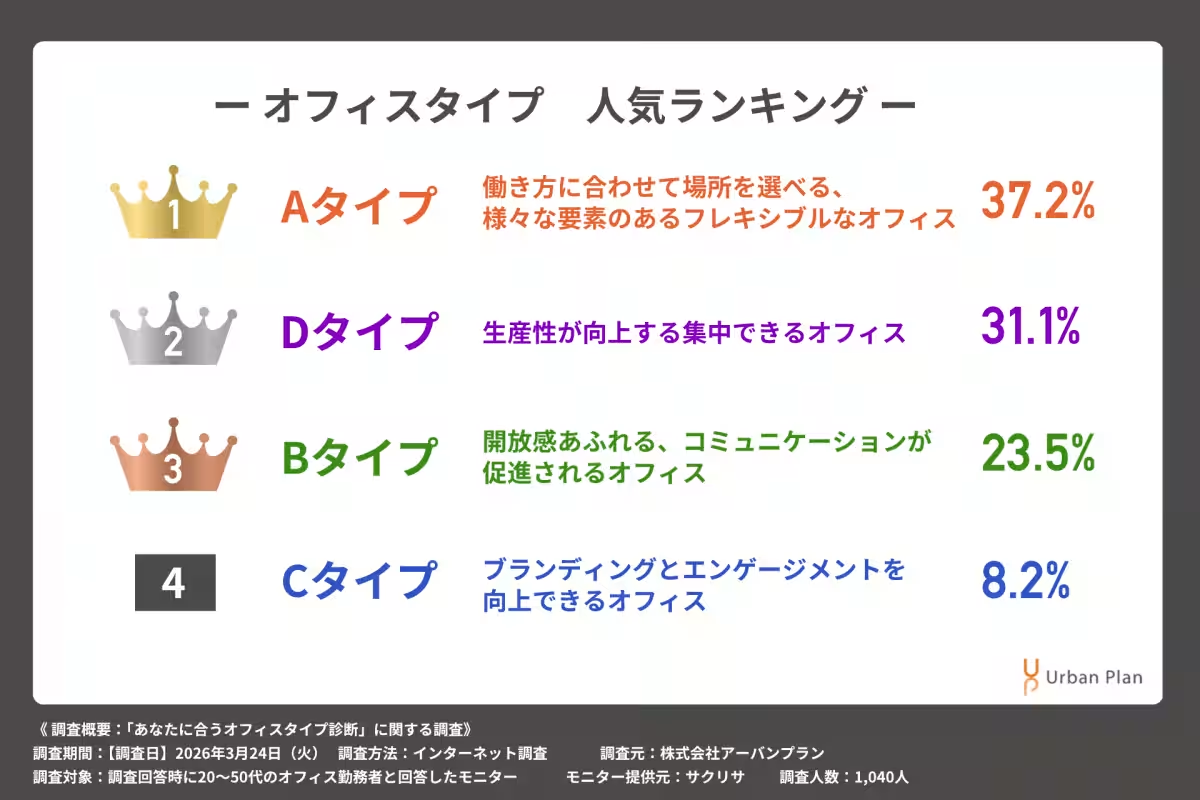
1. Type A (Flexible Office) - 37.2% of respondents preferred this workspace style, representing the highest interest.
2. Type D (Focused Office) - 31.1% favor a workspace conducive to deep work and concentration.
3. Type B (Communicative Office) - 23.5% appreciate open layouts that promote interaction.
4. Type C (Branding Office) - 8.2% consider branding in their work environment significant.
The high demand for a flexible workspace underscores the need for employees to select appropriate environments tailored to their tasks in the current hybrid work model. This autonomy represents a shift in employee expectations, revealing the essence of modern work culture. It is also imperative to note the desire for quiet work settings, which aligns with the strong need for productive environments—something that remote work often lacks.
Elements of an Ideal Workspace
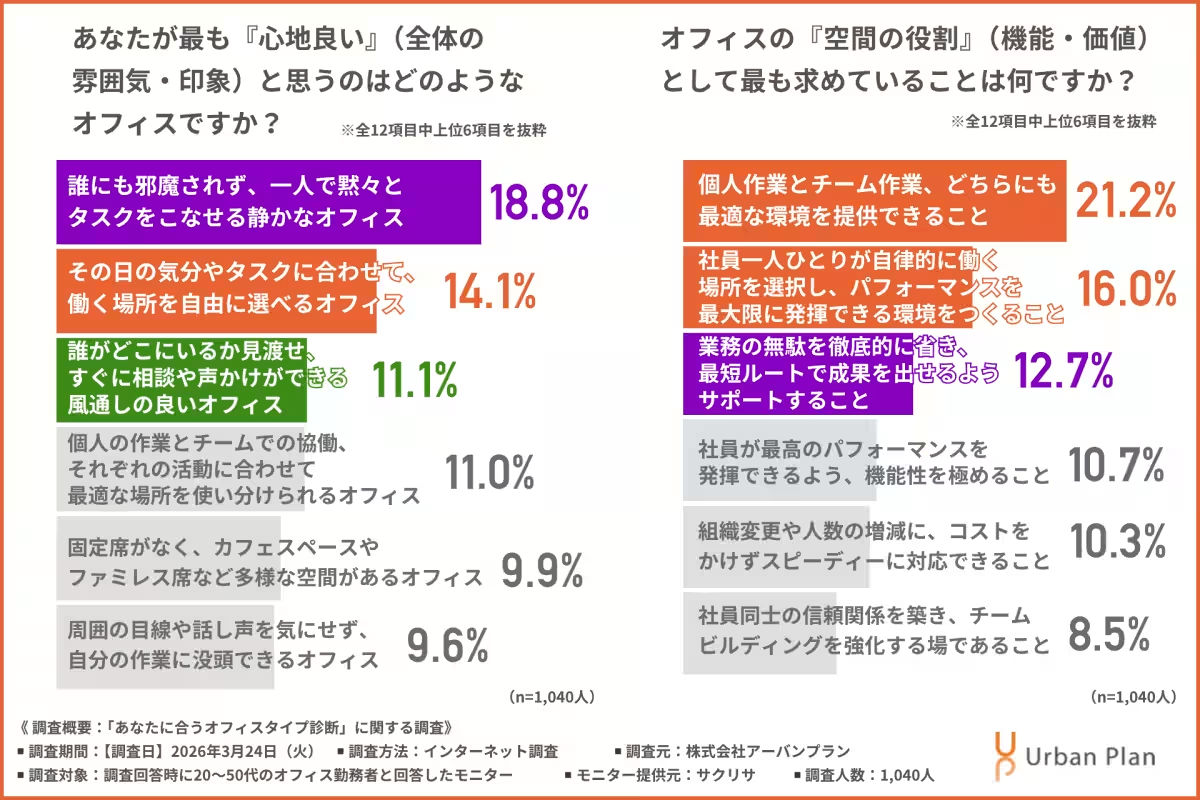
The survey didn't stop at identifying office types; it also explored essential elements that contribute to an appealing work environment. Respondents were asked about features they find most soothing in an office setting. The results were insightful:
- - Most respondents prefer a “quiet environment for solo work.”
- - Others expressed wishes for “a flexible workspace that can be adjusted based on mood” and “ease of communication.”
Moreover, when questioned about the functions essential for modern offices, most participants valued adaptable environments that cater to both solo and team tasks. This flexibility reflects a growing need for environments that can support diverse work styles and enhance overall efficiency.
Desired Equipment and Facilities
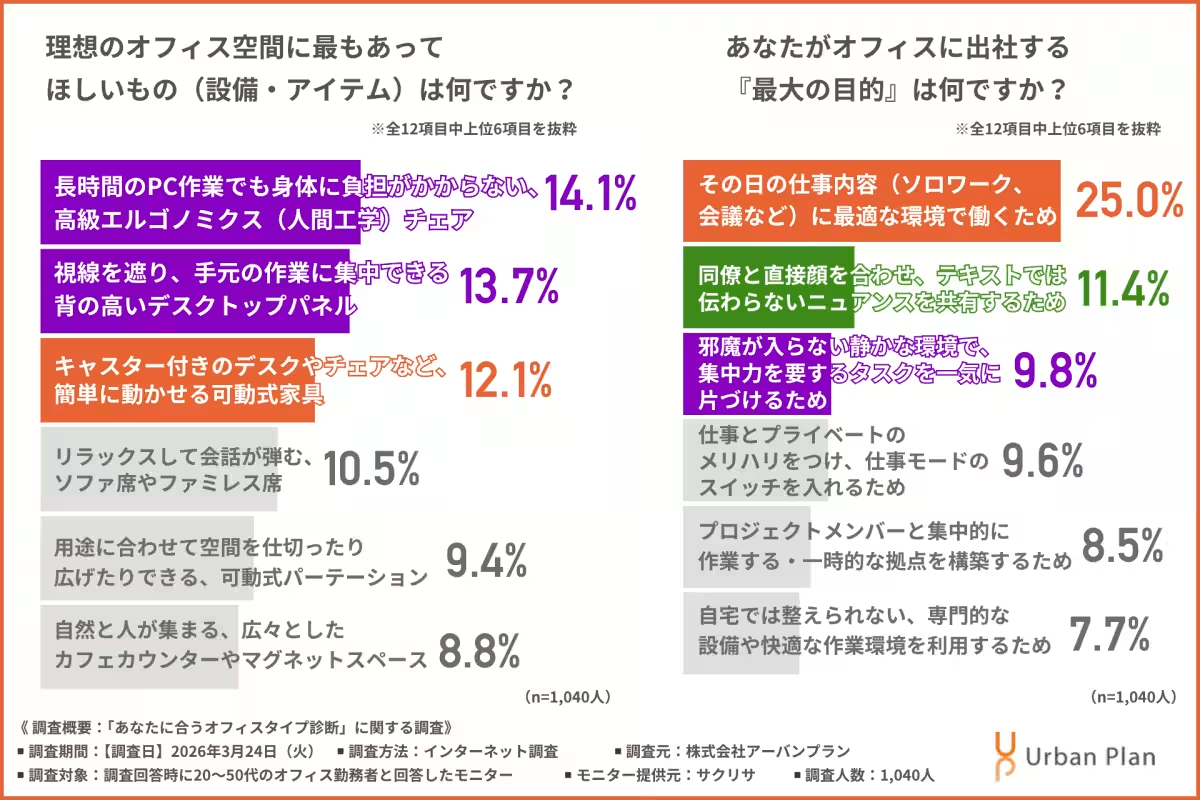
Employers eager to meet these demands should consider what equipment or furnishings would positively impact productivity and morale. The survey highlighted that participants favored:
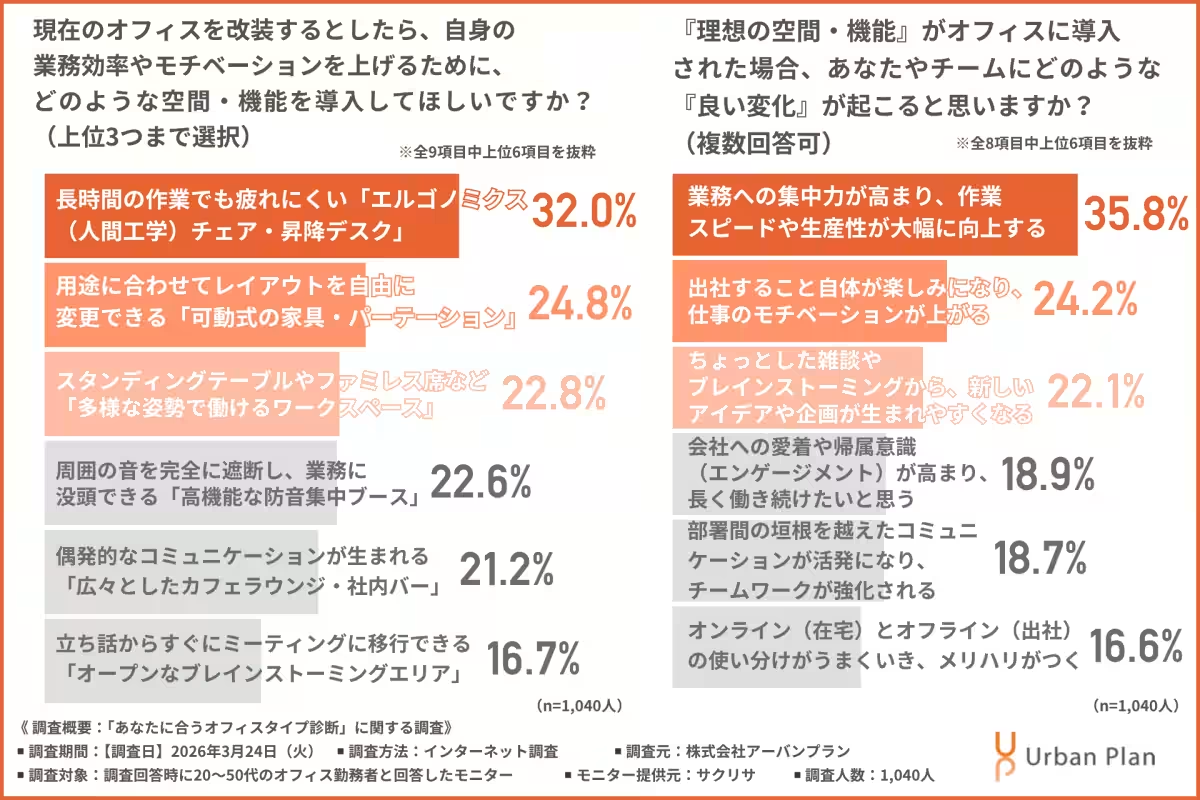
- - Ergonomic chairs designed to reduce fatigue during prolonged work sessions,
- - Desktop panels to mitigate distractions and enhance focus,
- - Movable furniture to enable easy reshuffling of workspaces to suit various setups.
Maximizing Office Visits
Additionally, when asked about their primary motivation for coming to the office, approximately 30% cited: “to work in an environment best suited for my job.” Other supportive reasons included opportunities for in-person communication and the enhanced concentration that a dedicated office provides. The survey made it clear that companies must establish offices as productive environments where employees can perform their best work.
Unmet Expectations and Future Improvements
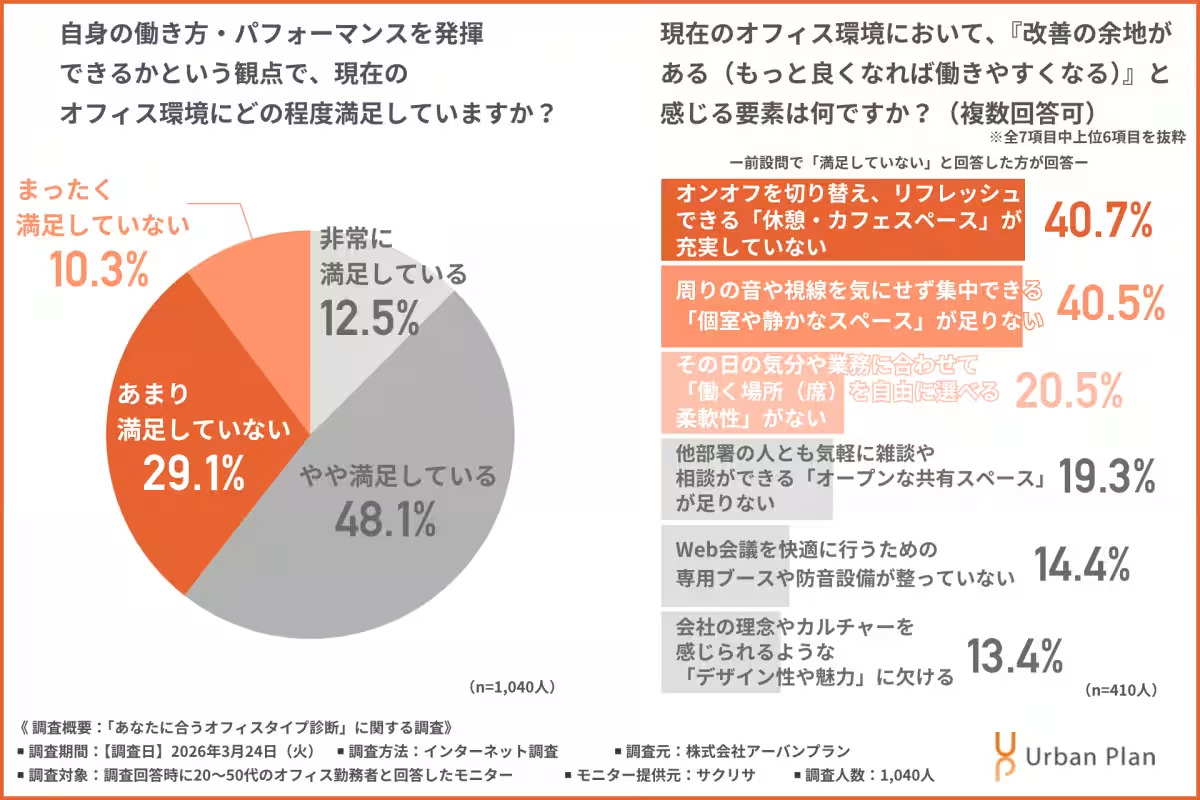
Despite the detailed insights on preferred office types and beneficial features, a significant number of workers reported dissatisfaction with their current office environments. Approximately 40% expressed:
- - They were “not satisfied at all” or “somewhat dissatisfied” with existing conditions.
- - The survey revealed a growing anticipation for improved amenities—especially the need for refreshing break areas and quiet zones that allow for focused work away from distractions.
If given the chance to redesign their workspace, survey respondent desires included ergonomic furniture, flexible layouts, and areas supporting diverse working postures. Such changes correlate directly with heightened productivity and increased job satisfaction.
Conclusion: Flexibility Meets Focus
Ultimately, the survey indicates that modern office workers are looking for the flexibility to choose their workspaces according to their immediate tasks. The research highlights a pressing demand for workplaces that not only cater to collaborations but also facilitate focused individual work sessions.
Urban Plan aims to help companies adapt to these contemporary needs by providing comprehensive office design services through their `Work Style 365` initiative, which focuses on creating adaptable work environments. Through their extensive offerings, including cloud solutions for document management and optimal space design, Urban Plan supports organizations in maximizing workforce productivity while ensuring a flexible working environment.
To learn more about enhancing your office space with Work Style 365, visit Urban Plan.
Contact Urban Plan
- - Head Office: Tokyo, Phone: 03-5909-0515
- - Contact Form: Urban Plan Contact
By understanding what workers want, companies can adapt and create spaces that not only meet their employees’ expectations but also encourage higher productivity and morale.
Topics Consumer Products & Retail)
【About Using Articles】
You can freely use the title and article content by linking to the page where the article is posted.
※ Images cannot be used.
【About Links】
Links are free to use.