



Exploring the Dynamics of Household Chores and Childcare Between Parents: A 2025 Study
An Insight into Parenting and Household Duties: Results from Tokyo's 2025 Survey
In a groundbreaking effort to understand the evolving landscape of household responsibilities and parenting roles, the Tokyo Metropolitan Government recently conducted a comprehensive survey involving 5,000 urban residents. The objective was to examine the realities of childcare and household chores, particularly focusing on the male experience, amidst a growing consciousness of shared domestic responsibilities. This report highlights key findings of the "2025 Male Household and Childcare Survey" and offers expert insights into the changing dynamics of family life in contemporary Tokyo.
Methodology of the Survey
The survey was conducted via a web-based questionnaire from July 15 to August 21, 2025. It consisted of two primary target groups: 4,000 parents with preschool-age children (2,000 men and 2,000 women) and 1,000 participants aged 18 to 69 (500 men and 500 women) across all generations. This meticulous sampling aimed to reflect a diverse range of perspectives on household chores and childcare.
Key Findings
1. Reduction of Gender Disparity in Chores and Childcare
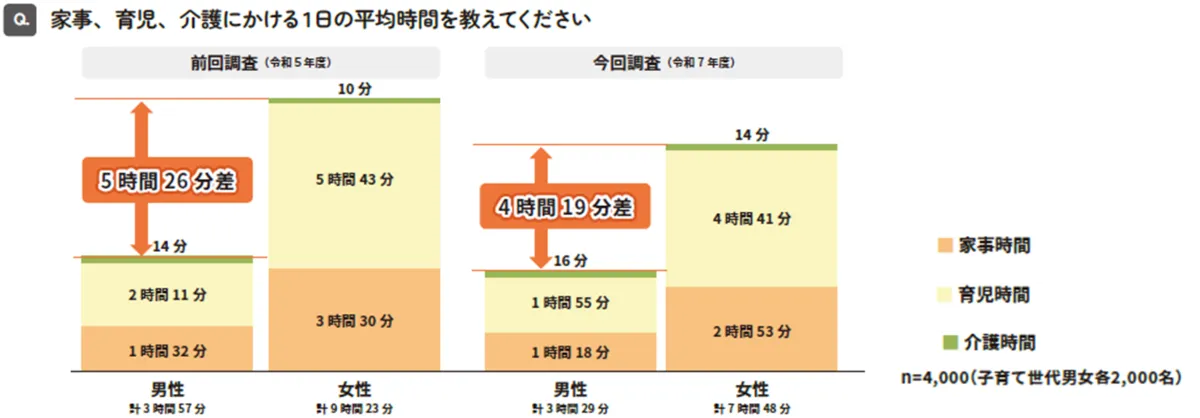
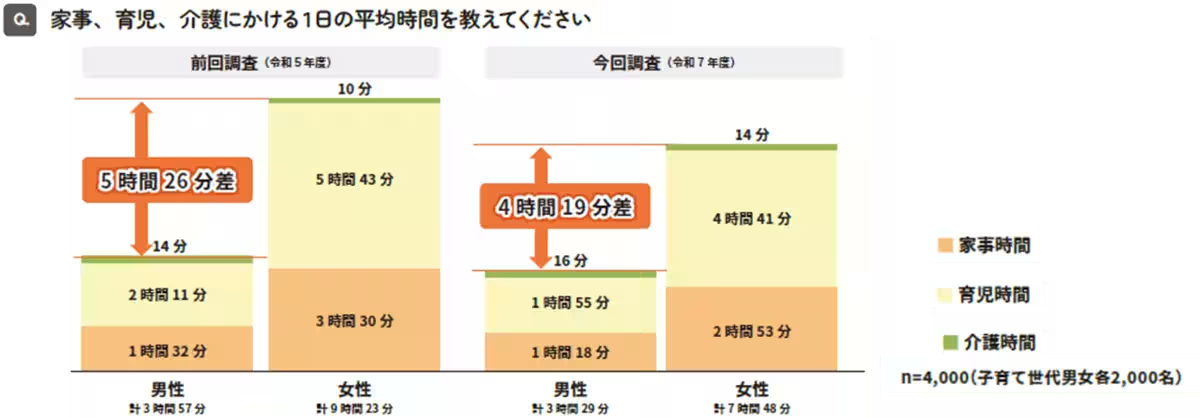
The study revealed a notable reduction in the gender gap concerning time spent on household duties and childcare. On average, men dedicated 3 hours and 29 minutes daily to these tasks, compared to women's 7 hours and 48 minutes. This difference of 4 hours and 19 minutes is a significant decrease of over one hour from the previous year's survey, indicating a positive shift towards shared responsibilities. Women, in particular, reported a considerable decline in time spent on chores and childcare, reflecting perhaps evolving social norms and expectations.
2. Satisfaction with Chore and Childcare Distribution
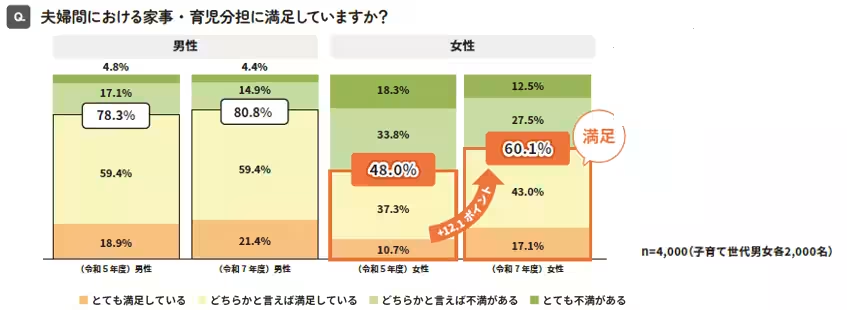
While satisfaction levels regarding the sharing of household responsibilities still exhibit significant gender disparities, women's contentment has seen marked improvements compared to the last survey. Interestingly, both men and women expressed a strong desire for personal time, with leisure time averaging around 2 hours on weekdays. However, during weekends, men enjoyed approximately 90 minutes more of free time compared to their female counterparts—insightful data hinting at the need for more equitable time sharing.
3. The Disparity in Expressing Gratitude
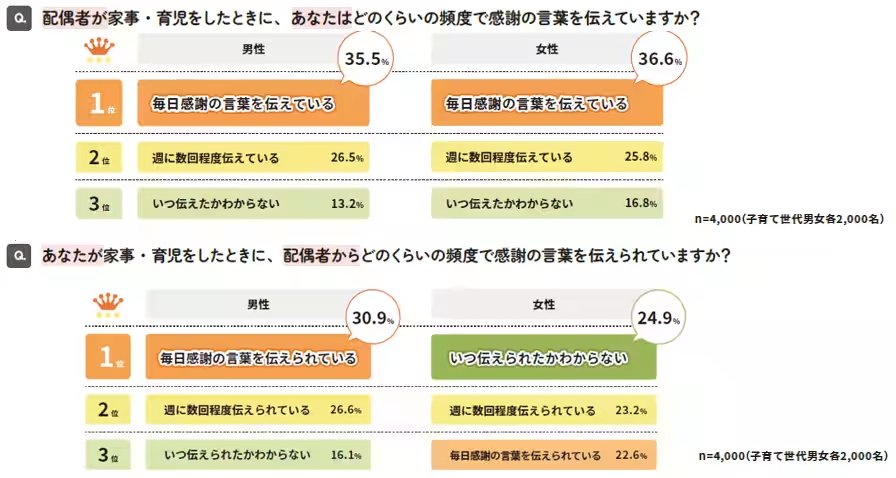
A significant finding of the survey pointed out a stark contrast in the frequency of gratitude expressed between partners. Both genders agreed that

Topics Other)
【About Using Articles】
You can freely use the title and article content by linking to the page where the article is posted.
※ Images cannot be used.
【About Links】
Links are free to use.