



Survey Predicts Increased Senior Recruitment in 2026, Says 58.3% of Professionals
Anticipated Surge in Senior Hiring by 2026
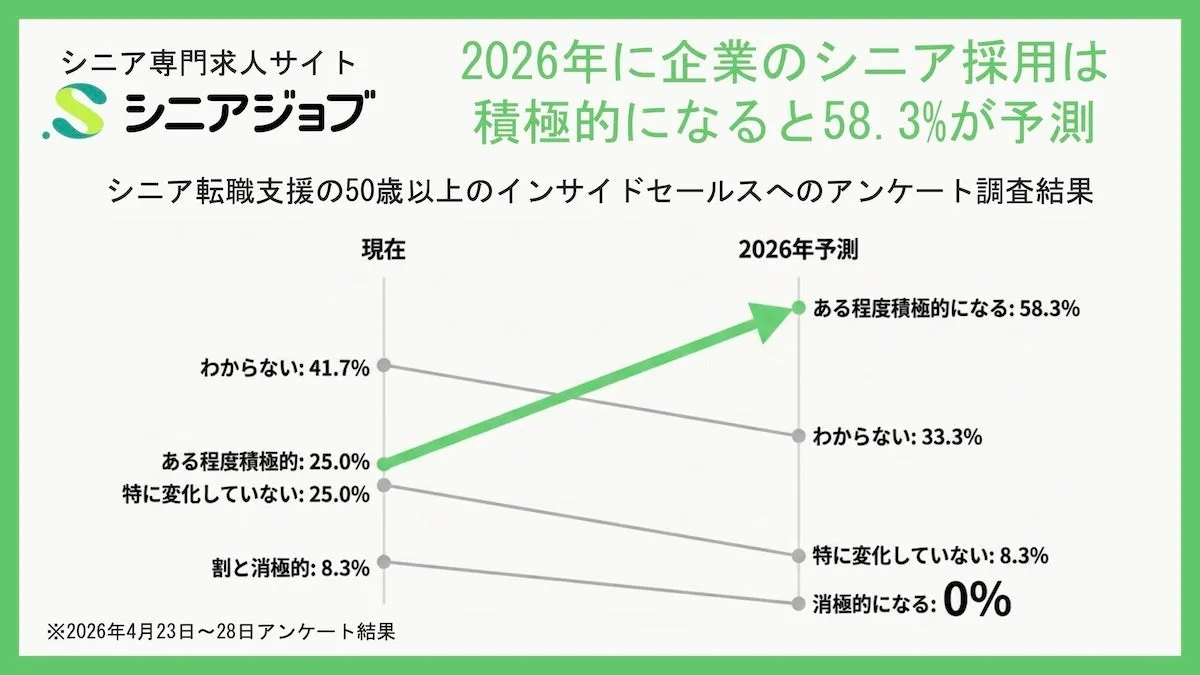
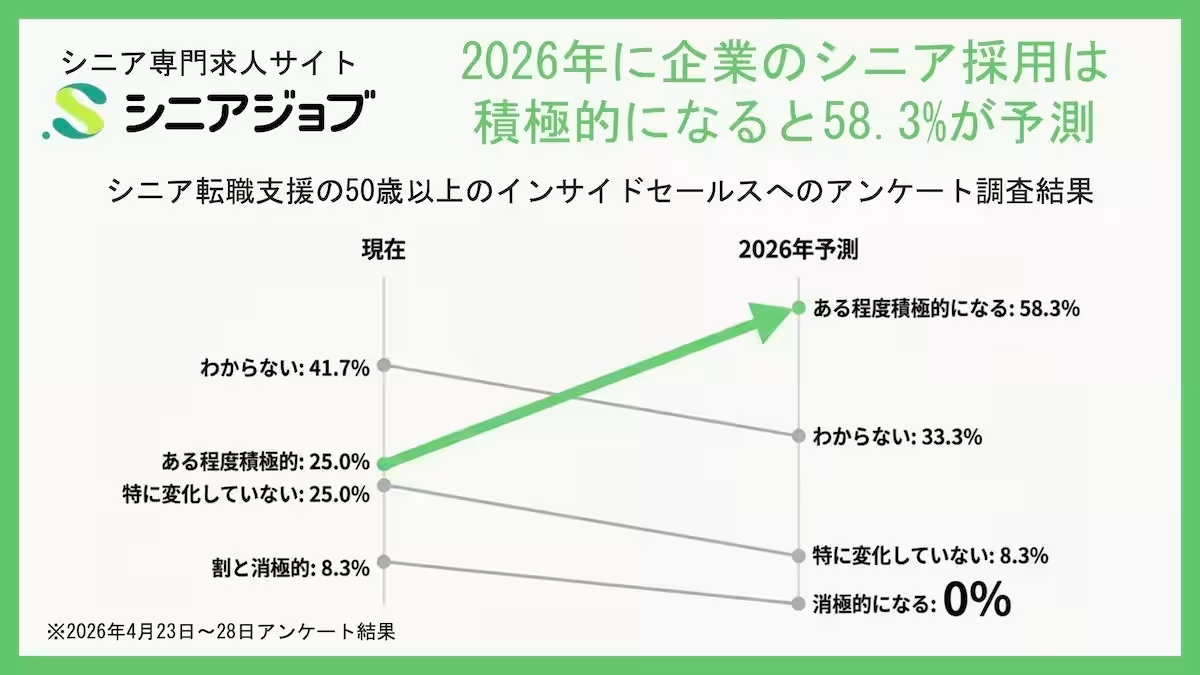
A recent survey conducted by Senior Job, a Tokyo-based company specializing in senior recruitment services, has revealed intriguing insights regarding the hiring landscape for seniors in Japan. The survey targeted professionals aged 50 and above who are involved in sales and proposals for senior talent at companies. Notably, 58.3% of these professionals forecast a significant uptick in senior hiring by the year 2026.
Survey Overview
The survey, conducted between April 23 and April 28, 2026, engaged 12 respondents who are tasked with promoting senior-specific job opportunities and facilitating the hiring of older professionals. The results indicate some positive trends regarding the perception of senior talent within the corporate sector. While only 25% of respondents viewed current corporate hiring toward seniors as being somewhat active, a larger 58.3% expected this activity to increase in the near future.
Key Findings
1. Increasing Activity: The belief that corporations will become more proactive in hiring seniors resonates among the majority, which may reflect an overall shift in corporate hiring strategies fostered by workforce shortages and changing socio-economic dynamics.
2. Concerns Persist: Despite the positive forecast, the survey also flagged significant concerns. An overwhelming 91.7% of professionals indicated that companies express worries regarding senior candidates' health, stamina, and capabilities. Furthermore, 83.3% of respondents highlighted a preference within companies for hiring younger employees, suggesting a complex attitude toward integrating older workers.
3. AI and Recruitment: The survey also noted that 66.7% anticipate an increase in AI-driven recruitment processes by 2026. A notable observation was that 58.4% reported challenges in establishing contact with potential candidates when dealing with automated systems.
Reasons for Hiring Seniors
When asked for the factors prompting companies to hire seniors, 58.3% pointed to the immediate value brought by the experience and skills that older workers offer. However, a concerning 50% noted that the comparatively lower wage expectations of seniors also play a role in hiring decisions. This presents a mixed narrative surrounding the motivations behind senior recruitment—balancing both operational needs and financial factors.
Barriers to Senior Employment
Concerns regarding the physical abilities of older candidates emerged as a prominent barrier. The survey revealed that 75% of respondents believe companies worry about the longevity and vitality of senior employees in demanding roles. This reflects a lingering stigma associated with aging in professional environments, which may hinder the potential contributions of seniors to the workforce.
Industry Insights
The results varied across industries. The healthcare and welfare sector emerged as accepting of senior employees—a sentiment shared by 75% of the respondents. In contrast, sectors like IT and legal professions revealed a higher barrier to senior employment due to the rapidly evolving nature of these fields, where younger workforce preferences appear to dominate recruitment strategies.
Conclusion
This survey encapsulates a pivotal moment for senior employment dynamics leading into 2026. While there is optimism about increased opportunities for senior applicants, profound barriers still reside within attitudes towards aging in the workforce. Going forward, senior recruitment services, like those offered by Senior Job, will play a critical role in bridging the gap between capable senior talent and the companies that may benefit from their experience.
For more information about job opportunities for seniors or inquiries on senior recruitment services, visit Senior Job. Further inquiries can be directed to the Senior Job public relations through the provided contact details on our official website.

Topics Business Technology)
【About Using Articles】
You can freely use the title and article content by linking to the page where the article is posted.
※ Images cannot be used.
【About Links】
Links are free to use.