



Exploring the TSUGITE Project: Capturing Food Experiences for a Sustainable Future
The TSUGITE Project: Preserving Unforgettable Food Experiences
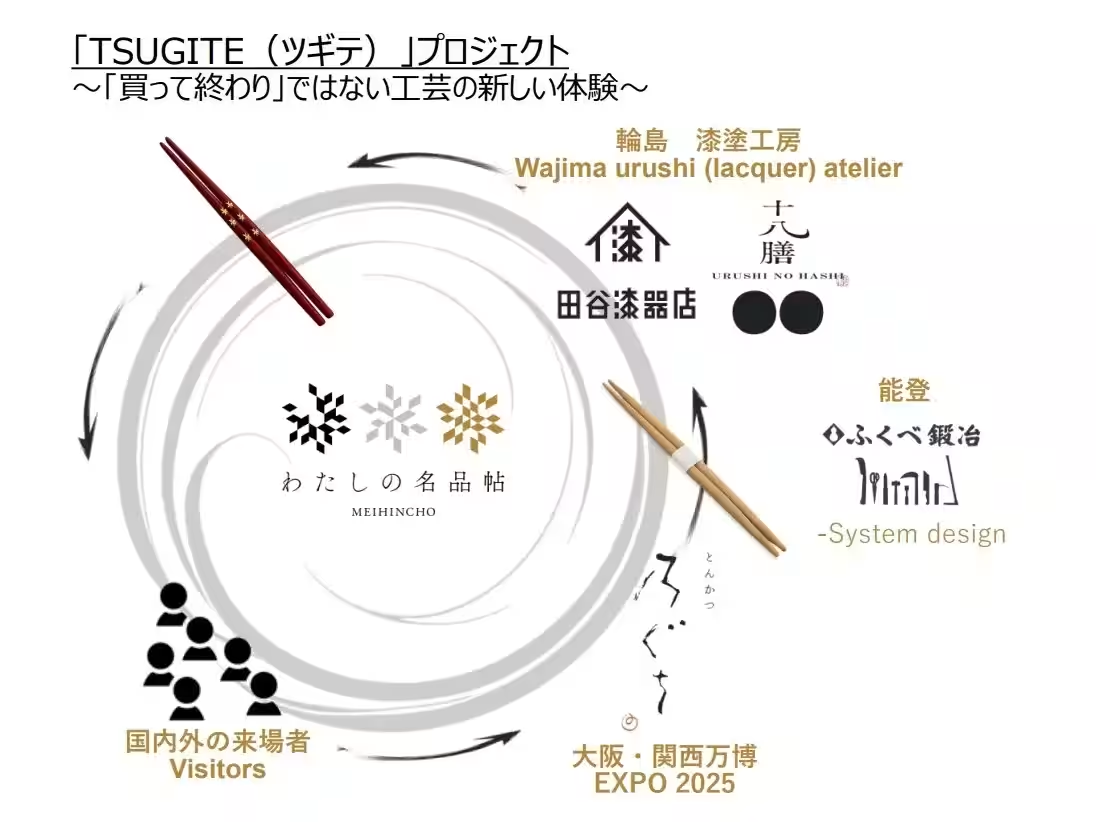
As we move towards the 2025 Osaka-Kansai Expo, the TSUGITE Project, initiated by uLu Consultants, has been gaining attention for its emphasis on preserving unforgettable food experiences. The project stems from research indicating that seven out of ten people desire to keep memories of their food experiences alive. This aligns with the growing awareness of the impermanence of dining experiences due to restaurant closures or changing times.
Food experiences hold a significant place in our lives, intertwining flavors, aromas, and the memories of those we share them with. During the survey conducted by uLu Consultants, targeting individuals who have had memorable dining experiences, intriguing insights emerged about modern dining habits.
Survey Insights: The Dining Habits of Today
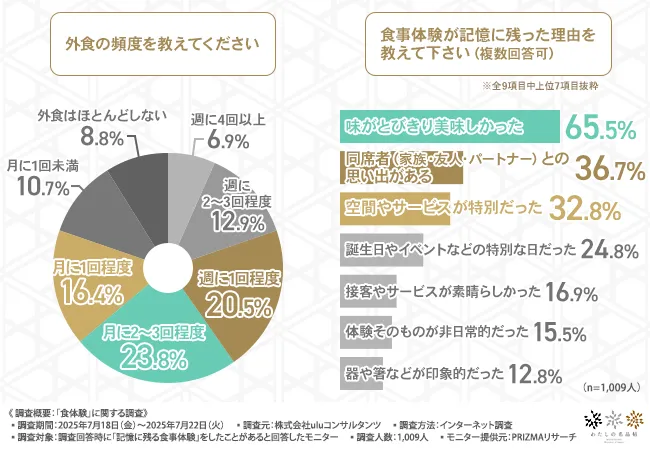
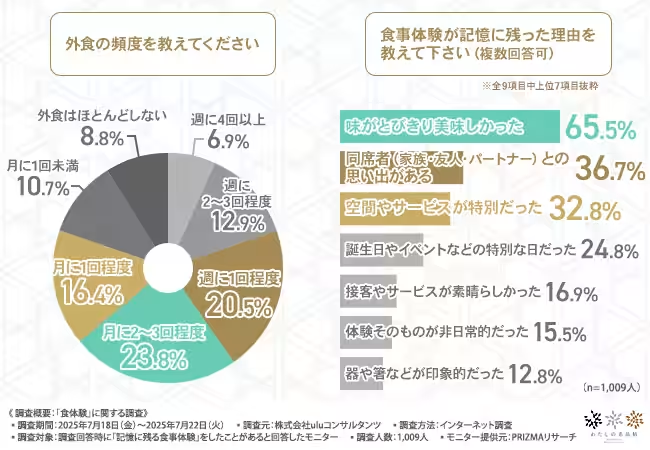
The survey, conducted between July 18 and 22, 2025, engaged 1,009 participants to explore their relations with food experiences. When asked about their dining frequency, the most common response (23.8%) was dining out about two to three times a month, with nearly 40% dining out once a week or more. This illustrates that many individuals have made dining out a central part of their lifestyle.
Criteria for Memorable Dining Experiences
The survey sought to understand what makes certain dining experiences unforgettable. The overwhelming majority (65.5%) cited the quality of the food as a key factor, while shared memories with companions (36.7%) and the ambiance of the venue (32.8%) also featured prominently. This reveals that taste alone is not the sole determinant of a meaningful experience; the context and emotional connections significantly enhance the memory.
The Role of Tangible Items in Food Experiences
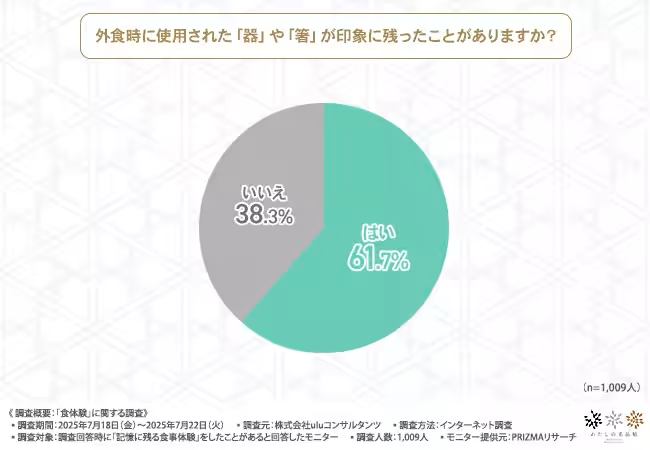
Interestingly, when asked if specific items used during dining left lasting impressions, around 61.7% reported that they had strong memories tied to utensils or tableware. This highlights the impact of not only the food but also the tactile and aesthetic qualities of the dining items. Particularly in a restaurant setting, the materials and designs of dishes can enhance the overall dining experience.
Preserving Memories: The Quest for Tangibility
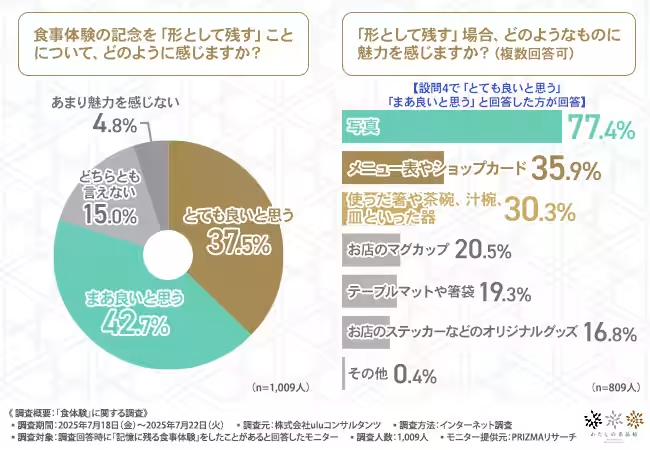
When inquiring if they found value in physically memorializing their food experiences, about 80% of respondents affirmed that it was good or very good to do so. People showed a desire to record, share, and recreate memorable moments, emphasizing the perceived value of tangible keepsakes beyond mere documentation.
Instruments of Memory: What to Preserve?
Among those who supported the notion of preserving experiences, 77.4% favored taking photos, with other options like menus, shop cards, and even tableware receiving attention (35.9% and 30.3% respectively). This suggests a strong inclination towards items that trigger memories, with realistic objects offering a multi-sensory connection to past experiences.
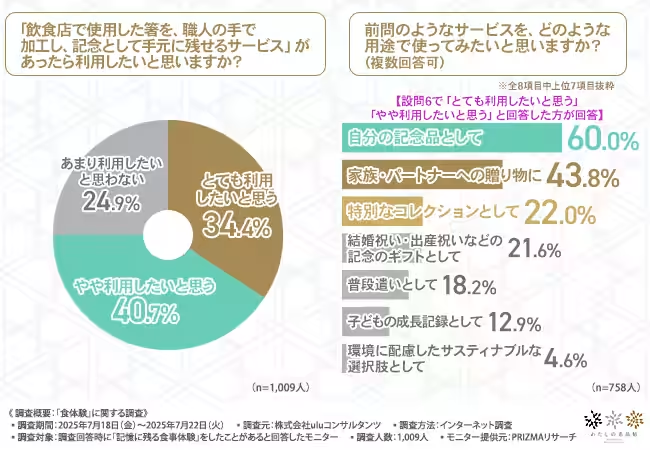
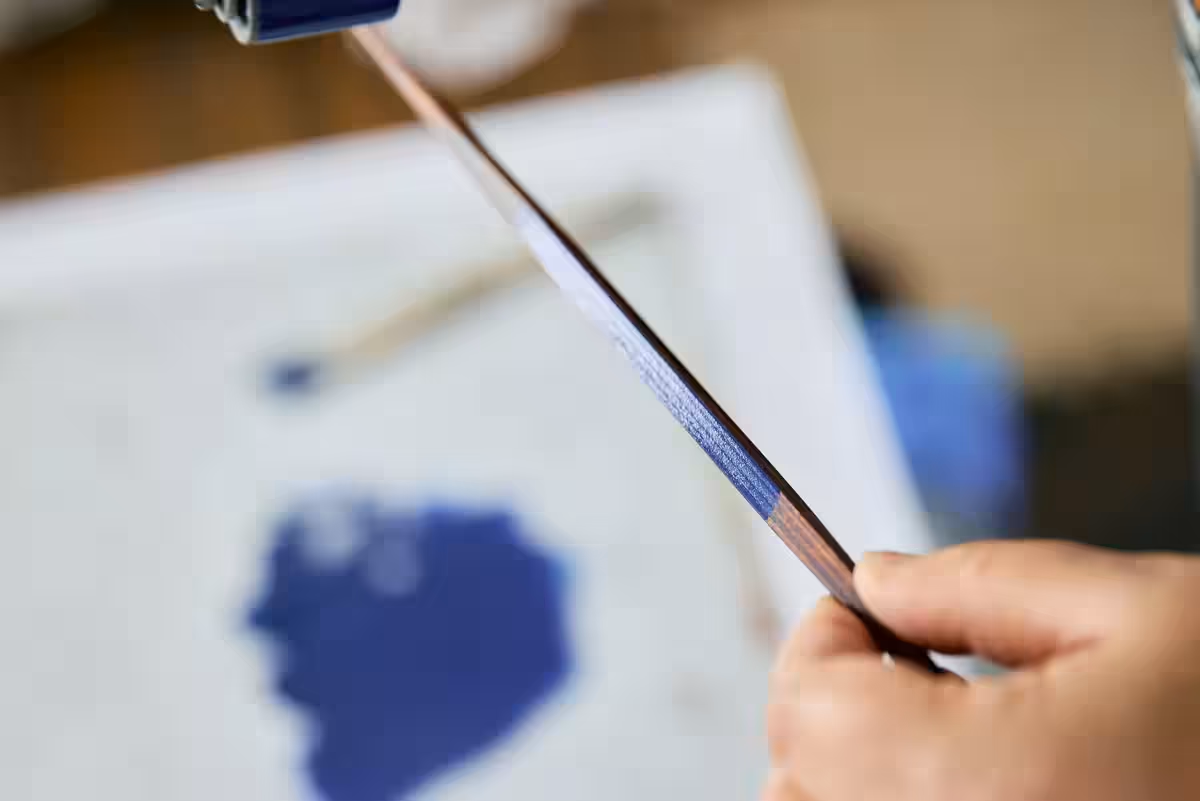
A fascinating insight emerged regarding the desire to preserve chopsticks used at restaurants. Approximately 75% of participants expressed interest in a service that would allow them to have these items artistically processed and kept as souvenirs, indicating a significant market for meaningful, handcrafted mementos.
The Emotional Value of Keepsakes
When exploring potential usage of such preserved items, the leading response (60%) was a desire for personal keepsakes, followed by gifts for family or partners (43.8%). This dual usage shows a strong inclination towards reflecting personal memories while also wanting to share experiences with loved ones.
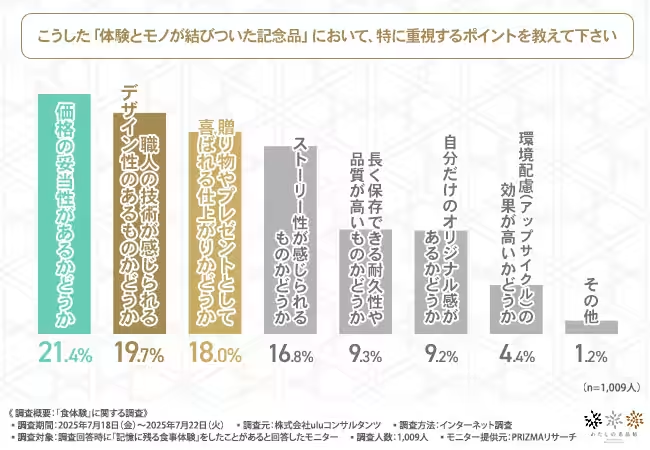
Participants also revealed what they value most in memorable keepsakes: appropriate pricing (21.4%) topped the list, followed by the perceived craftsmanship (19.7%) and overall appeal as a gift (18.0%). This indicates that while cost is crucial, emotional value, including storytelling and originality, also plays a significant role in consumer choices.
Capturing Experiences: Innovative Approaches
Some participants offered innovative suggestions about memorializing experiences, noting that they would appreciate sets that include photos with frames (30% of respondents), or new copies of the dishes they used during meals. Personalization, such as including dates or names, adds to the experience and enhances memory retention.
Real-Life Treasures
Participants shared memorable keepsakes they received, such as meal-related photos and personalized chopsticks, emphasizing the blend of utility and sentiment. These items not only serve practical purposes but also evoke strong memories tied to specific experiences.
Conclusion: The Value of Preserved Experiences
The findings reveal a significant cultural shift towards valuing food experiences beyond their transient nature. While many dine out several times a month, common elements of unforgettable experiences revolve around taste, companionship, and the ambiance. Furthermore, the potential to preserve these moments through tangible means indicates a deeper longing to connect with memories meaningfully.
Through the TSUGITE Project, uLu Consultants is leading an initiative that resonates with consumer values. By blending food and craft to provide sustainable experiences, the project is set to address the challenges of contemporary consumer behavior while creating a meaningful impact on future dining experiences.

Topics Other)
【About Using Articles】
You can freely use the title and article content by linking to the page where the article is posted.
※ Images cannot be used.
【About Links】
Links are free to use.