



Establishment of the Japan-New Zealand Hydrogen Corridor Consortium for Green Hydrogen Initiatives
Formation of the Japan-New Zealand Hydrogen Corridor
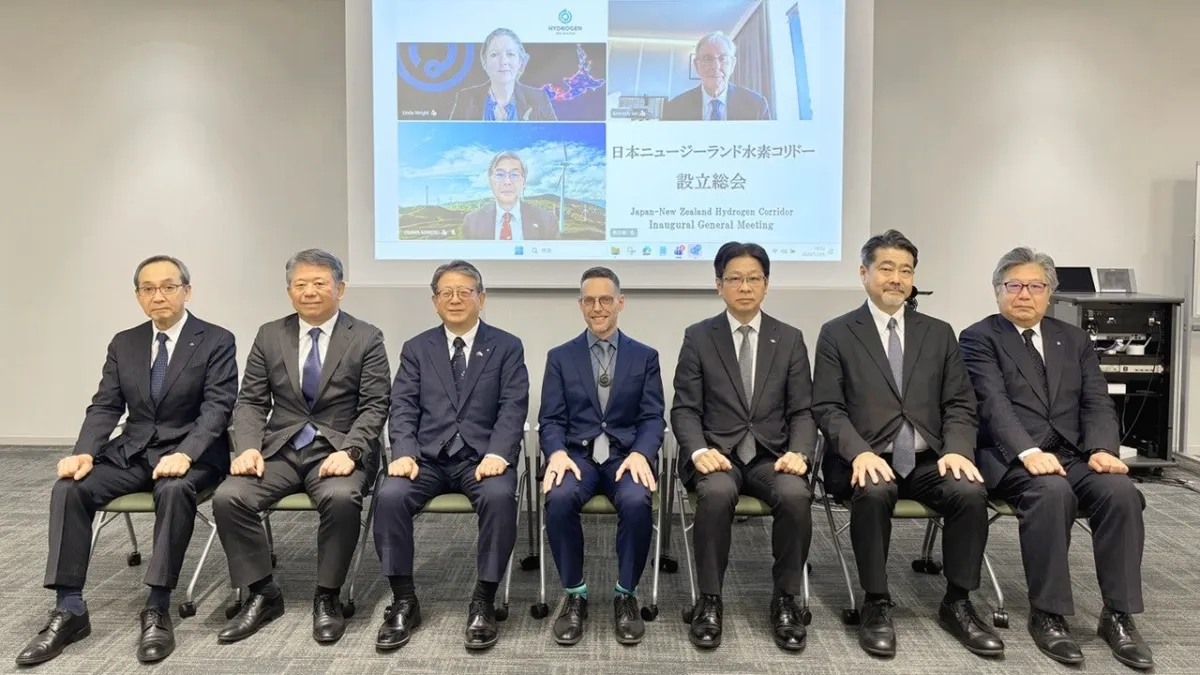
On March 5, a consortium named "Japan-New Zealand Hydrogen Corridor" was established by four prominent companies: Mitsui O.S.K. Lines, Obayashi Corporation, Kawasaki Heavy Industries, and Chiyoda Corporation. Headquartered in Tokyo, these firms have come together to explore the commercialization of green hydrogen production in New Zealand and its subsequent export to Japan.
Hydrogen is recognized as a clean energy source that emits no CO2 during combustion, making it particularly beneficial in sectors where reducing greenhouse gas emissions is challenging, such as steel and chemicals. Additionally, it holds promise for use in mixed combustion in thermal power generation. However, Japan's energy self-sufficiency rate is notably low, and the proportion of renewable energy within that is also minimal, indicating that it will be challenging for Japan to meet future large-scale green hydrogen demands solely from domestic sources.
New Zealand, on the other hand, is rich in renewable energy sources required for green hydrogen production, including geothermal and hydroelectric power. The New Zealand government is actively promoting the development of the hydrogen industry, positioning the country as a potential major producer and supplier of green hydrogen in the Asia-Pacific region.
Importing green hydrogen from New Zealand, a country with stable diplomatic and trading relations with Japan, is expected to significantly contribute to Japan's decarbonization goals and energy security under stable international relations.
The Japan-New Zealand Hydrogen Corridor aims to build a hydrogen supply chain starting from New Zealand and facilitate the export of green hydrogen to Japan, with studies set to begin in fiscal 2026, targeting the start of imports and exports in the early 2030s. The goal is for New Zealand to emerge as a key supplier of green hydrogen for Japan, thus aiding both Japan's carbon neutrality aspirations and creating a new export industry for New Zealand.
Key Roles in the Consortium
The consortium is structured with a leadership team including:
- - Chairman: Kenichi Ando, Executive Officer and Head of the Green Energy Division at Obayashi Corporation.
- - Vice Chairmen: Motohiko Nishimura from Kawasaki Heavy Industries and Hirofumi Kuwada from Mitsui O.S.K. Lines.
- - Director: Toshiyuki Ito from Chiyoda Corporation.
The establishment meeting took place at the Tokyo Chamber of Commerce and Industry, featuring various dignitaries such as Linda Wright, Chief Executive of the New Zealand Hydrogen Council, Ian Kennedy, Chairman of the Japan-New Zealand Economic Committee, and Japanese Ambassador to New Zealand, Makoto Oosawa.
Future Outlook
According to data from 2023, Japan's energy self-sufficiency stands at approximately 15.3%, with renewable energy contributing around 22.9% to total electricity generation. In contrast, as of 2024, New Zealand is expected to achieve over 45.5% of its primary energy supply from renewable sources, with hydro, geothermal, and wind energy accounting for about 85.5% of electricity generation.
Furthermore, New Zealand's Hydrogen Action Plan, which was unveiled in November 2024, aims to lower regulatory barriers and improve the investment environment for the private sector to expand the low-emission hydrogen market.
As the initiative progresses, ongoing collaboration among the members of the Japan-New Zealand Hydrogen Corridor will play a crucial role in establishing reliable green hydrogen production and supply chains that benefit both nations.
Topics Other)

【About Using Articles】
You can freely use the title and article content by linking to the page where the article is posted.
※ Images cannot be used.
【About Links】
Links are free to use.