



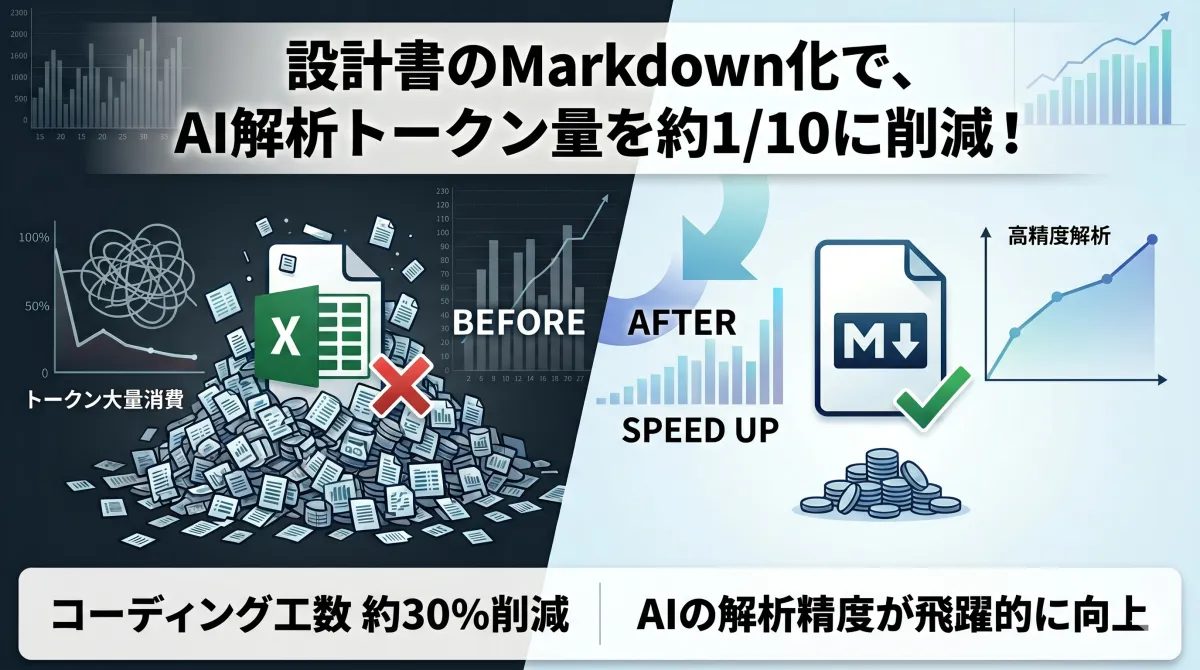
Breaking Through the 'Excel Barrier': OMN Embraces Markdown for AI Integration
Breaking the Excel Barrier: A New Era for OMN
In a surprising move towards greater efficiency in software development, OMN Network Co., Ltd., headquartered in Niigata, Japan, has taken steps to overcome traditional practices that have hindered the effective utilization of AI—specifically, the usage of Excel for documentation. By transitioning their design documentation to Markdown format, OMN aims to facilitate faster coding and smoother knowledge sharing among teams, laying the groundwork for a more integrated approach to AI collaboration.
Optimizing Documentation Formats
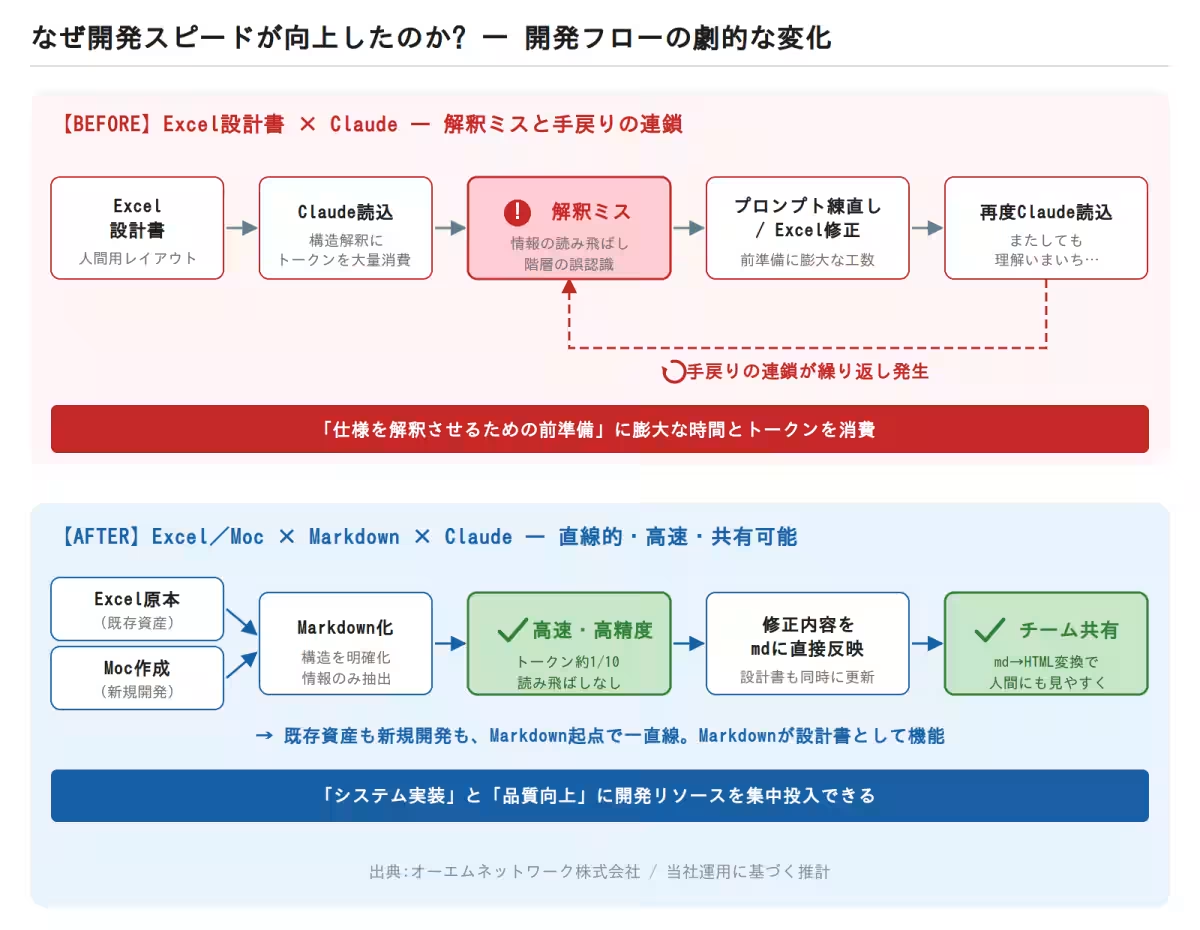
The digital transformation journey at OMN began with the realization that there was significant room for improvement in the way documents were created and processed. The integration of the AI tool 'Claude Code' marked the initial step in enhancing development efficiency and product quality. Since this tool's implementation, code generation and specifications confirmation workflows have been significantly expedited. However, as the team dove deeper into leveraging AI, challenges arose—most notably, instances where the AI misinterpreted the information in the specifications. This largely stemmed from the complexities inherent in Excel-based documents, leading to heightened frustration.
During efforts to refine the directives issued to the AI, the team recognized that over-complicating prompts only escalated operational difficulties, creating a cycle of inefficiency that was counterproductive. This led to a period of introspection within the team, as they grappled with a nagging question: Why are we still using Excel for our documentation?
Rethinking the Status Quo
This pivotal question catalyzed a series of discussions with the in-house AI specialists. Whereas the development team initially sought a technical workaround for improved Excel interpretation, they were confronted with a fundamental challenge to their way of thinking. Instead of forcing AI to grapple with a human-centric framework, it became apparent that the most effective documents should align with the AI's strengths: clear structural formats over conventional layouts.
This moment of clarity signified the launch of OMN’s new endeavor in digital documentation transformation—an awakening that drove them to investigate Markdown as a solution that could assuage their previous challenges.
Transitioning to Markdown
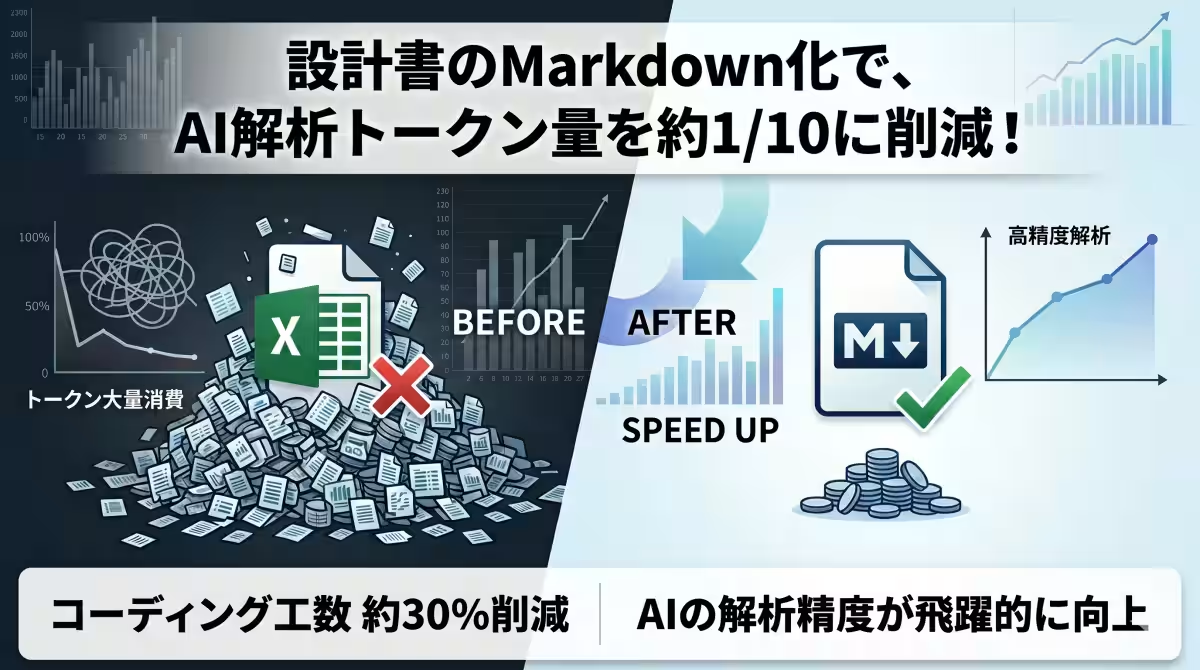
Following methodical application testing, OMN found that Markdown provided the most straightforward and efficient format for AI analysis. Unlike Excel files, which bulky metadata inhibits processing speed and increases costs in token consumption, Markdown offers a simplistic and concise hierarchy. Consequently, OMN has estimated that the token consumption for processing documents in Markdown could be about one-tenth compared to their Excel counterparts.
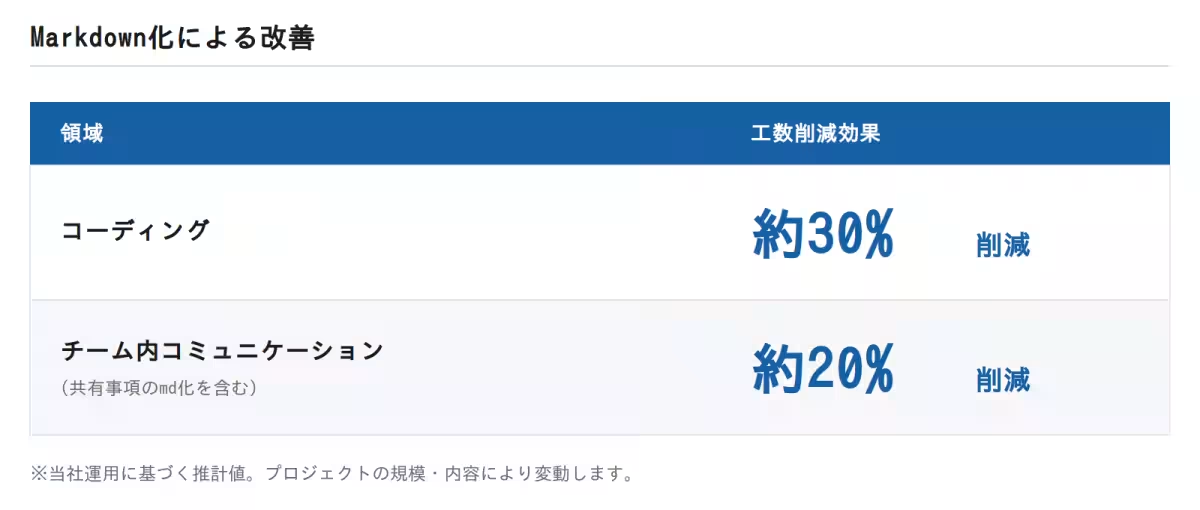
As a result, the interactions between engineers and AI have drastically improved—engineers are now able to focus on delivering high-quality implementations without the frustration of revisiting and amending prompts. Instead of spending excessive time interpreting a specification, they can channel all their skills into system implementation and enhancement. According to engineers involved, this transition has led to significantly enhanced speeds in response to specification changes as well.
Enriching Knowledge Sharing
Markdown's adoption extends beyond formal specifications; it encompasses technical notes and previously dispersed knowledge bases. This comprehensive shift has streamlined contextual sharing with AI and reduced discrepancies among engineers. By structuring information to suit AI capabilities, OMN now considers its collective knowledge a powerful asset in executing digital transformations and enhancing AI proficiency.
One engineer noted, “The shift from Excel meant that we could pass our intents directly to the AI. Now, instead of spending endless hours preparing to elucidate specifications, we are able to focus on actual development.”
Currently, three engineers are actively utilizing Claude Code within the company. Not only have they embraced Markdown for formal documentation, but they are also applying this standard to everyday technical notes and shared team resources. Plans are underway to widen the adoption of Markdown progressively across the organization as the utilization of Claude Code expands.
Balancing Structure and Layout
Nevertheless, confining all documentation within Markdown posed some practical challenges. While Markdown excels at data structuring, accessible visualization for human readers cannot be overlooked. OMN’s development team thus established a process wherein Markdown serves as the foundational format but can be converted to user-friendly HTML layouts instantly through AI tools. This ensures the structure benefits AI capabilities while humans engage with intuitive layouts designed to streamline comprehension.
Redefining Documents
Ultimately, OMN's endeavor to redefine documentation is about more than just changing file formats; it is the establishment of a common language for collaboration with AI in the pursuit of innovation. Optimizing the shape of information to suit AI has empowered engineers to concentrate more intensely on crucial aspects of design and quality. This knowledge is beginning to circulate as a corporate standard, accelerating the organization’s digital transformation trajectory.
As an organization, OMN remains committed to integrating advanced technology while drawing on the ingenuity of their team to drive optimal solutions that deliver swift and sustainable value to clients.



Topics Business Technology)

【About Using Articles】
You can freely use the title and article content by linking to the page where the article is posted.
※ Images cannot be used.
【About Links】
Links are free to use.