



Major Companies Embrace Dedicated Budget for Employee Retention Strategies
Emphasizing Employee Retention
In an increasingly competitive labor market, retaining talent has become a pressing concern for major corporations. A leading survey conducted by IKUSA, a Tokyo-based company specializing in experiential events, has unveiled compelling insights into corporate attitudes towards employee retention budgets. The survey involved 200 respondents from firms with over 1,000 employees and annual revenues exceeding 10 billion yen, providing a snapshot of the trends in employee retention strategies.
Key Findings from the Survey
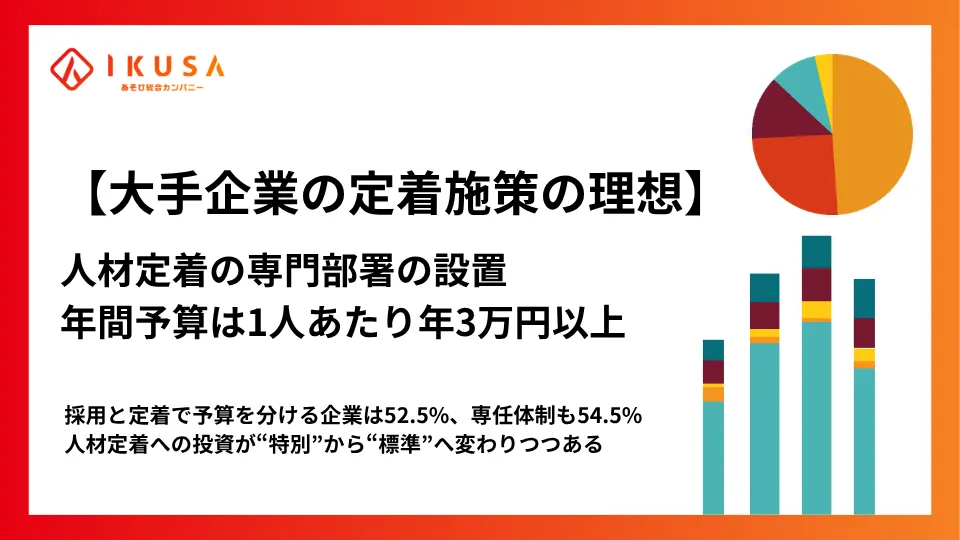
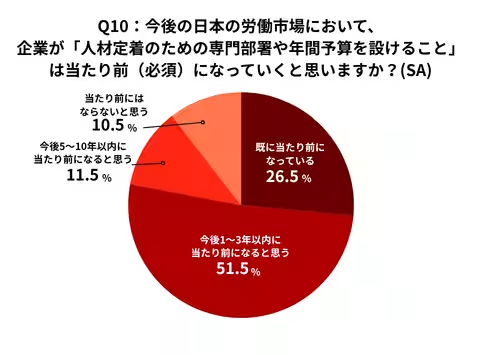
1. Expectation of Specialized Roles: An impressive 89.5% of participants believe that having a dedicated department and budget for employee retention will soon become the norm. Of these, 26.5% already consider it standard practice, while 51.5% anticipate this transition within the next one to three years.
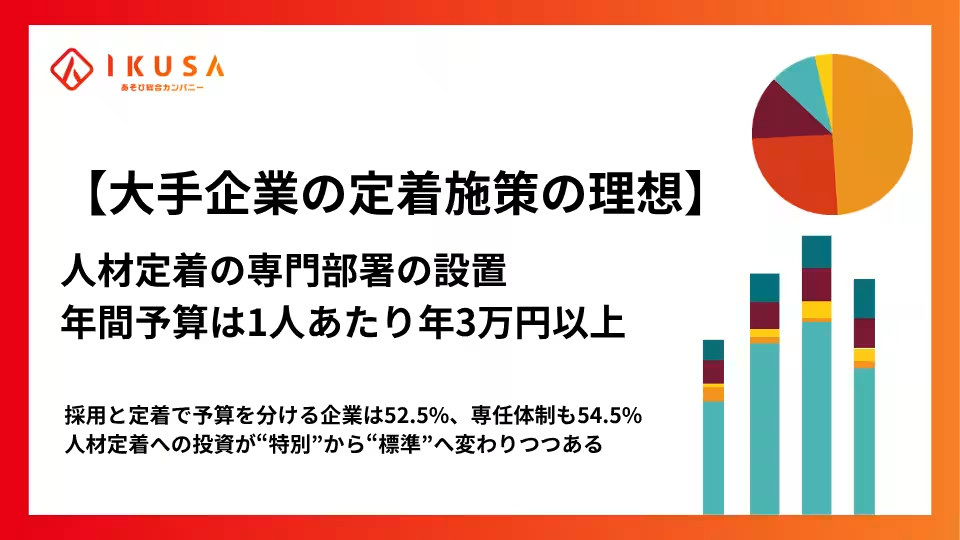
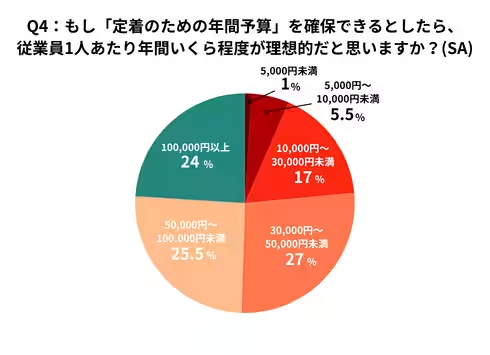
2. Ideal Budget Allocation: A significant 76.5% of respondents indicated that an ideal budget for employee retention should be over 30,000 yen per person annually. This finding highlights a consensus on the need to allocate adequate resources to foster employee loyalty.
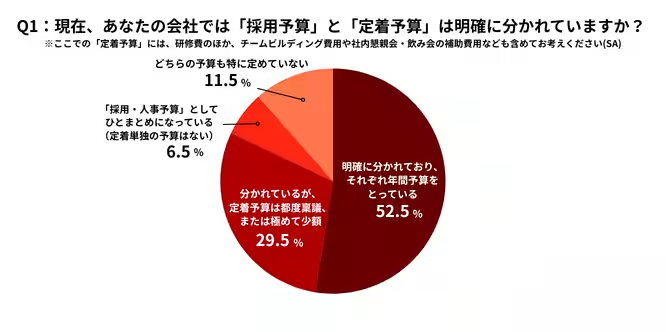
3. Budget Distinction: More than half (52.5%) of companies surveyed clearly separate their hiring budgets from their retention budgets, ensuring each has its dedicated allocation. Furthermore, 54.5% have established specialized structures to improve retention and engagement, comprising dedicated teams or personnel.
The Urgent Need for Specialized Departments
The survey underscores a shift in corporate culture towards viewing employee retention investment as essential rather than optional. As hiring challenges persist, developing an employee-centric work environment is imperative. Organizations that take proactive steps toward building specialized retention departments not only benefit from improved employee morale but also from higher engagement levels.
Budgets Must Evolve
Despite the optimistic outlook regarding retention plans, the realities of budget allocation show a stark divide within the respondents. While over half have begun laying the groundwork for dedicated budgets and departments, many companies continue to lack a structured approach to these investments. This gap indicates the need for more businesses to recognize the urgency of creating systems that support employee retention.
Starting Small: Building Relationships
The path to improving employee retention begins with fostering relationships among team members. Small initiatives that promote collaboration across various departments can lay the foundation for stronger inter-employee engagement. IKUSA has successfully implemented numerous creative team-building activities—ranging from sword fighting battles to large-scale customized events—that facilitate interaction and teamwork.
Recent feedback from participants in IKUSA’s events shows promising trends: 88.8% felt more positive about their workplace following participation.
Conclusion
As the workplace landscape continues to evolve, the importance of employee retention strategies cannot be overstated. Companies must not only commit budgetary resources but also cultivate environments where employees feel valued and engaged. For organizations looking to kickstart their retention strategies, IKUSA offers a wealth of options tailored to meet diverse needs. Whether starting with small-scale events or larger endeavors, the focus should remain on enhancing workplace relationships as a critical step towards fostering a culture of retention.
About IKUSA
IKUSA, established in May 2012, operates under the mission of identifying challenges and resolving them creatively through play. Specializing in experiential events, IKUSA has assisted over 3,000 companies and 560,000 participants through activities designed to enhance teamwork and address societal issues. More information about IKUSA’s services can be found at IKUSA.jp.
Topics People & Culture)
【About Using Articles】
You can freely use the title and article content by linking to the page where the article is posted.
※ Images cannot be used.
【About Links】
Links are free to use.