



Okayama University Seeks Approval for Innovative Cancer Treatment with Oncolytic Virus Therapy
Okayama University Pursues Approval of Oncolytic Virus Therapy
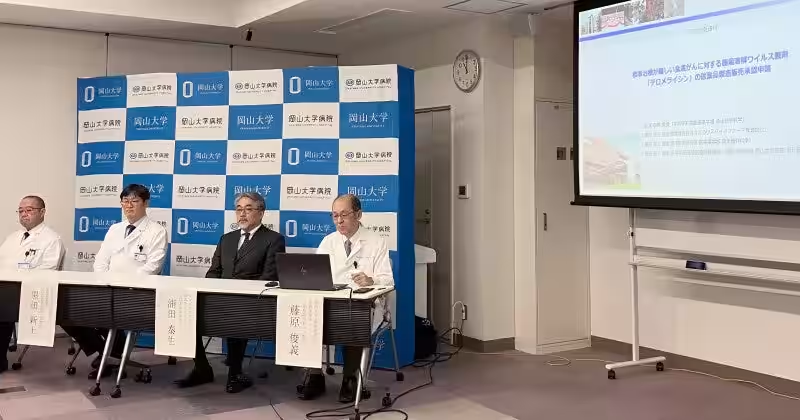
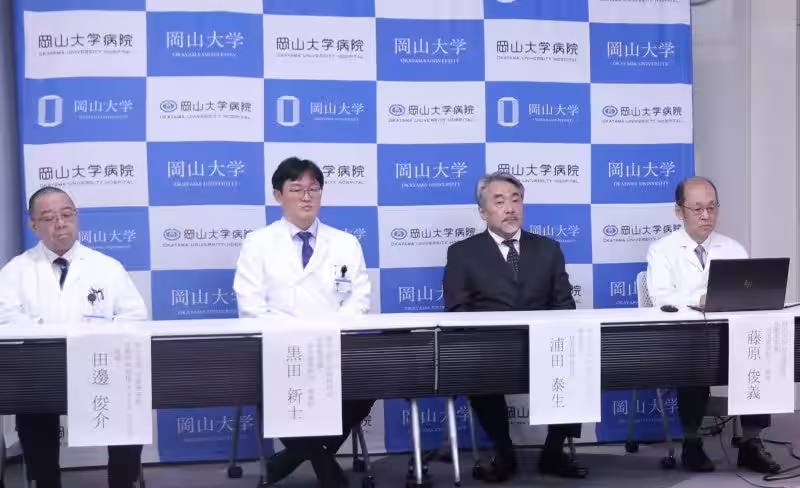
In a significant development for cancer treatment, Okayama University has submitted an application to the Japanese Ministry of Health for the manufacturing and sale of Telomerase (OBP-301), an innovative oncolytic virus therapeutic specifically designed to combat esophageal cancer. This submission was made by Oncolys Biopharma, a venture startup stemming from the university, marking a pivotal step in the therapeutic landscape of Japan where esophageal cancer prevalence is notably high.
Developed by Professor Toshiyoshi Fujiwara and Associate Professor Shinji Kuroda, Telomerase is engineered to selectively replicate within cancer cells, initiating cell death while sparing normal tissues. This selectivity not only increases the safety of the treatment but also addresses the urgent need for effective alternatives in cases where standard therapies fall short.
Clinical Trials and Advancement
The clinical journey for Telomerase started back in 2006, under the auspices of the U.S. FDA, which led to a successful Phase I clinical trial aimed at confirming safety in the United States. The research unveiled Telomerase's synergistic effects when combined with radiation therapy, presenting an opportunity to amplify the efficacy of traditional cancer treatments. In subsequent studies from 2013 onwards, Telomerase was used in conjunction with radiation therapy for patients unable to receive standard surgical or chemotherapeutic interventions.
A broader Phase I trial was synergistically conducted starting in 2017 between Okayama University and the National Cancer Center East Hospital, which laid the groundwork for subsequent multi-institutional trials. By 2020, a national cooperative Phase II trial commenced, involving 17 high-volume centers across Japan.
Telomerase's significance was recognized by the Pharmaceuticals and Medical Devices Agency (PMDA) in 2019, classifying it under the
Topics Other)
【About Using Articles】
You can freely use the title and article content by linking to the page where the article is posted.
※ Images cannot be used.
【About Links】
Links are free to use.