



Can Accurate Information Increase Support for Gender Inequality Policies? A Comparative Study between Japan and South Korea
Understanding the Impact of Accurate Information on Gender Policy Support
This article delves into an intriguing question: can providing accurate information about gender inequality, such as wage disparities, influence public opinion and policy support in different countries? Despite long-standing assumptions that correcting misconceptions would effectively change attitudes, this recent study has brought fresh insights into the dynamics at play, particularly in Japan and South Korea.
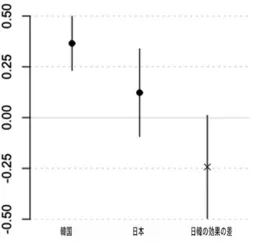
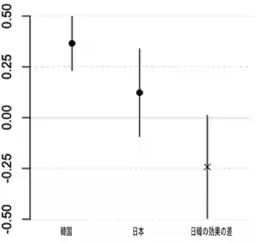
Conducted by a team of researchers from Waseda University, Sungkyunkwan University, Ewha Womans University, and Gakushuin University, the study employed survey experiments to compare responses from voters in both countries. Participants were presented with accurate data on gender wage gaps, challenging their preconceived notions. The findings revealed a noticeable disparity: while South Korean respondents exhibited increased support for gender equality policies following the provision of accurate information, Japanese respondents showed minimal change in their policy support levels.
Key Findings
The research highlighted that while factual information can correct misconceptions, it does not automatically lead to changes in attitudes or behaviors. In South Korea, the respondents' alignment with gender equality policies grew significantly upon receiving accurate information regarding wage disparities. In stark contrast, the increase in such support was limited in Japan, indicating that simple data presentation might not suffice to elicit changes in public consciousness.
Furthermore, the study emphasizes the importance of societal context. In South Korea, gender inequality is a prominent political issue recognized by the public and frequently debated, which may make citizens more responsive to new information. Conversely, in Japan, a relatively lesser sense of urgency regarding gender issues appears to dampen the effectiveness of information correction efforts.
The Importance of Context
The research draws attention to crucial aspects of how information is perceived based on cultural and political climates. For instance, South Korea’s ongoing discussion surrounding gender equality, especially among younger citizens, influences their receptiveness towards policy changes. In contrast, Japanese participants, who often underestimate the severity of wage gaps, displayed limited willingness to alter their stance despite being presented with factual corrections. This calls into question the one-size-fits-all assumption that just sharing data will effect change.
Methodology
The survey experiment involved approximately 3,500 participants from each country and included a control group that did not receive the information, allowing for a clear comparison of reactions. The study serves not only to highlight differences between the two nations but also underscores the complexity of changing public opinion through information dissemination. By utilizing the same experimental design for both Japan and Korea, the researchers are able to isolate the effects of contextual factors on policy support.
Implications and Future Research
The findings from this research hold significant implications for policymakers and advocates for gender equality. Simply presenting numerical data does not guarantee increased understanding or a shift in attitudes towards gender disparity issues. Instead, this study suggests that the effectiveness of information dissemination must align with the current societal understanding and political climate surrounding gender issues in each region.
Additionally, the study points to a need for further research into how various forms of information – whether through media, political discourse, or social movements – can effectively alter public perceptions. Evaluating the longitudinal effects of information over time and its real-world application during electoral processes could provide further clarity on the dynamics of public opinion.
The outcomes of this study contribute significantly to broader discussions about public perception, gender inequality, and informed policy-making across different societal frameworks. The findings invite international comparisons and could guide future strategies for addressing gender disparities in various contexts. By understanding how accurate information is processed and the role of social discourse, future research can illuminate the pathways to effective engagement with gender policies.
Conclusion
In conclusion, the research underscores the complexity involved in altering public perspectives through information alone, particularly within different sociopolitical frameworks. Recognizing the varied receptiveness to gender-related information in Japan and South Korea opens new avenues for discussions about the efficacy of gender inequality policies and the necessary contexts for public engagement. The future of gender equality advocacy will likely depend on a nuanced understanding of how information is received and acted upon within varying cultural landscapes.
Topics People & Culture)
【About Using Articles】
You can freely use the title and article content by linking to the page where the article is posted.
※ Images cannot be used.
【About Links】
Links are free to use.