



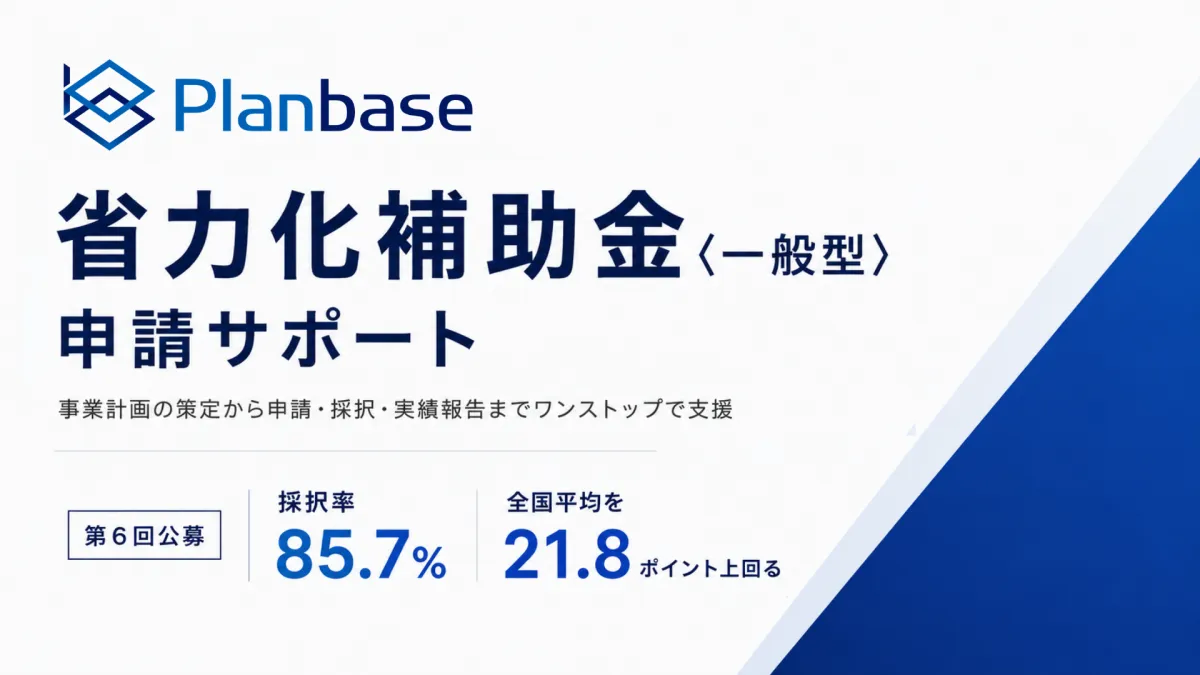
Planbase Achieves Exceptional Subsidy Acceptance Rate of 85.7% for SMEs
Achieving an 85.7% Acceptance Rate in Labor-Saving Subsidies
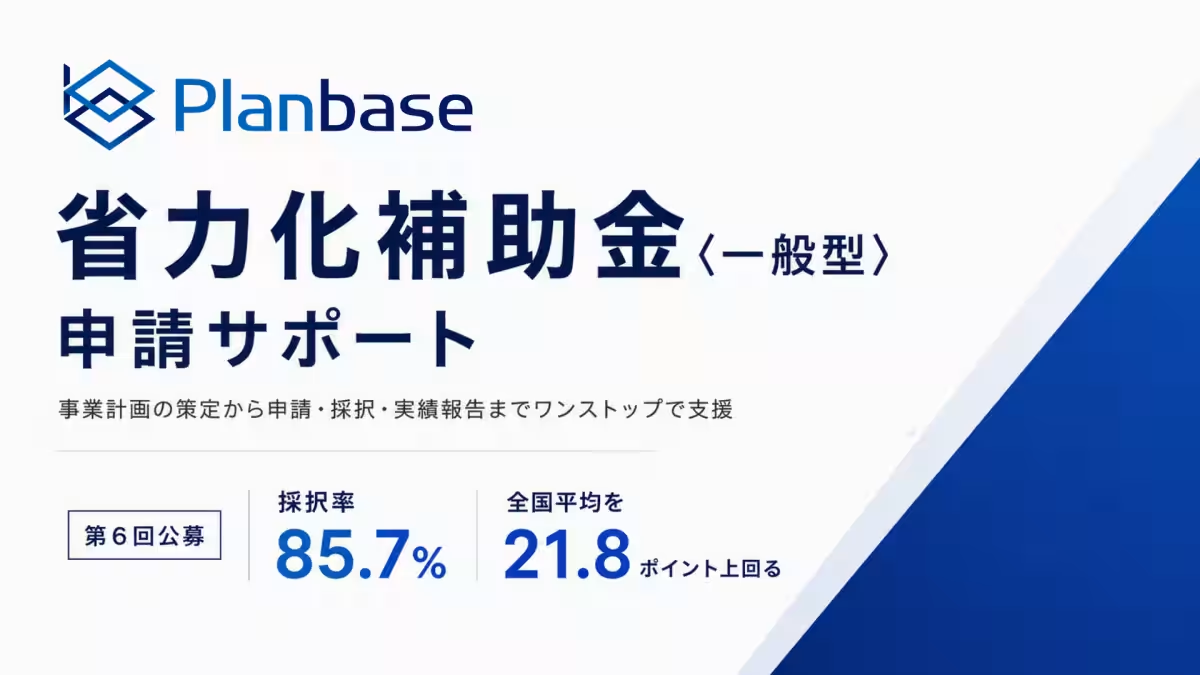
In an exciting development for small and medium enterprises (SMEs), Planbase, a consulting firm based in Chiyoda, Tokyo, has announced remarkable results from the 6th public offering of the Labor-Saving Investment Subsidy (General Type). The acceptance rate for subsidy applications that Planbase supported reached an impressive 85.7%, significantly outperforming the national average of 63.9%, by a margin of 21.8 percentage points. This shows how effective Planbase’s application support can be for SMEs facing labor shortages and challenges in improving productivity.
The Importance of Tailored Application Support
The Labor-Saving Investment Subsidy (General Type) is an initiative designed to assist SMEs in automating and enhancing their business processes. It does not merely focus on the act of installing new equipment, but rather emphasizes convincingly demonstrating how these investments will solve labor shortages and improve overall productivity. This requires a deep understanding of each company's unique operational challenges and workflows.
At Planbase, a team of knowledgeable consultants conducts thorough interviews with business owners to identify their operational hurdles and to clarify how the changes brought about by new processes will affect their work hours and staff allocations. They also ensure that the resulting business plans showcase the connection between labor-saving effects and business growth, crafting compelling narratives for approval.
To ensure the highest standards, each application goes through an internal review process that evaluates it from multiple perspectives. This guarantees consistency with permitted regulations, logical coherence of the entire application, and the validity of numerical claims. It is this meticulous approach to supporting businesses—from initial interviews to detailed planning and rigorous review—that has evidently led to Planbase’s significant success in subsidy approvals and its greater acceptance rate.
Notable Examples of Successful Subsidy Applications
Several successful projects backed by Planbase can be highlighted as exemplary cases of how effectiveness has been achieved in various sectors:
1. Manufacturing Sector: Automation in Welding Processes
The introduction of welding robots to automate jobs in factories was approved as a project aimed at enhancing production capacity and increasing the ability to produce high-value-added products.
2. Manufacturing Sector: Automation of Cutting Processes
This initiative involved the implementation of machining centers equipped with pallet changers to streamline setup changes and work detachment, thereby expanding production capacity without the need for additional staffing.
3. Dental Practices: Digitization of Treatments
Utilizing intraoral scanners and 3D printers, dentists recorded their activities related to elective treatments, aiming to channel freed resources towards enhancing revenue generation by expanding these services.
What is the Labor-Saving Investment Subsidy?
The Labor-Saving Investment Subsidy (General Type) is a grant program tied to Japan's Ministry of Economy, Trade, and Industry, aimed at supporting SMEs to automate and enhance their operational processes. Eligible businesses can install customized equipment and systems tailored to their specific needs, with the maximum subsidy cap set at 100 million yen. Support rates vary for SMEs, potentially reaching 2/3 under certain conditions.
Planbase offers comprehensive support that goes beyond just grant application filing. From confirming eligibility to developing business plans, submitting applications, and managing post-approval documentation, Planbase ensures continuous guidance tailored to each enterprise's unique needs.
FAQs about the Labor-Saving Subsidy
- - What was the acceptance rate for the latest round of applications?
- - When is the next application deadline?
- - What is the maximum subsidy amount and rate?
- - What is required for the application?
Preparing for the Next Round of Applications
To improve the chances of receiving a subsidy, Planbase invites SMEs looking to invest in automation and streamlining their operations to reach out early. The preparations typically require about a month, and with the next application deadline approaching in mid-October 2026, timely consultation is recommended.
For more details on applying for the subsidy or to schedule a free consultation, visit Planbase's official site.
About Planbase
Founded by a group of specialists with extensive experience in consulting and subsidy management, Planbase has effectively supported over 1,500 SMEs, securing a total of over 20 billion yen in grants. Our team, including certified management consultants and administrative scriveners, addresses a wide range of management challenges faced by businesses today. We pride ourselves on our proactive approach partnered with personalized assistance, continuously striving to empower SMEs for sustainable growth and strategic advancement in the competitive landscape of the Japanese economy.

Topics Business Technology)
【About Using Articles】
You can freely use the title and article content by linking to the page where the article is posted.
※ Images cannot be used.
【About Links】
Links are free to use.