



James Chen's Vision on AI-Driven UBB for Inspiring Business Growth
Driving Business Growth Through AI-Enabled UBB
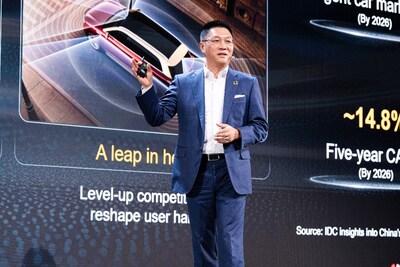
At the recent 11th Ultra-Broadband Forum (UBBF) 2025 held in Paris, industry leader James Chen, President of Huawei's Carrier Business, delivered a compelling keynote presentation focusing on new practices aimed at fostering growth in the era of AI-enabled ultra-broadband (UBB). Under the title Triple Leaps to AI UBB Inspiring New Business Growth, Chen discussed how telecommunications operators can strategically capitalize on advancements in artificial intelligence to unlock new business opportunities and revenue streams.
The Three Dimensions of Innovation
Chen outlined three critical areas of innovation—depth, breadth, and height—that can drive growth in AI UBB. By analyzing the successful practices of various operators, he provided actionable insights for companies looking to enhance their operational models and market offerings.
1. Jumping in Depth: From Bandwidth to Experience Monetization
Chen emphasized the necessity of transitioning from mere bandwidth monetization to experience-based monetization. By integrating AI capabilities into their networks, operators can proactively manage and improve application performance. A notable case he mentioned was a leading operator in Thailand that implemented Huawei's AI WAN solutions, resulting in enhanced application experiences for users in areas like AI cloud gaming and 4K live streaming. This strategic pivot enabled the operator to significantly boost its average revenue per user (ARPU).
2. Jumping in Breadth: Extending Reach into Digital Intelligence
With over 1 billion home gateways deployed globally, operators are uniquely positioned to transform into smart home service providers. Huawei has introduced the AI Homehub, facilitating the rollout of smart home services that, according to Chen, have already seen one operator increase its home services ARPU by 60%.
Moreover, in the small and medium-sized enterprise (SME) sector, the Fibre to the Office (FTTO) solutions can streamline service delivery, allowing operators to offer standardized digital services. In China, the three largest carriers have successfully deployed FTTO solutions, attracting more than 2 million users.
In larger enterprises, network operators are utilizing integrated Wi-Fi solutions for innovative services, such as fall detection systems in elder care and intelligent meeting room management. Chen highlighted an operator in the UAE that leveraged Huawei's AirEngine Wi-Fi 7 to offer Wi-Fi-as-a-Service, significantly reducing operational costs for users.
3. Jumping in Height: From Work Order to Intelligent Network Operations
Chen concluded his presentation by discussing the transformation of network operations from manual, work-order-driven processes to intelligent, automated systems. Huawei’s collaboration with MasOrange in Spain led to the establishment of Europe's first Level 4 autonomous IP network. Leveraging iMaster NCE, the operator successfully reduced mean time to repair (MTTR), thus enhancing customer satisfaction.
Looking Ahead: The Future of AI UBB
In closing, Chen expressed optimism about the future of AI UBB, stating that we are only at the beginning of what is possible. He urged operators and industry partners to continue collaborating in order to achieve sustained innovation. Huawei aims to empower operators to thrive in the AI era, focusing on experience monetization, establishing new growth trajectories, and optimizing operational expenditures (OPEX).
With these insights, it becomes evident that the telecommunications industry stands on the brink of a significant transformation powered by AI, promising to not only enhance user experiences but also to cultivate widespread business innovation and growth.
Topics Telecommunications)
【About Using Articles】
You can freely use the title and article content by linking to the page where the article is posted.
※ Images cannot be used.
【About Links】
Links are free to use.