



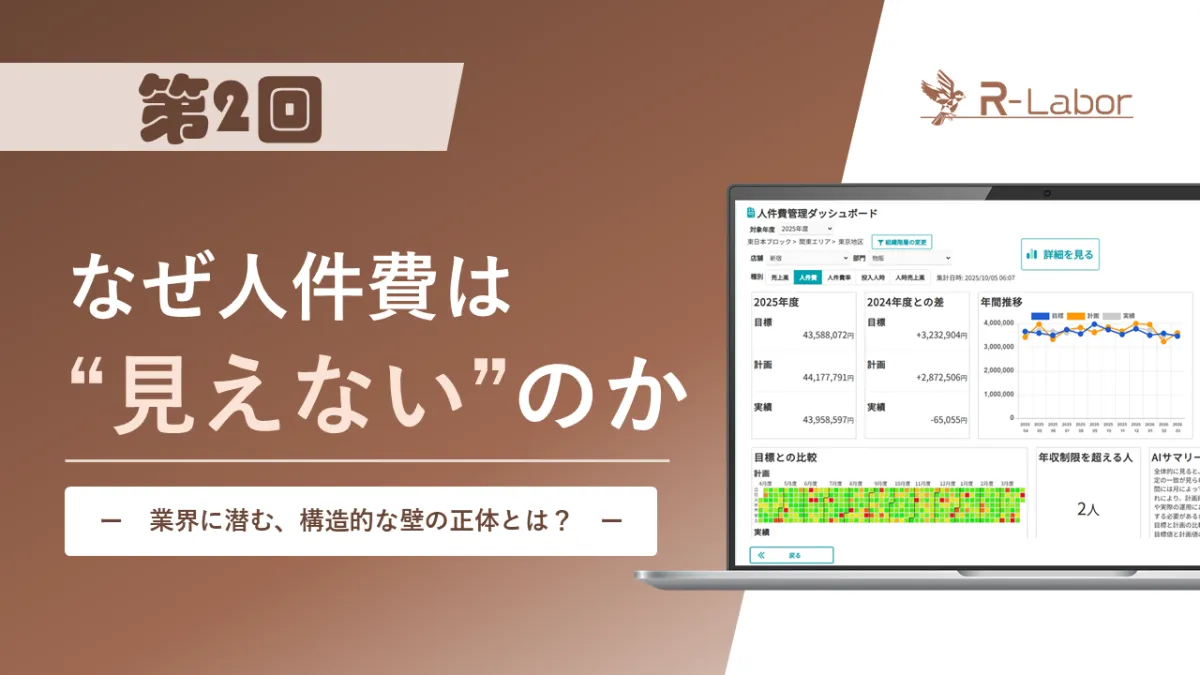
Uncovering the Hidden Costs: The Development Journey of R-Labor's Solutions
Unraveling the Challenges of Labor Costs in Retail and Service Industries
In the second installment of the R-Labor development story, we delve deeper into the reasons behind the invisible costs in the industry. Building on the first article's discussion of budget unpredictability in retail, this piece examines the unique structural hurdles faced by our development team.
The Information Time Lag
In our previous article, we identified the fundamental fear in retail and service environments: the inability to know expenditures until month-end. This certainly poses significant challenges and appears to stem from a critical issue: the industry's inherent information time lag. To understand why this lag occurs, our investigation led us to discover a structural dual barrier affecting the retail and service sectors—the first of which is fluidity.
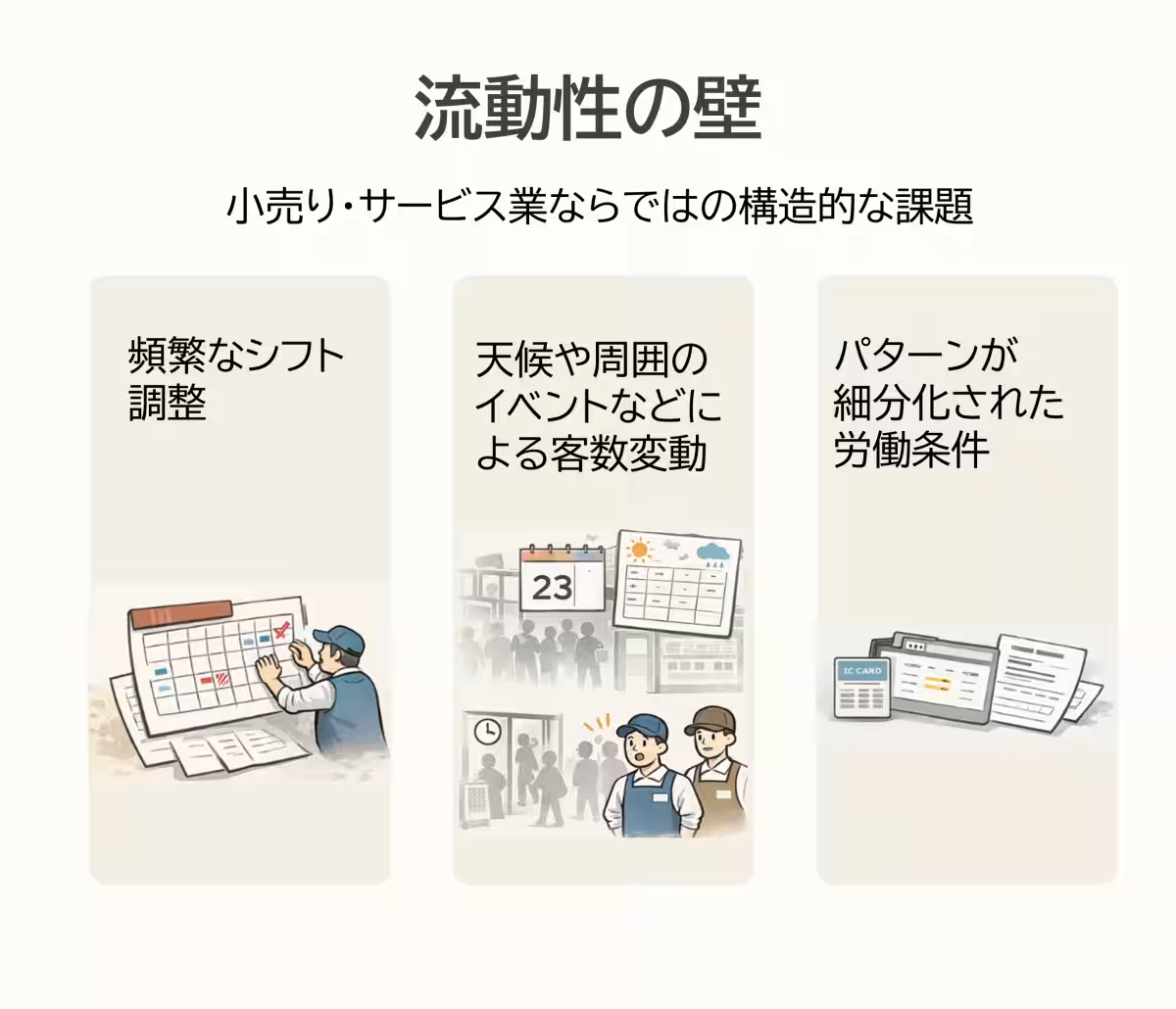
The First Barrier: Fluidity
The operational dynamics in retail and service sectors differ drastically from conventional office environments:
- - Long hours of operation with numerous employees necessitate frequent shift changes.
- - Customer numbers vary dramatically due to unpredictable factors like weather and events.
- - The multitude of employment types, each with their unique pay rates and working conditions, complicates things further.
These structural characteristics create constant fluctuations, making it nearly impossible to capture the current state of things using basic, manual methods.
The Second Barrier: Fragmented Information
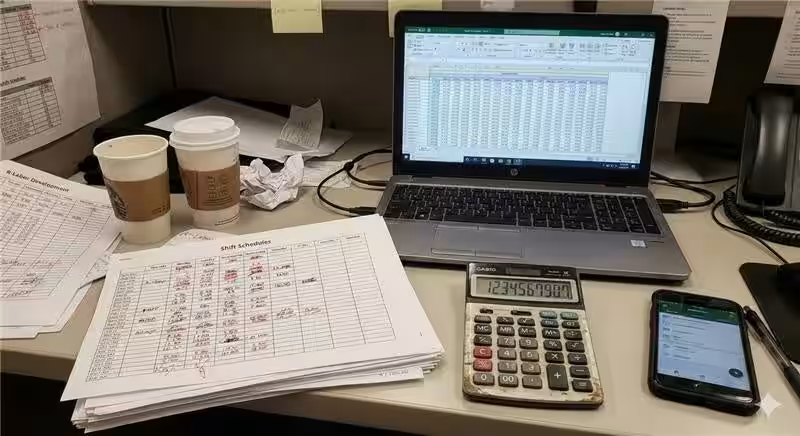
The second barrier is rooted in operational practices. We found that many companies kept their data related to shift management, attendance tracking, and payroll calculations separate. Oftentimes, data would be scattered across various platforms like Excel or handwritten notes, forcing employees to extract and compile data manually from different sources. This not only introduces delays but also increases the chances of errors, leading to significant time lags.
For instance:
- - While individual systems may provide functionality for shift management and payroll, budget tracking is still conducted through Excel, leading to fragmentation.
- - Accurate hourly rates exist only in payroll systems, which remain unseen by the workforce.
- - Without consolidated data, obtaining an overview relies on manual entry, which is both time-consuming and susceptible to mistakes.
Importantly, this information disconnection has made the time lag seem acceptable, trapping us in a cycle of delayed insights.
Differentiating What Can Be Changed
For our development team, a pivotal moment came with the realization that we could not alter the inherent fluidity of the industry. The business model—staffing stores in accordance with customer visits—cannot be transformed by a systems company. The struggle many workplaces face is due to their attempt to counteract this unchangeable industry trait with manual means like Excel.
Mistakes and delays are inevitable when solving complex puzzles by hand. So, what is the solution? The answer is straightforward: if industry characteristics cannot change, then we must adapt our systems to accommodate them. By automating the complex calculations and data integrations, we can free humans from tedious aggregation tasks. In doing so, we aim to achieve real-time visibility, even within the unique fluidity of the retail sector.
R-Labor's Solution: Real-Time Visibility through Systemization
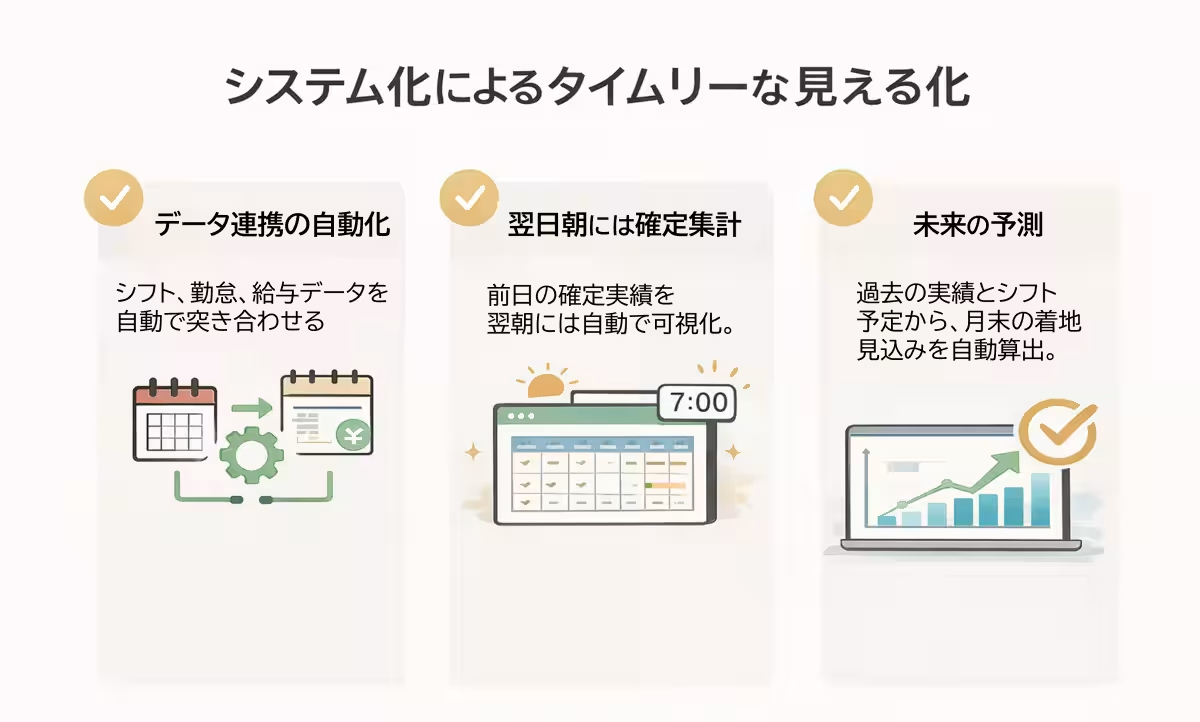
"Let the system handle the complexity"—this principle guided the design of R-Labor. By automating data integration and calculations, we strive to present users with current figures without delay.
- - Automated Data Integration: Shift, attendance, and payroll data are reconciled automatically.
- - Next-Day Reporting: Confirmed metrics from the previous day will be available the next morning.
- - Forecasting: Using historical data and scheduled shifts, we automatically calculate expected results for month-end.
Through systemization, we aim to resolve the time lag that has long plagued the industry. We are confident that this approach represents the essence of R-Labor’s value and is the only way to cut down on hidden costs.
Next Time: A User-friendly Approach to Understanding
While we’ve identified logical solutions, it’s crucial to ensure that even the most sophisticated system is user-friendly for busy staff members. In our next installment, we will discuss the design principles employed by the R-Labor team to enhance understanding and alleviate the burden of budget management.



Topics Business Technology)

【About Using Articles】
You can freely use the title and article content by linking to the page where the article is posted.
※ Images cannot be used.
【About Links】
Links are free to use.