



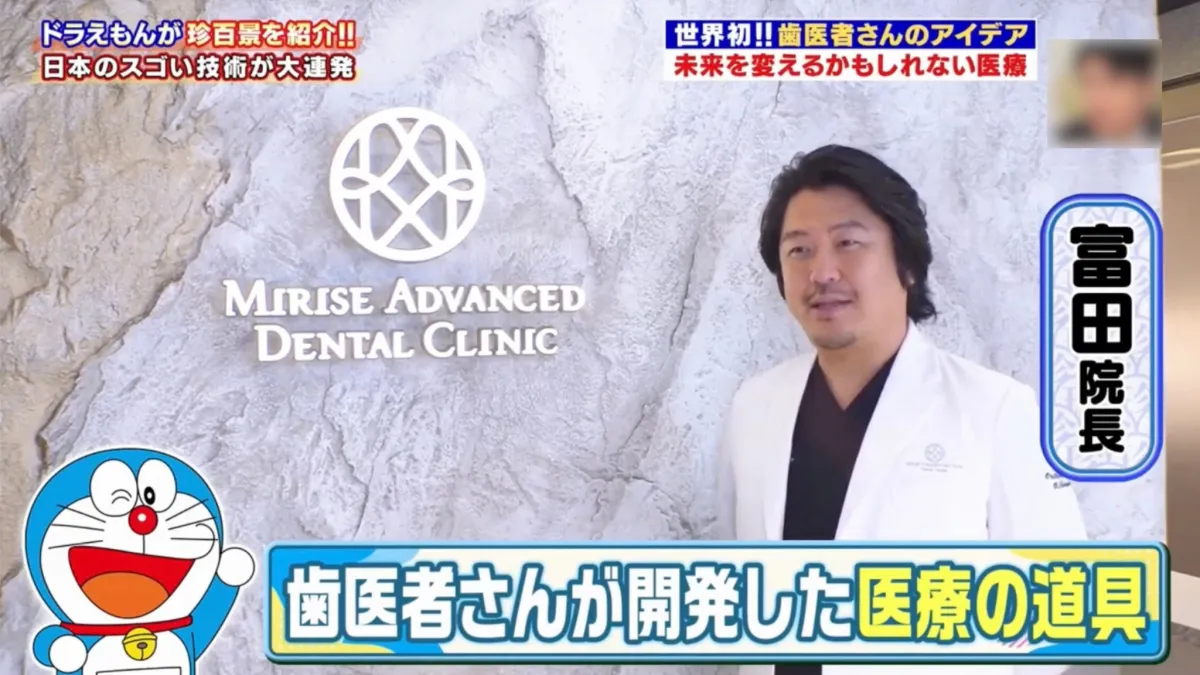
Mirise Develops Groundbreaking 3D Clone Model Revolutionizing Medical Education
Mirise Unveils the 3D Clone Model: A Leap into the Future of Medical Education
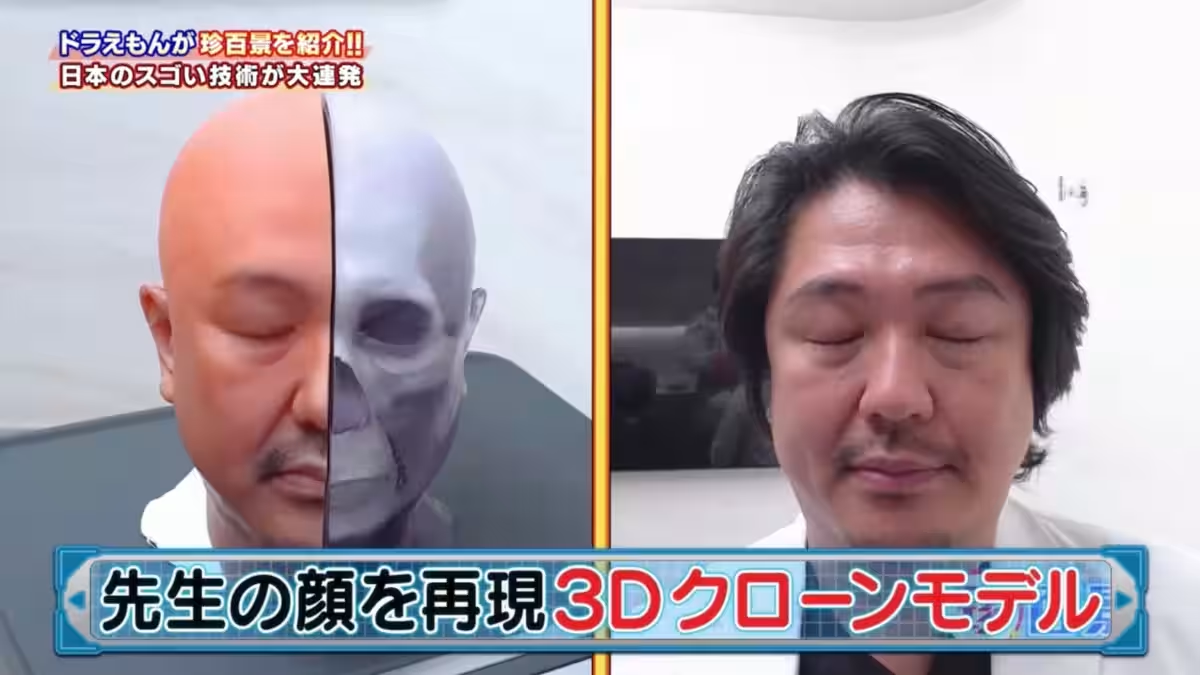
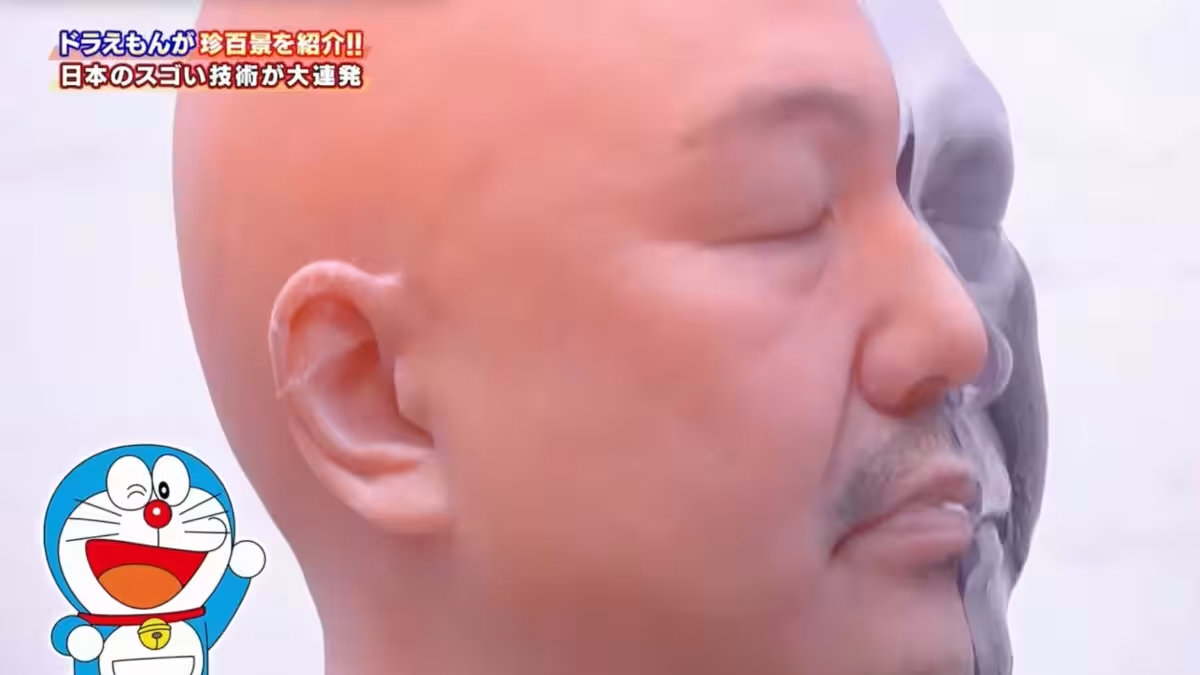
In an astounding development that feels straight out of a science fiction narrative, Mirise Well Medical Group, led by Daisuke Tomita, has introduced the world’s first highly realistic 3D medical model known as the "3D Clone Model." Recently featured on the popular Japanese television show "Nanikore Chinbikyokei," this creation has made waves for its ability to simulate surgical procedures, complete with blood loss.
What is the 3D Clone Model?
The 3D Clone Model is not just a basic replica; it’s a revolutionary tool that allows surgical trainees to practice in an environment that closely mimics reality. Integrating advanced 3D printing technology, this model achieves an incredible level of detail—down to just 0.02mm—allowing for an authentic experience when handling various anatomical features such as teeth, bones, gums, tongue, and skin.
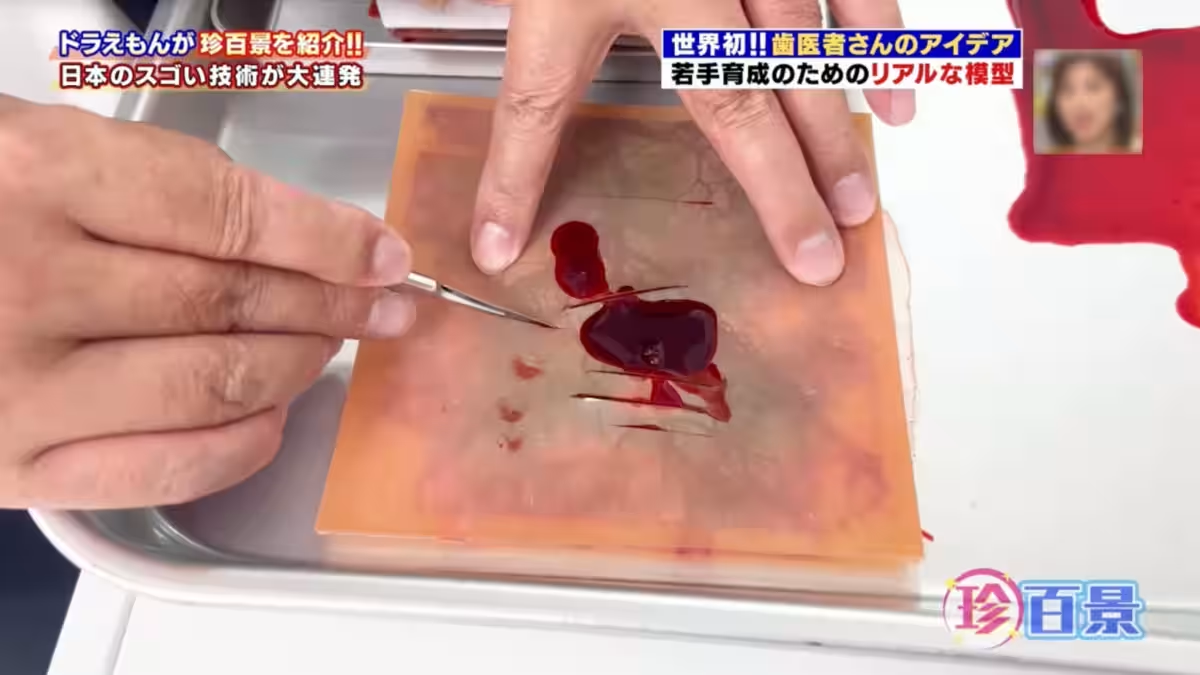
Imagine a scenario where a scalpel is introduced to this model, yielding actual blood—a design that intensifies the realism of surgical training. The technology behind this innovation involves multi-material, full-color 3D printing, contributing to what has been described as a clone-like realism, making it a significant asset in healthcare education.
A Collaborative Effort
The development of the 3D Clone Model owes much to a partnership with Nichinan Co., a company renowned for precision manufacturing. The fusion of Nichinan’s expertise in material control and Mirise’s medical perspective has cultivated a new standard for surgical simulations, emphasizing aesthetic quality and anatomical accuracy.
A New Philosophy in Medical Training
A core tenet driving the development of the 3D Clone Model is the principle of fostering a safe training environment. Rather than allowing for failures on real patients, this model serves to create realistic practice opportunities where medical professionals can hone their skills without the dire consequences of making mistakes in actual surgery. This approach aims to ensure that both fledgling medical students and seasoned professionals can repeatedly practice vital techniques—such as incision, dissection, and suturing—in a controlled setting.
The mantra reiterated during the program was profound: "Creating patients that can afford mistakes" symbolizes a shift in how we can train medical professionals. The intention is to sidestep actual patient risk and instead build a practice framework where the stakes are significantly lower.
Real-World Applications
In a practical application of this model, Mirise has collaborated with Tokyo Dental University’s Oral and Maxillofacial Surgery department to produce precise models for challenging cases like tongue cancer surgeries. This project aims to reduce operation time and increase success rates by validating surgical plans before actual procedures.
A Global Standard for Medical Education
The 3D Clone Model is set to be showcased at Stanford University in May 2025, as well as at the upcoming Osaka-Kansai Expo in 2025, where it will be displayed on an international platform. It has already been acknowledged by top doctors worldwide as a significant paradigm shift in medical education—a true testament to Japan’s advancements in medical technology.
Mirise and Nichinan's collaboration is anticipated to redefine the benchmarks in medical training, making this the new norm rather than the exception.
Value for Patients
This invention does not just benefit medical professionals—it also catalyzes better patient understanding when it comes to orthodontic and surgical procedures. Thanks to 3D technology, clear visualizations of treatment goals and risks can be shared with patients, directly improving their comfort and comprehension throughout long-term care processes.
Looking Ahead
The 3D Clone Model is continually evolving. Future iterations are set to integrate further innovations, including the simulation of circulatory functions for realistic blood flow, temperature control, and logging skills through sensors linked with XR and AI technologies. This will transition the model from a mere prototype into a comprehensive training system for the future.
Get Involved
For those in medical institutions interested in collaborating on 3D model production or training solutions, Mirise is open for discussions. Please direct inquiries regarding custom clone model creations or partnerships to [email protected] or by calling 03-5464-0808 at Mirise Orthodontics, Minami Aoyama.
About Mirise Well Medical Group
Driven by a mission to accelerate the evolution of healthcare with Japanese technology, Mirise integrates various aspects of dental orthopedics, oral surgery, and next-generation medical device development through its subsidiary MEDiDENT, promoting the implementation of cutting-edge technology in society.

Topics Health)
【About Using Articles】
You can freely use the title and article content by linking to the page where the article is posted.
※ Images cannot be used.
【About Links】
Links are free to use.