



Quollio Launches Metadata Lifecycle Manager for Enhanced Data Governance
Quollio Unveils Metadata Lifecycle Manager for Improved Data Management
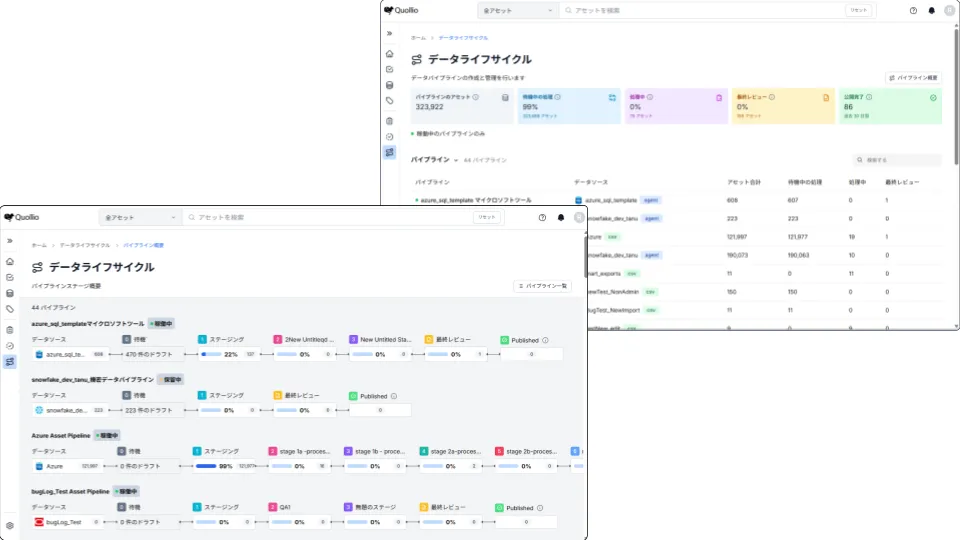
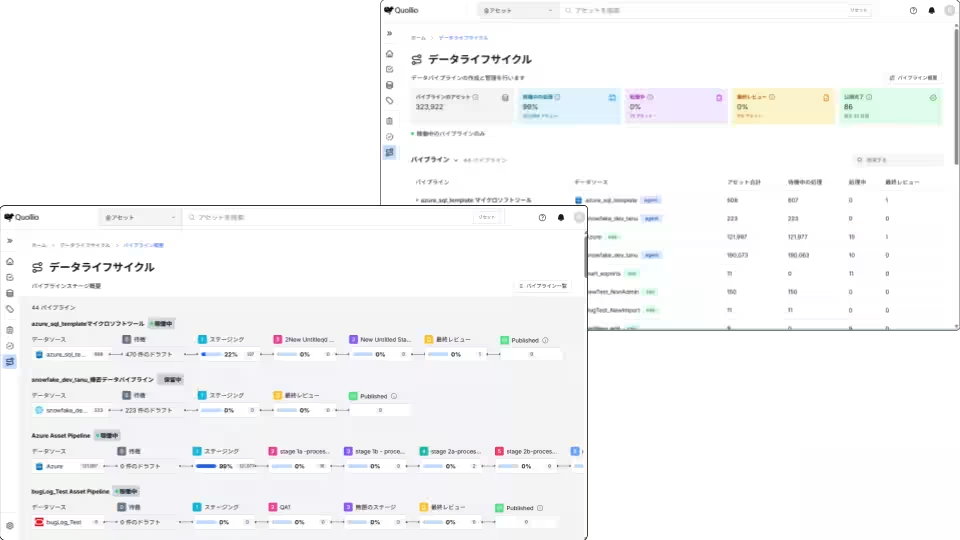
Quollio Technologies, based in Minato, Tokyo, has just announced the launch of a new feature, the Metadata Lifecycle Manager (MLCM), as part of its existing data intelligence platform, the Quollio Data Intelligence Cloud (QDIC). This innovative tool aims to revolutionize the way enterprises track and manage their metadata throughout its entire lifecycle—from the initial data intake to editing, review, and final publication.
Background on Metadata Management Challenges
In large-scale enterprises, the previous methods of augmenting metadata—such as tagging and adding descriptions—often led to confusion regarding responsibility for different stages. The siloed nature of departmental collaboration resulted in inconsistent data quality, governance gaps, and increased manual coordination costs. Traditional workflow systems lacked support for phased asset reviews, differential tracking, and role-based task views, complicating the metadata management process.
Overview of Metadata Lifecycle Manager (MLCM)
MLCM mimics the review processes typically employed by enterprise data management departments, structuring the entire data lifecycle into a manageable pipeline. This streamlined approach facilitates easy editing of data catalogs while accommodating various asset modifications, including spreadsheet edits, CSV uploads, and agent imports. All changes to assets are funneled through this organized pipeline.
Key Features
- - Automatic Pipeline Generation Linked to Data Sources: Whenever a new data source is registered, MLCM automatically generates a corresponding pipeline, allowing for flexible customization of stage order and reviewer assignments.
- - First In, First Out (FIFO) Processing: To prevent conflicts from simultaneous edits and ensure the accuracy of audit logs and data consistency, MLCM prioritizes a system of sequential processing.
- - Bulk Approval/Disapproval and Commenting: Users can review changes side-by-side, approving or rejecting edits both individually and in bulk, while also allowing for comments during rejections.
- - Table View for Large-Scale Processing: To combat usability issues when handling thousands of assets via CSV uploads, MLCM employs a table view tailored for extensive batch processing, as opposed to using a kanban format.
- - My Tasks View and Audit Log: MLCM provides role-specific task views for reviewers not in admin roles, along with an audit log that tracks who made changes, what the changes were, and when they occurred at each stage.
- - Smart Stage Skipping and Notification Functionality: Conditions can be set for automatic stage skipping based on asset type and intake method, ensuring pertinent staff receive timely notifications for task assignments or transitions.
Advantages of Implementing MLCM
By adopting MLCM, companies will ensure that all asset changes undergo a structured review prior to publication, significantly reducing the risk of incomplete metadata or errors infiltrating the data catalog. Role-based stage assignments enhance clarity around accountability, even in complex organizational structures. Moreover, MLCM eliminates the need for intricate custom workflow designs by integrating intuitive stage processes that align with Japanese enterprise requirements, facilitating the Fit-to-standard approach. This streamlining also resolves issues related to documenting workflows and knowledge transfer while significantly improving maintenance efficiency.
Pricing and Availability
- - Pricing: Annual subscription model (contact for detailed pricing)
- - Delivery Format: Available as an extension feature of QDIC
- - User Licensing: MLCM does not impose standalone limits on the number of users but follows the structure of existing purchased users for standard features.
- - Launch Date: Now available for use.
Future Developments
The introduction of MLCM serves as a critical foundation leading towards the integration of AI capabilities, where AI can propose metadata additions for human approval in a 'Human-in-the-loop AI' model. Future plans aim for a streamlined process whereby AI agents can automatically generate and manage metadata through the pipeline, signifying a significant step in establishing a collaborative metadata management framework between AI and human input.
About Quollio Data Intelligence Cloud
The Quollio Data Intelligence Cloud is optimized for enterprises in the era of AI, providing systematic management of both technical metadata and business context information. This enhances robust data governance while building a contextual layer for AI-human collaboration, ultimately improving autonomy in AI operations and data-driven decision-making.
About Quollio Technologies
Quollio Technologies envisions a future where humanity sustainably creates value while addressing societal challenges. Offering the Quollio Data Intelligence Cloud centered on metadata management, Quollio assists corporations in transforming their data into true assets while establishing strong data governance and AI readiness. The company supports Japan's leading firms and public entities in adapting to next-generation information technology and driving digital transformation.
- ---
Topics Business Technology)
【About Using Articles】
You can freely use the title and article content by linking to the page where the article is posted.
※ Images cannot be used.
【About Links】
Links are free to use.