



The Impact of Severe Heat on Commuting Stress: Insights from Recent Research
The Impact of Severe Heat on Commuting Stress: Insights from Recent Research
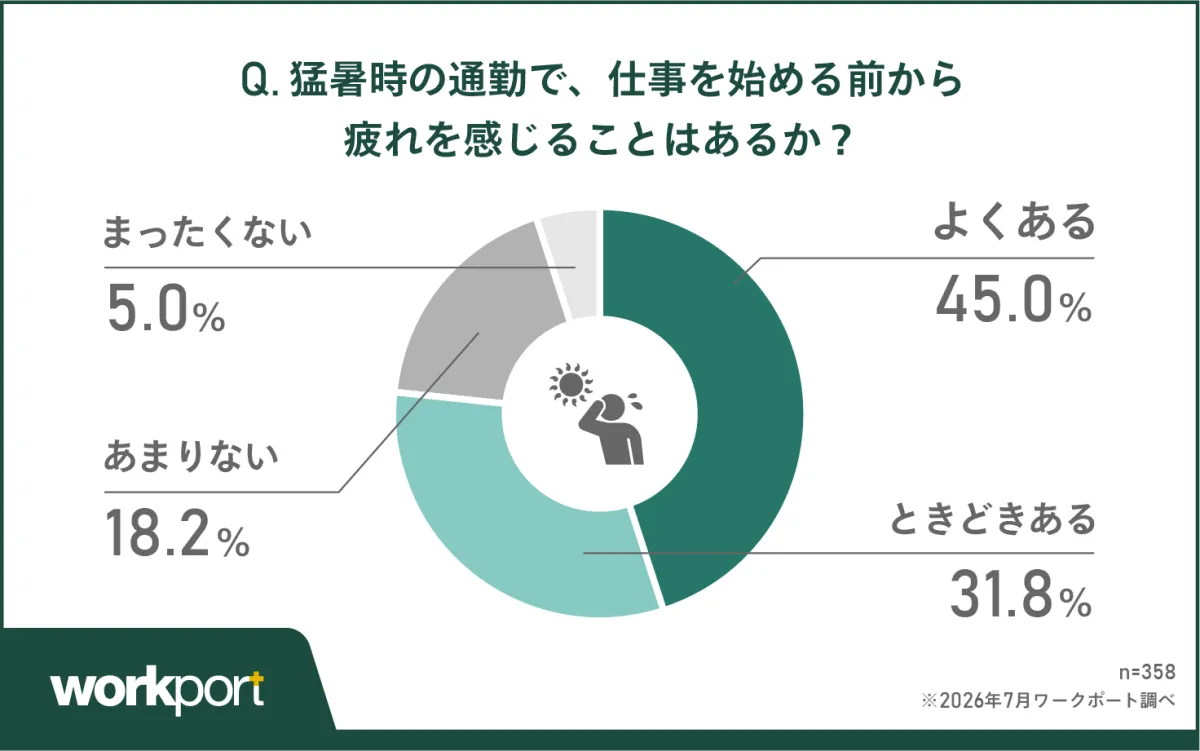
As summer temperatures intensify year after year, commuting during extreme heat is becoming a significant source of stress for many employees. A recent survey conducted by Workport, a human resource consulting company based in Japan, examined the burdens that extreme heat places on professionals commuting to work. The study focused on business people aged 20 to 40 years across the country, revealing that up to 80% of those surveyed experience fatigue even before beginning their workday due to the oppressive conditions of their daily commute.
Key Findings
- - Fatigue Before Starting Work: The research indicates that about 76.8% of respondents report feeling tired before their shifts even begin, with 45% saying it happens often. This overwhelming statistic highlights the significant toll that extreme heat takes on workers' well-being right from the start of their day.
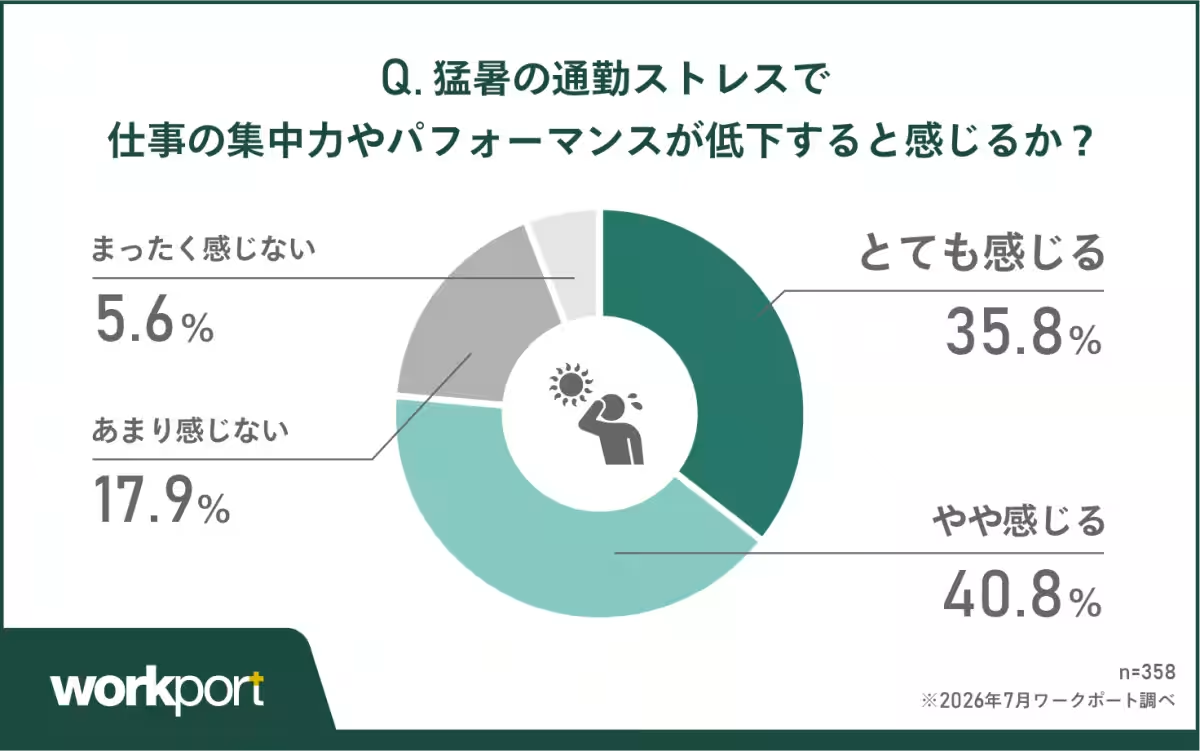
- - Impact on Work Performance: In terms of job performance, a staggering 76.6% of respondents acknowledged a decline in concentration and efficiency due to the stress associated with commuting in high temperatures.
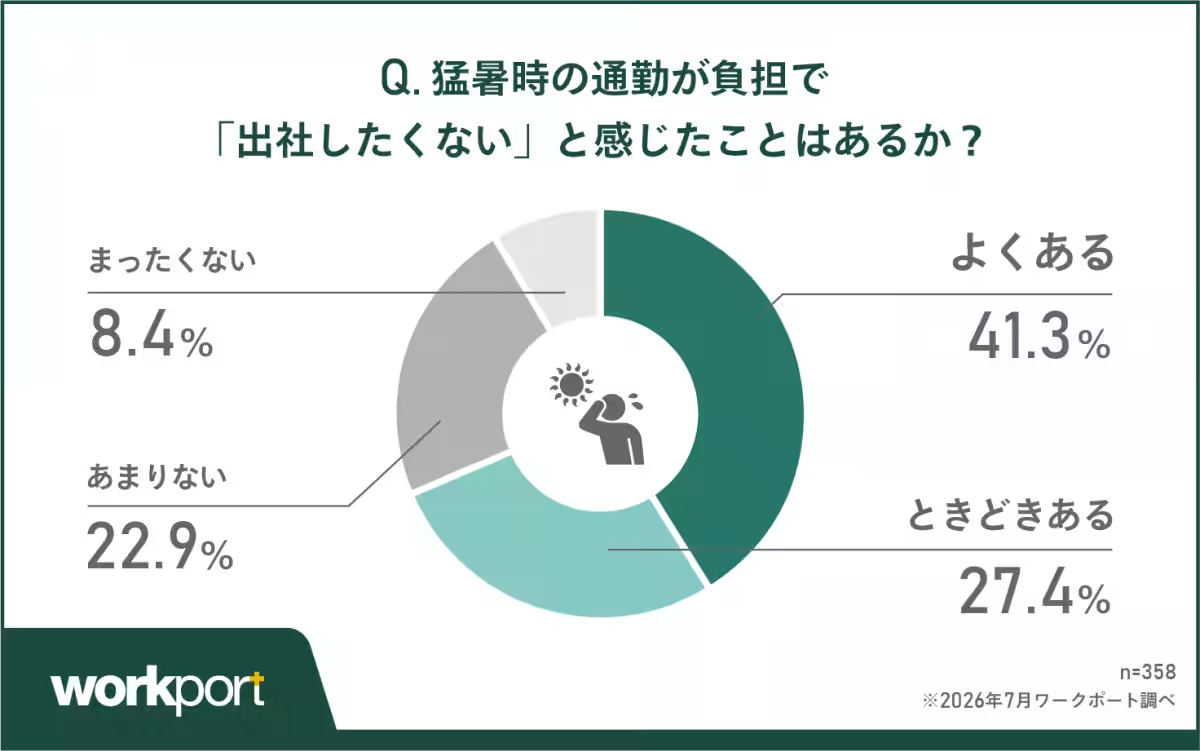
- - Employee Sentiment Toward Commuting: When asked about their desire to go to work, nearly 69% expressed reluctance, with 41.3% often feeling that they do not wish to commute during the hot summer months.
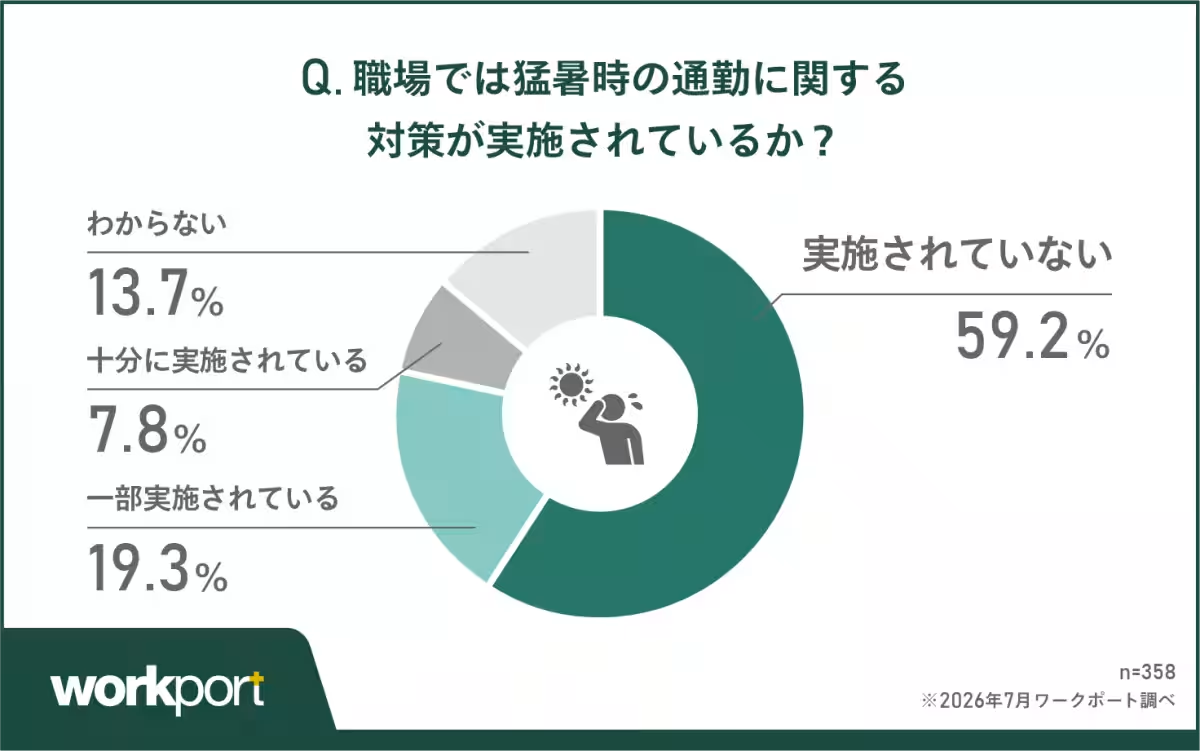
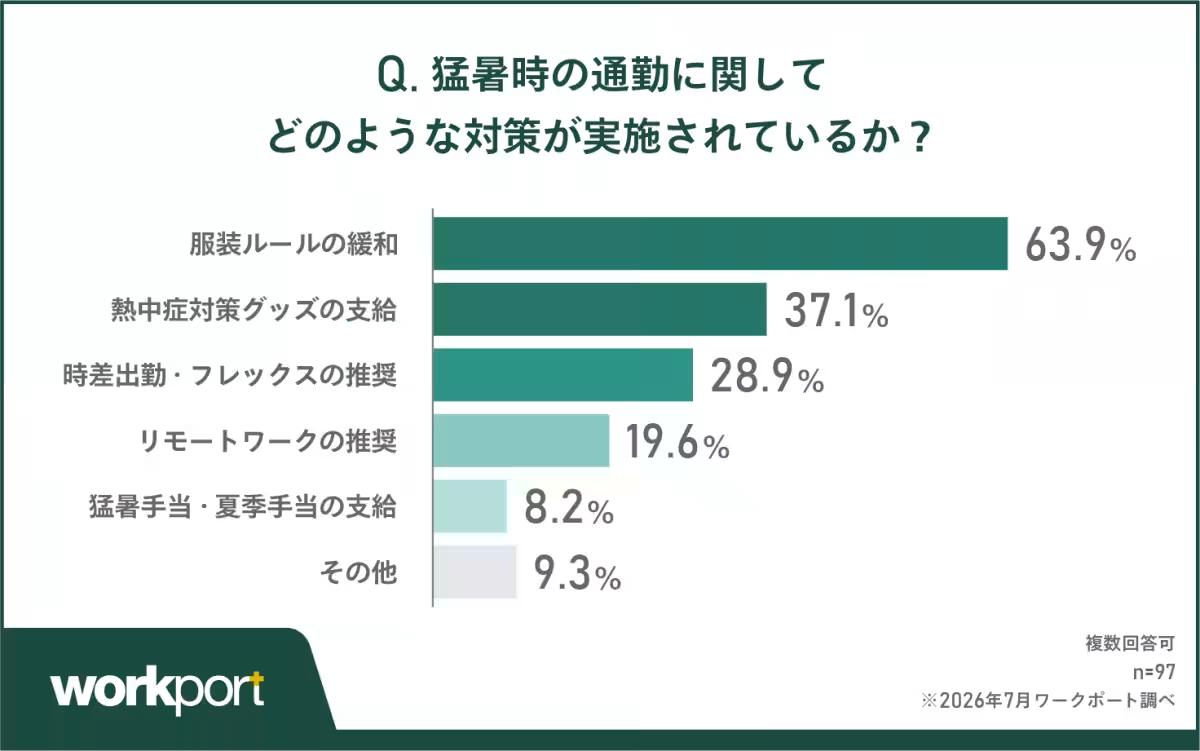
- - Corporate Response: The survey revealed that nearly 60% of companies have not implemented any specific measures to alleviate commuting stress in extreme heat. Where measures are taken, such as relaxed dress codes and provision of cooling gadgets, they are largely inadequate to meet employee needs.
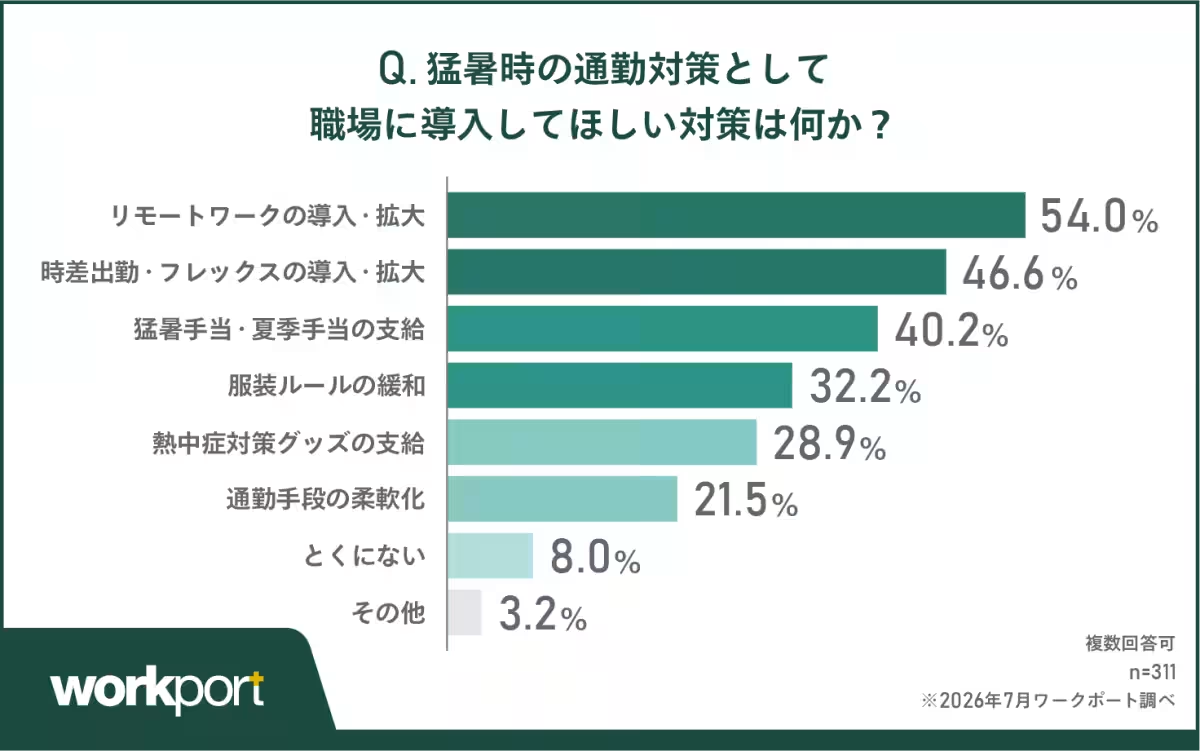
- - Employee Needs and Expectations: The most sought-after solutions among employees include the expansion of remote work options (54%) and the introduction of flexible working hours (46.6%). These preferences starkly contrast with the measures currently enacted by employers, indicating a significant gap between employee needs and corporate policy.
Personal Experiences of Commuters
Many participants shared their challenges during hot weather. Comments ranged from concerns about sweat and odors upon arrival at work to frustrations with crowded public transportation, where the heat and close quarters heighten stress levels. For instance:
- - One female office worker noted, "Arriving at work drenched in sweat makes me self-conscious and affects my concentration."
- - A male marketing professional described the commute as burdensome, feeling that the heat and crowded conditions lead to a significant energy drain.
Assessing Corporate Measures
Among those surveyed, around 63.9% reported that corporate policies primarily focus on relaxing dress codes. However, only about 7.8% believed sufficient measures to address commuting stress were in place, shining a spotlight on companies' slow responses to the changing climate and its impact on employees.
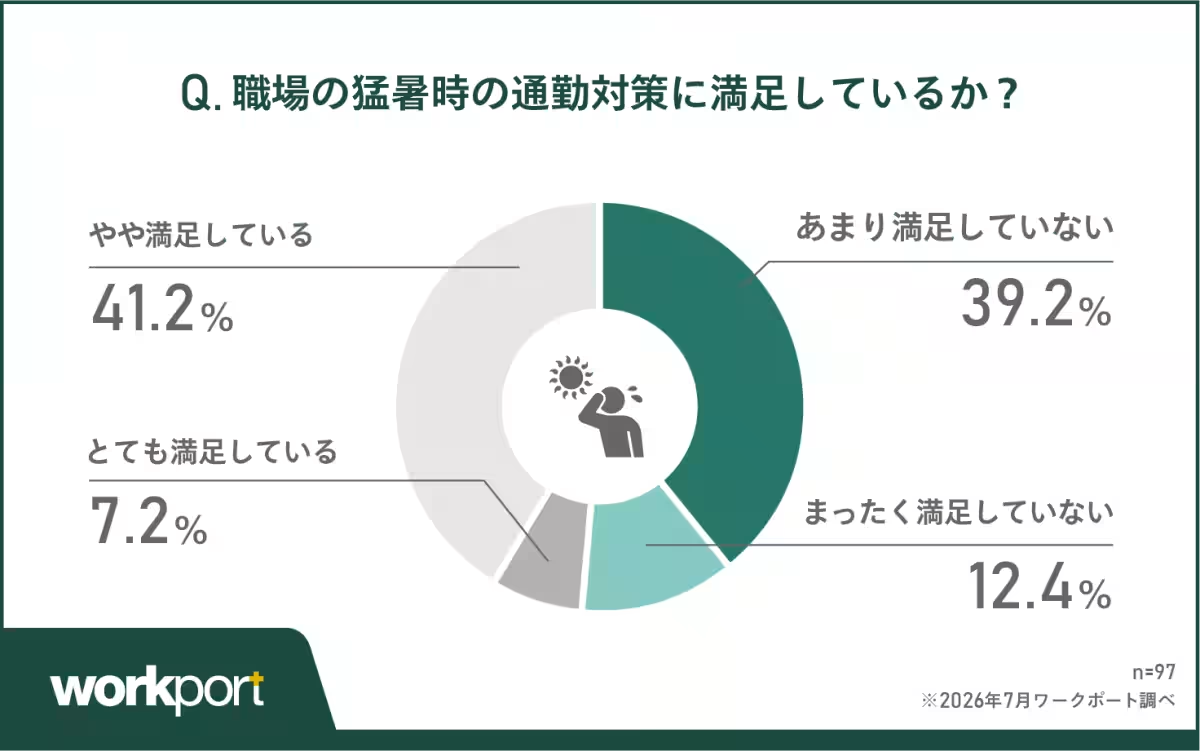
- - Dissatisfaction with Corporate Response: The satisfaction levels regarding corporate initiatives to mitigate commuting stress are almost evenly split, with about 51.6% of employees expressing dissatisfaction with existing measures.
Looking Ahead
With record-breaking temperatures becoming more common, businesses must elevate their approach to employee welfare during extreme weather events. Moving forward, companies need to prioritize flexible work arrangements and consider the development of policies that safeguard employee health and productivity during the sweltering summer months. Addressing the commuting burden from its roots will not only enhance individual well-being but also improve overall workplace performance.
This study effectively illustrates that extreme heat is more than just a climate issue; it is a significant factor that undermines the physical and mental capabilities of workers. As the demand for effective solutions grows, it is essential for organizations to not only acknowledge these challenges but also to act decisively in creating an environment conducive to employee satisfaction and productivity.
- ---
Survey Overview: Conducted by Workport from July 7 to July 14, 2026, the survey involved 358 responses from professionals across Japan, excluding those in full remote positions.

Topics People & Culture)
【About Using Articles】
You can freely use the title and article content by linking to the page where the article is posted.
※ Images cannot be used.
【About Links】
Links are free to use.