



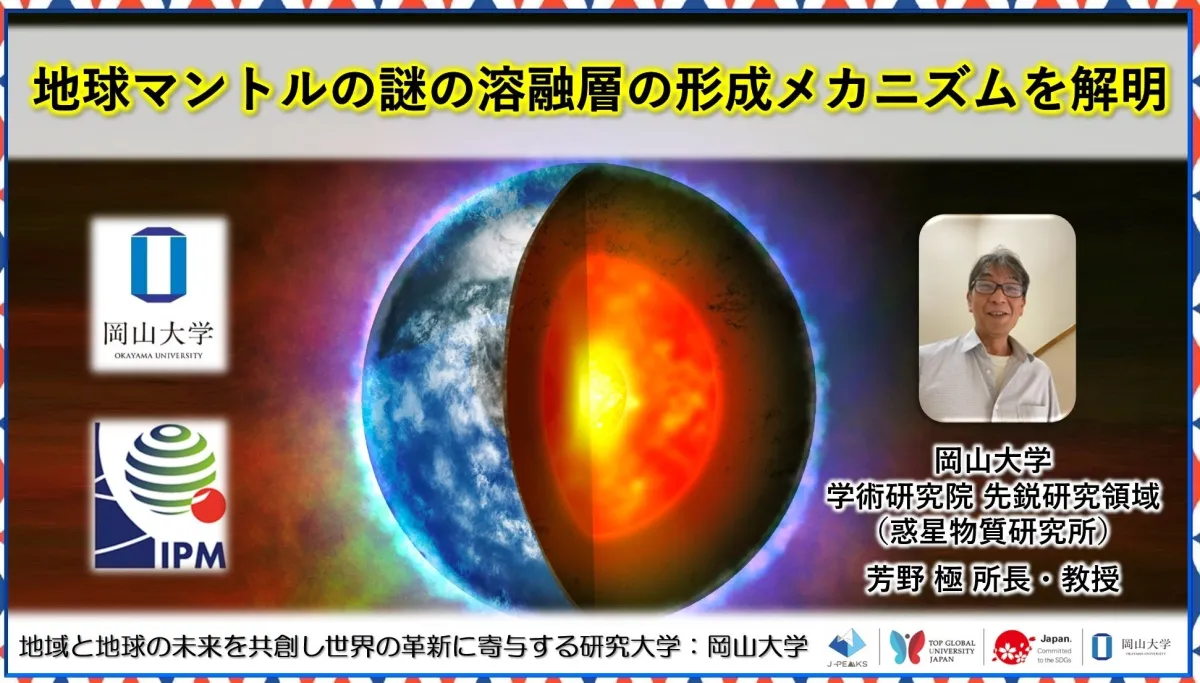
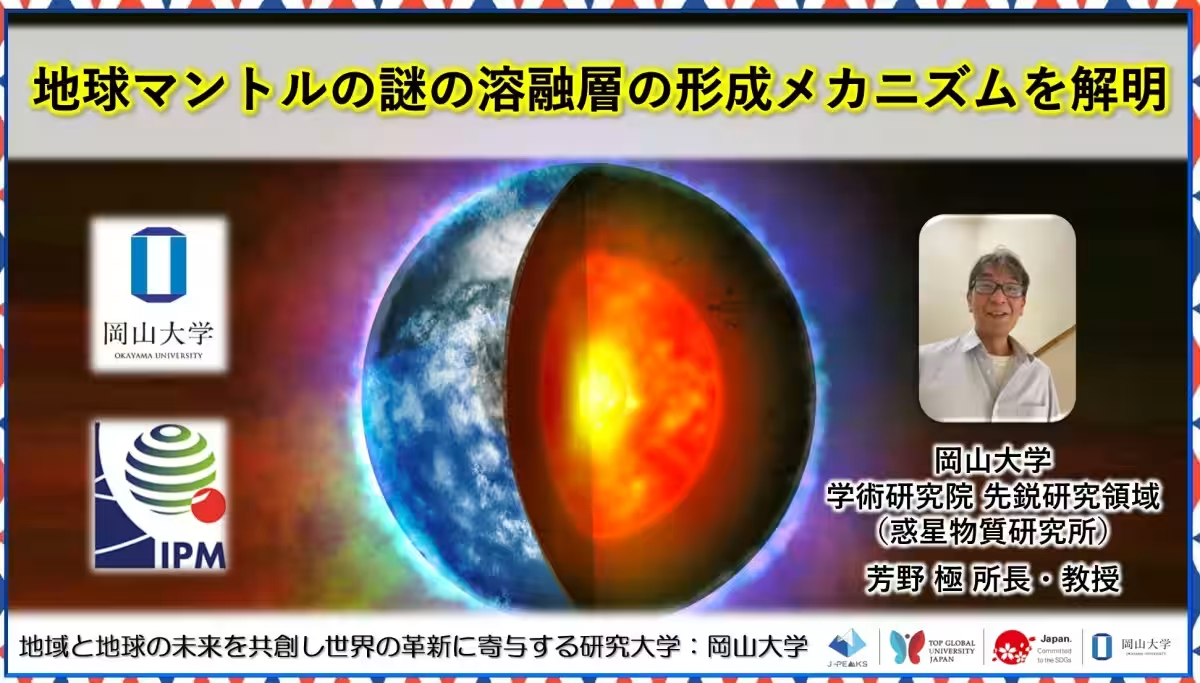
Okayama University's Breakthrough Study Reveals Mantle Layer Formation Mechanism
Unraveling the Mystery of Melt Layers in Earth's Mantle
In a groundbreaking collaborative study involving eminent scientists from Okayama University and the Japan Synchrotron Radiation Research Institute (SPring-8), researchers have made significant strides in understanding the formation mechanisms of enigmatic melt layers located deep within Earth’s mantle. Initially highlighted on May 8, 2025, this research has been published in the prestigious journal Nature Communications.
The Depths of the Mantle
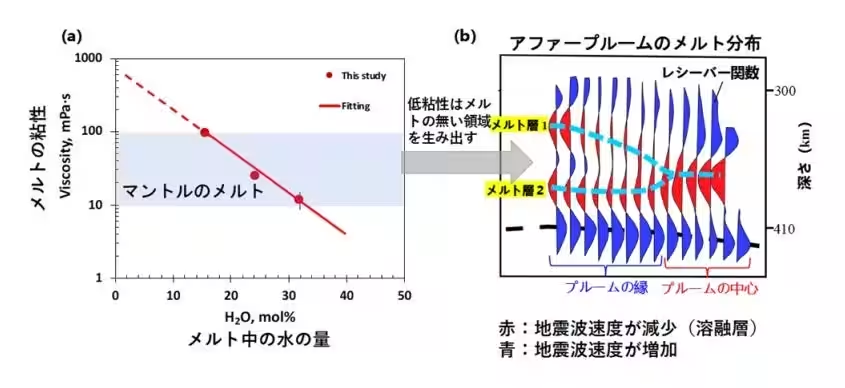
The Earth’s mantle, situated beneath the crust, extends to depths of about 2,900 kilometers. Within this critical layer, scientists have long observed double low-velocity layers at approximately 410 kilometers deep, but their origins have remained elusive. This study aimed to demystify these geological features by exploring the viscosity of molten
silicate materials under high-pressure conditions, a crucial factor in understanding mantle dynamics and the movement of tectonic plates.
Innovative Experimental Approach
Utilizing advanced pressure experimental techniques developed at Okayama University, researchers added water to silicate materials mimicking mantle properties and subjected them to high temperatures and pressures. By dropping heavy spheres into these molten materials, the team efficiently measured the melt's viscosity, revealing unexpectedly low levels that could facilitate the existence of melt doublets above the 410-kilometer discontinuity.
An important breakthrough was the computational modeling, which demonstrated that the presence of water-containing melts in the rising mantle convection can reproduce the characteristics of these double low-velocity layers. These findings suggest that water and melt behaviors significantly influence mantle dynamics and potentially climate changes over geological timescales.
The Research Team
Led by Dr. Longjian Xie, an alumnus of Okayama University now affiliated with the University College London and a member of the High-Pressure Science and Technology Advanced Research Center (HPSTAR), the international team also included researchers from other prestigious institutions in Japan and abroad. Takashi Yoshino, a professor at Okayama University, emphasizes how advanced synchrotron radiation technology at SPring-8 allows scientists to observe high-temperature and high-pressure states in real-time.
Implications for Future Research
This landmark study not only elucidates the formation process for these melt layers but also enhances our understanding of the convection patterns within the mantle and the movement of water through geological formations. Such insights could pave the way for new theories emerging regarding Earth’s geological activity.
Dr. Yoshino, who has participated in this collaborative endeavor with his talented former students, encourages young scientists interested in earth sciences to engage in research projects that inspire wonder and discovery.
Supporting Research
The research was supported by grants from the Japan Society for the Promotion of Science (JSPS) and the RCUK, highlighting its significance in the field of geoscience. The findings aim to inspire further exploration into the connections between mantle dynamics, magma formation, and planetary evolution.
Conclusion
The discovery of the mechanisms behind the formation of double melt layers in the Earth's mantle by Okayama University researchers marks a crucial advancement in geoscience. Moving forward, scientists will work to deepen their understanding of mantle processes and their implications for planetary dynamics. As we continue to explore Earth's depths, the journey of scientific discovery is only beginning—emphasizing the importance of nurturing a new generation of researchers.
For more information about this research, please refer to the detailed press release and related resources available at Okayama University Press.


Topics Other)
【About Using Articles】
You can freely use the title and article content by linking to the page where the article is posted.
※ Images cannot be used.
【About Links】
Links are free to use.