



The Surprising Preference for Side Jobs Among Hybrid Workers Over Fully Remote Workers
Exploring the New Work Dynamics: Side Jobs Among Remote Workers
In a recent study conducted by LASSIC, a company dedicated to promoting flexible work styles, intriguing insights have emerged regarding the preferences of remote workers and their inclination towards side jobs. The survey, dubbed the "Remote Work and Side Job Survey," analyzed 1,009 individuals who have experience with remote work, bringing forth compelling statistics that challenge conventional beliefs about remote workers.
Key Findings of the Survey
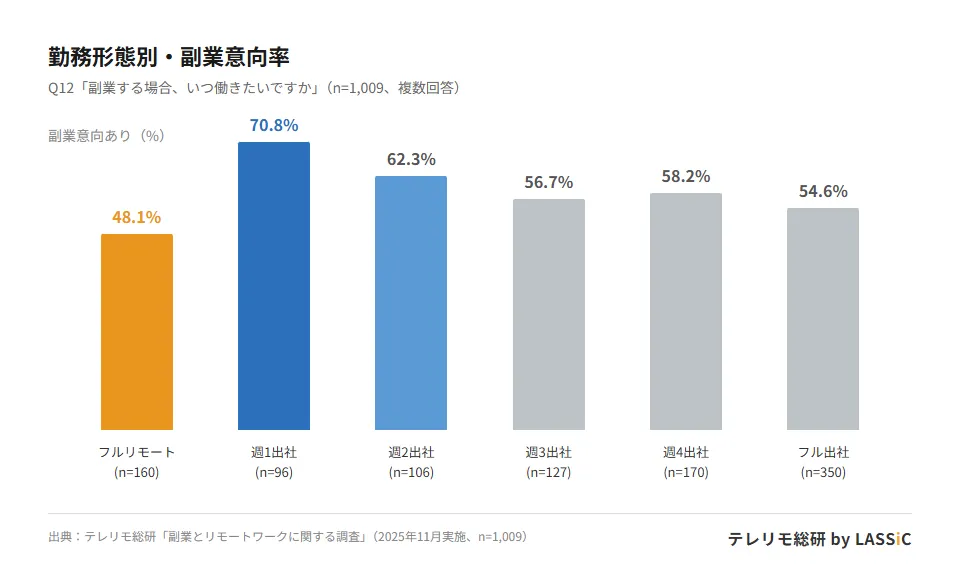
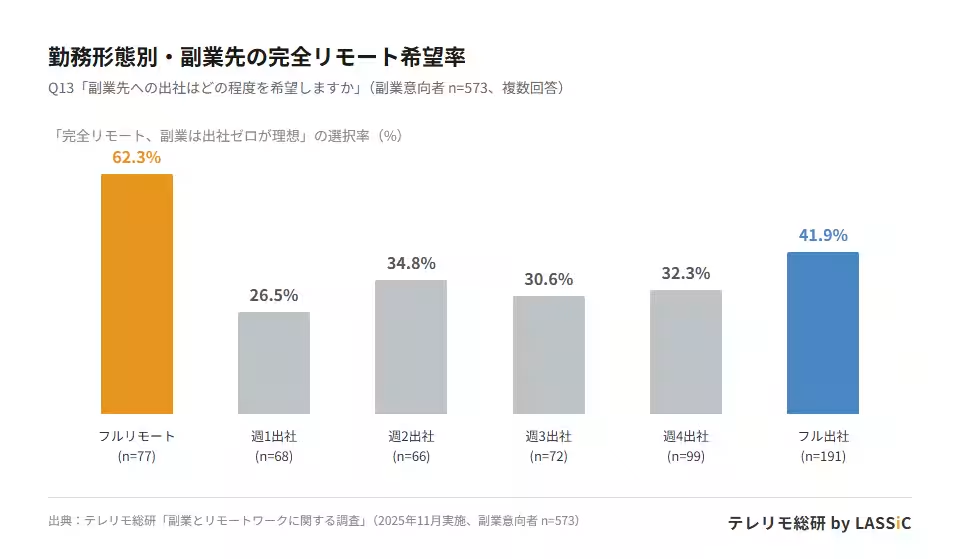
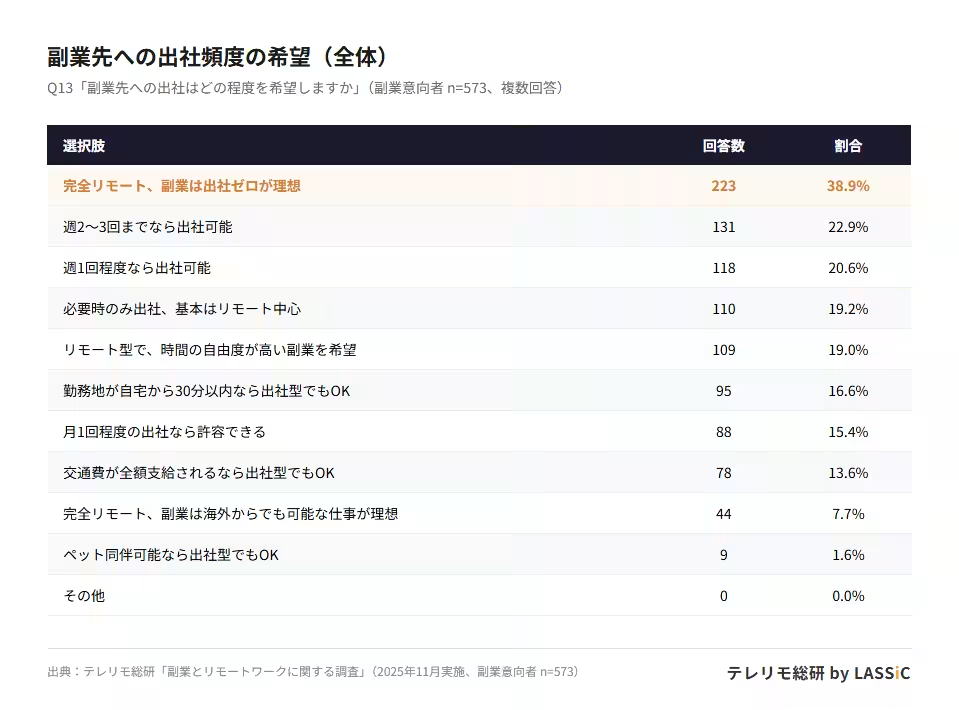
The most striking finding was that hybrid workers, specifically those who come into the office just one day a week, expressed a 70.8% interest in taking on a side job — significantly higher than the 48.1% of fully remote workers who showed similar interest. The survey further explored the expected frequency of working for side jobs, revealing that 38.9% of all respondents prefer a fully remote set-up, with a remarkable 62.3% among the fully remote workers.
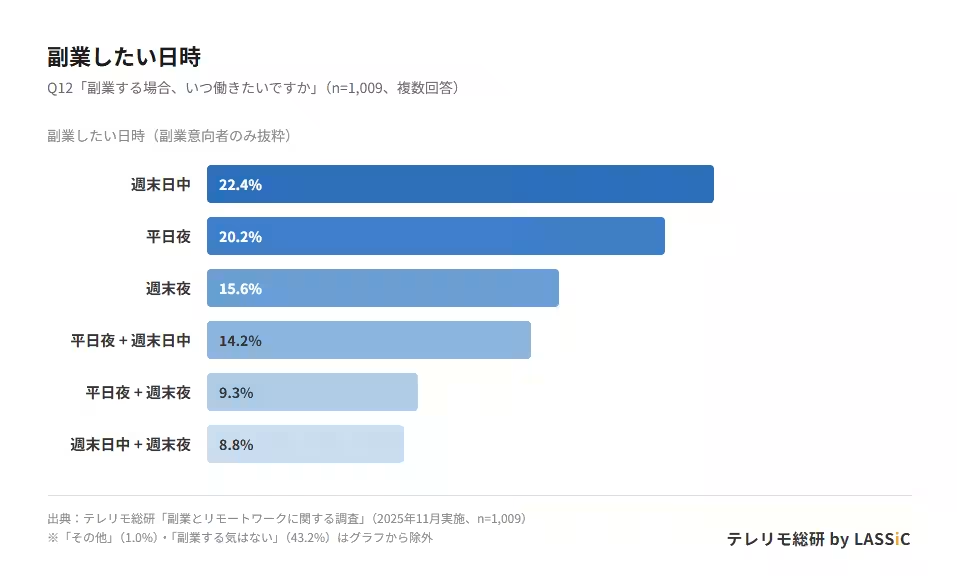
Additionally, the survey highlighted peak preferred times for side work, with 22.4% opting for weekends and 20.2% for weekday evenings, illustrating a clear preference for flexibility among remote workers.
Debunking the Myth: Who is More Ambitious?
One might assume that fully remote workers, given their flexibility, would pursue side jobs more actively. However, survey results suggest otherwise, highlighting that a majority of those who favor full-time remote work prioritize work-life balance over additional income. Many individuals prefer to dedicate their time to personal commitments rather than engaging in side work, as seen from previous LASSIC studies where only 6.5% said that remote work made it easier to pursue additional income opportunities.
Why Hybrid Workers Thrive
The study posits that hybrid workers—those who engage in a mix of home and office work—minimize commuting stress, thus freeing up mental and physical resources to explore side job opportunities. This revelation is underscored by the finding that as in-office attendance increases, the likelihood of pursuing side jobs decreases. Essentially, the connection between work-life balance and job motivation appears to grow stronger as commuting burdens are lifted.
Looking Ahead: What This Means for Employers and Job Seekers
These findings could serve as crucial insights for businesses looking to attract employees interested in side jobs. Employers may want to consider the commuting burdens of their workforce and provide flexible work arrangements that encourage hybrid or fully remote settings. This consideration will not only attract talent but also foster an environment where employees feel motivated and engaged in additional work opportunities, thereby enhancing their skills and experience.
In conclusion, the LASSIC survey opens up discussions about how flexible work arrangements are reshaping employee aspirations and career development. It prompts us to reconsider our approach to work, emphasizing the importance of balancing job commitments with personal needs. As the professional landscape continues to evolve, hybrid workers lead the way in redefining side job interests and setting new standards for modern working environments.
For a more detailed analysis of the survey and its implications, you can visit the LASSIC website where additional resources are available.



Topics Other)
【About Using Articles】
You can freely use the title and article content by linking to the page where the article is posted.
※ Images cannot be used.
【About Links】
Links are free to use.