



Understanding Schedule Management Practices Among Accounting Professionals: A New Study Reveals Insights
Schedule Management in Accounting: Current Practices and Insights
A recent survey conducted by Invoice Corporation aimed to delve into the scheduling practices of accounting professionals. With a focus on understanding how these individuals manage their time and tasks, the report titled "How Are Accountants Managing Their Schedules? Insights from the Field and Improvement Tips" sheds light on the alarming persistence of analog methods in a mainly digital world.
Key Findings
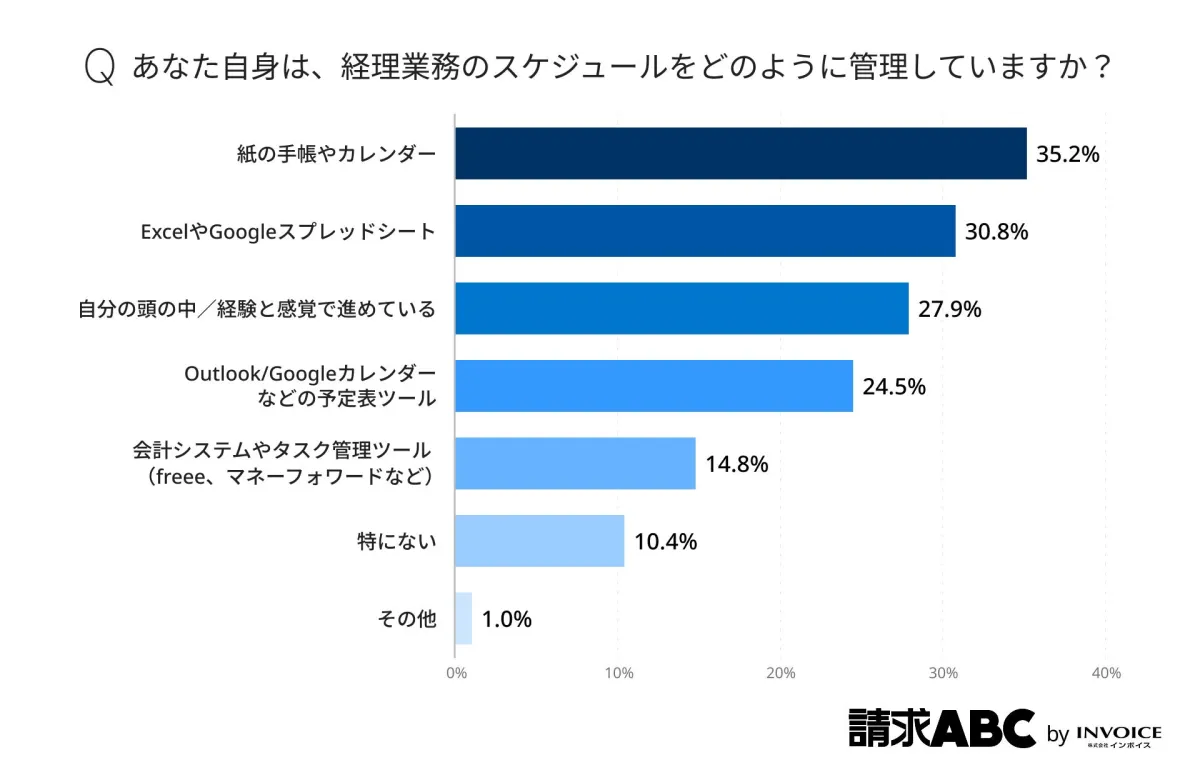
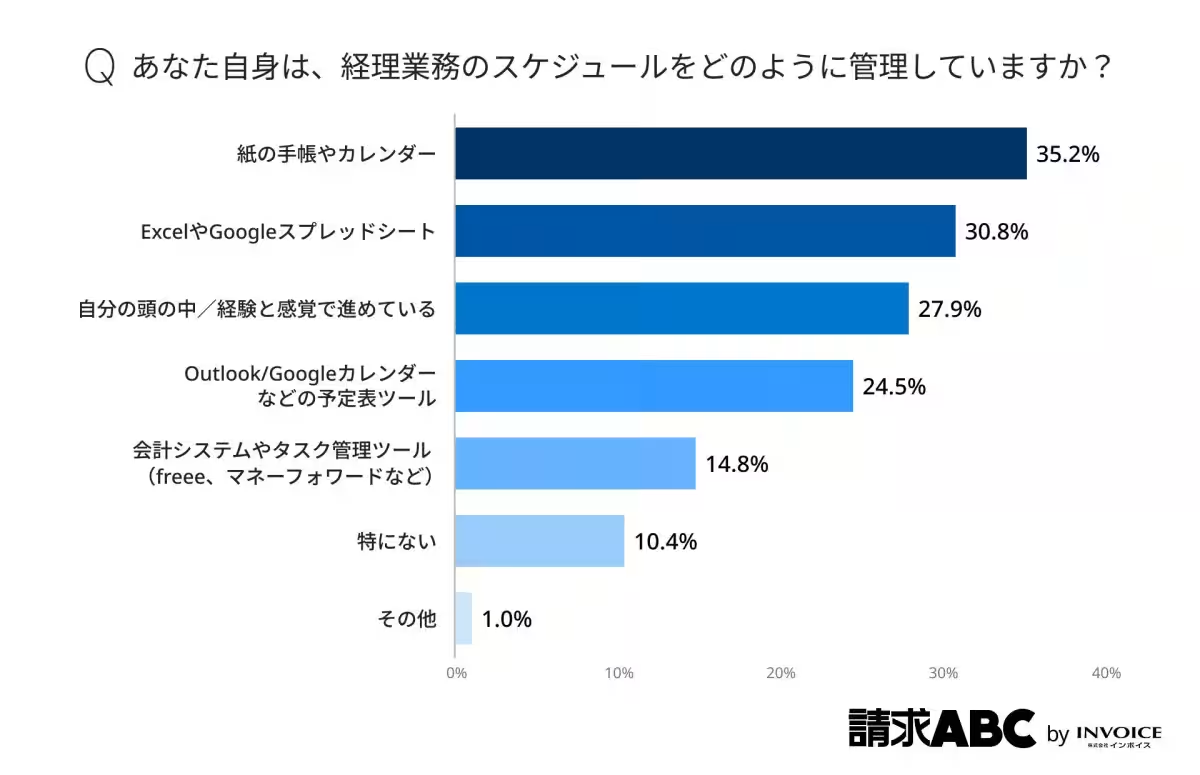
According to the survey of 441 accounting professionals, a mere 20% of schedule management is handled digitally. Surprisingly, the most common tool remains physical planners and calendars, used by 35.2% of respondents. Following closely are Excel and Google Sheets, at 30.8%. The reliance on these traditional methods is still strong, suggesting that many accountants prefer to organize their daily tasks manually, allowing for flexibility and personal touch.
Additionally, 27.9% of respondents admitted to using their own mental frameworks or past experiences for scheduling, showing that some professionals are not utilizing formal tools at all. Only 24.5% have adopted scheduling tools like Outlook or Google Calendar, and a mere 14.8% use accounting systems or task management software, such as freee or Money Forward.
This widespread use of analog methods raises concerns about efficiency and productivity within the accounting sector, especially as businesses increasingly prioritize streamlined processes.
Awareness and Accountability
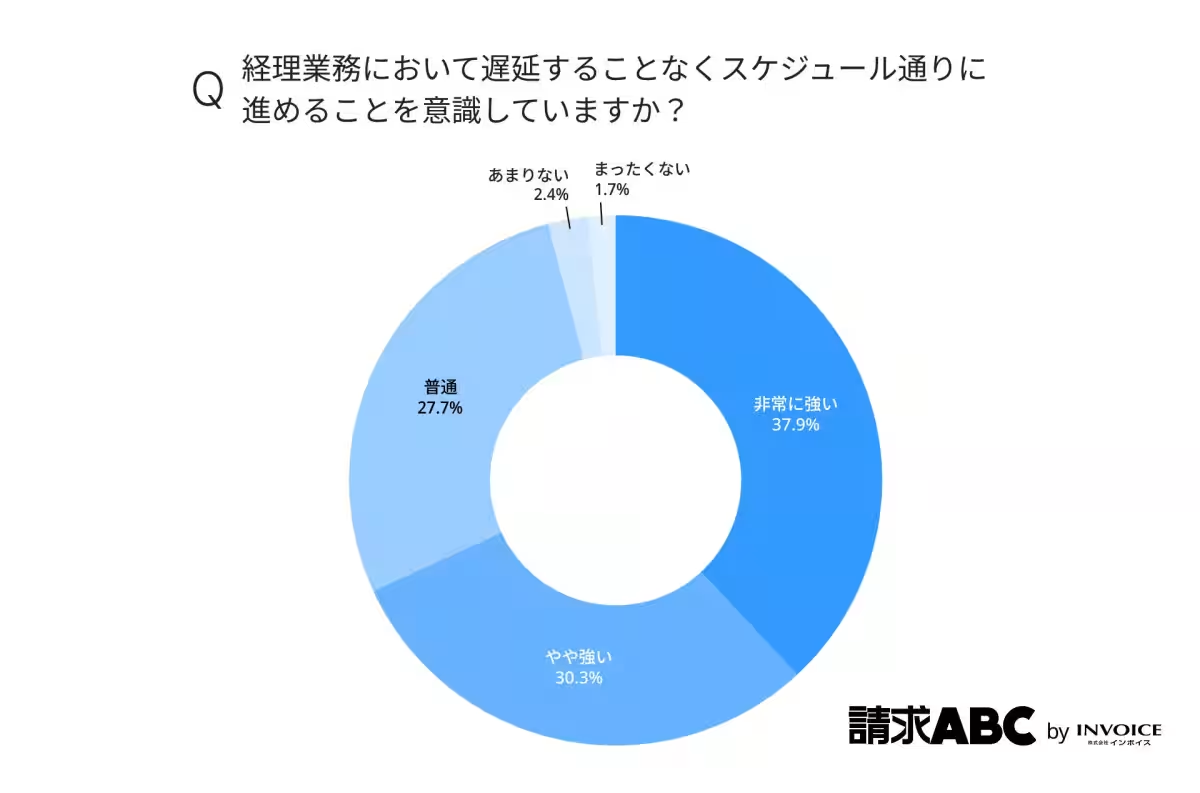
The survey also highlighted a strong awareness of the importance of schedule management among accounting staff. Nearly 68.2% of participants indicated a strong or somewhat strong commitment to managing their schedules effectively. This reflects a culture focused on timely and accurate task execution, which is crucial in the accounting realm where deadlines are often strict.
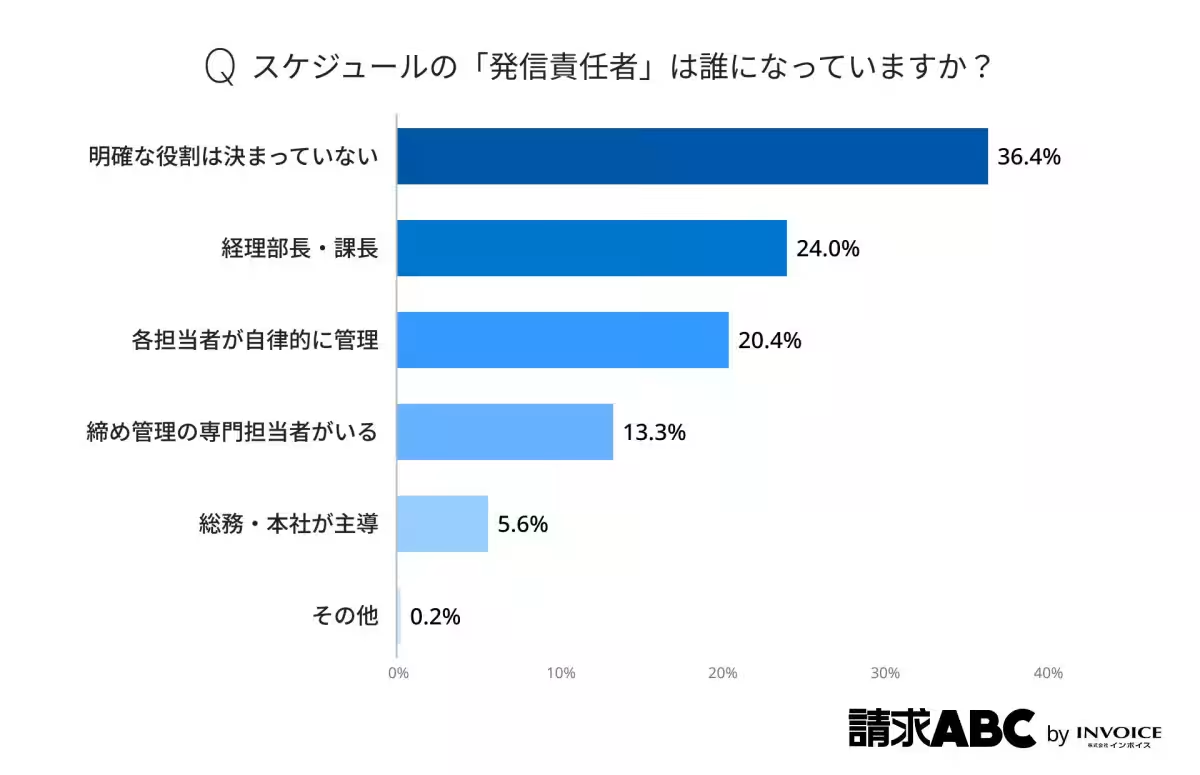
Moreover, the results reveal a significant issue concerning responsibility for schedule management. More than a third of respondents (36.4%) reported that there is no clearly defined individual responsible for overseeing schedules. This gap can lead to delays and miscommunications, further complicating an already challenging environment. However, some organizations have taken steps to establish clearer roles, with 24.0% reporting that a department head handles schedule management and 20.4% stating that team members manage their own schedules autonomously.
Moving Towards Digital Transformation
Despite the existing challenges, the survey emphasizes the need for not only awareness but also improved organizational systems to transition from analog to digital management methods. With many accounting professionals recognizing the importance of schedule management as a critical skill, enhancing efficiency tools and fostering collaboration across departments will be essential.
By addressing these issues, companies can minimize the risk of schedule mismanagement and bolster productivity, allowing accounting professionals to focus on higher-value tasks. The report encourages organizations to move away from reliance on individual habits and create structured environments that empower accountants to manage their schedules effectively and systematically.
Conclusion
In summary, while the accounting field demonstrates a promising recognition of the importance of scheduling, the cling to analog methods poses significant risks. The survey findings underscore the necessity for a shift towards adopting comprehensive digital tools and practices that can streamline processes and sustain organizational productivity. As accountants embrace these changes, they can better serve their companies and society as a whole, ensuring the accuracy and timeliness that the profession demands.
For a comprehensive look at the findings, check out the full report here.

Topics Business Technology)
【About Using Articles】
You can freely use the title and article content by linking to the page where the article is posted.
※ Images cannot be used.
【About Links】
Links are free to use.