




Introducing Judgment Design Quick-Q®: A Practical Guide for Individuals to Enhance Decision-Making Skills
Introduction
In today’s fast-paced work environment, making sound decisions is more critical than ever. Until now, an innovative resource has surfaced to bolster decision-making skills—the "Judgment Design Quick-Q® | Individual Practice Version." Launched by Request Inc., a pioneering organization grounded in organizational behavioral science, this tool is designed to guide professionals in seamlessly incorporating judgment design into their daily responsibilities.
The Foundation of Quick-Q®
With data derived from 980 companies and 338,000 working individuals, Request Inc. has studied adult professionals to develop practical resources on judgment design. This launch aligns with the company’s mission to refine decision-making practices within the AI era, emphasizing the significance of judgment experiences and structured decision-making processes.
By October 2026, Request Inc. aims to produce a comprehensive range of material regarding management decisions, judgment experiences, and structures that support AI-oriented workforce development. However, recognizing the challenges individuals face in transforming theoretical knowledge into practical action, the Quick-Q® guide serves as a solution.
Starting Small
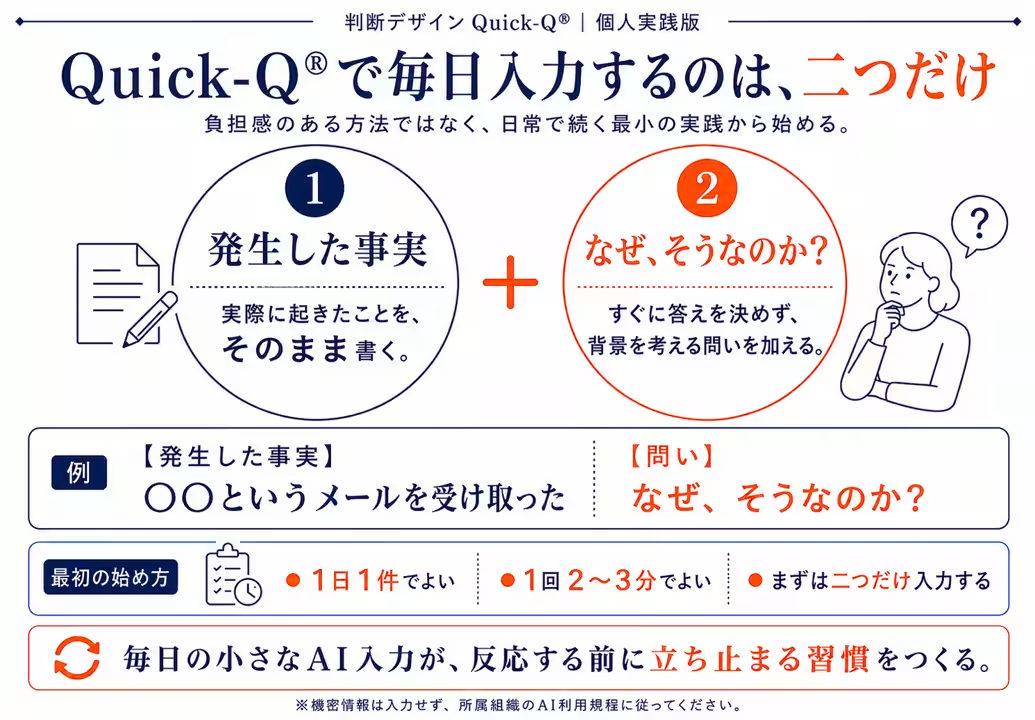
One central idea that Quick-Q® proposes is the importance of beginning with manageable, incremental actions rather than overwhelming individuals with exhaustive analyses right out of the gate. Too often, professionals grasp the overall necessity of judgment design yet fail to know how to proceed. Quick-Q® addresses this by encouraging users to initiate their journey with minimal practice based on real-time incidents experienced during their workdays.
This approach shifts focus from comprehensive execution to identifying the first actionable step in any given situation, be it responding to an email, interpreting a report, addressing customer feedback, or even questioning a surprise element during a meeting. This practical starting point aims to ease individuals into the habit of more strategic judgment without the additional burdens of determining the detailed complexities associated with it.
Balancing Speed and Depth
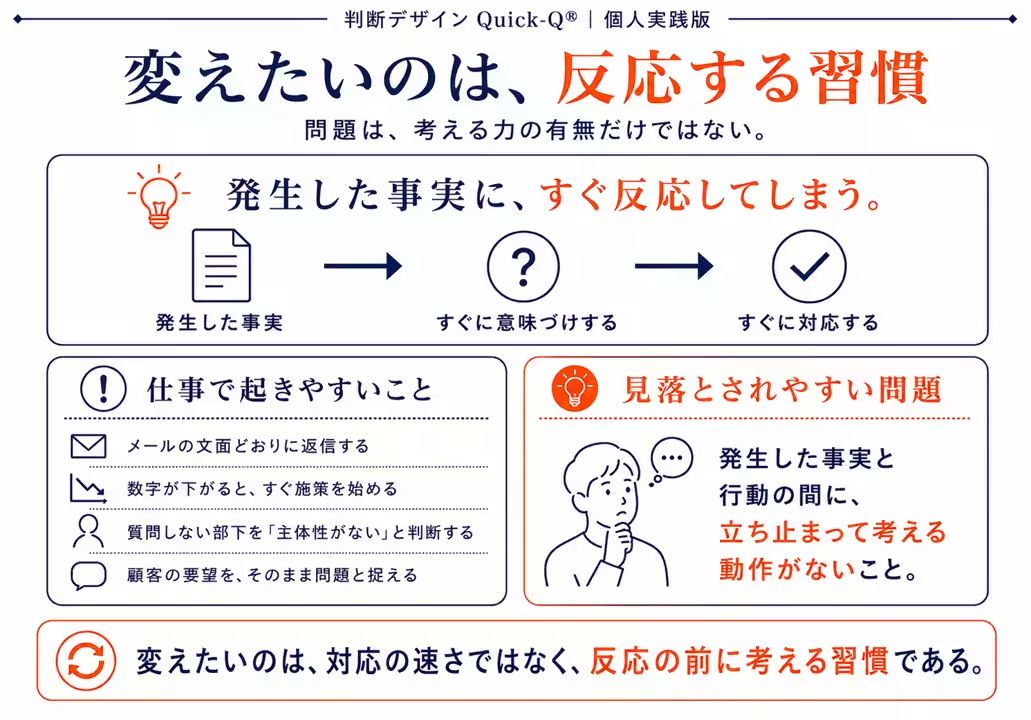
In workplaces, rapid responses often take precedence. Tasks such as swiftly replying to emails, proposing immediate strategies in response to declining figures, or explaining issues as they arise may lead to oversight in fully verifying facts before assigning meanings to them. The danger lies in making quick inferences based on incomplete information, highlighting the crucial requirement for integrated reflective pauses in a work routine.
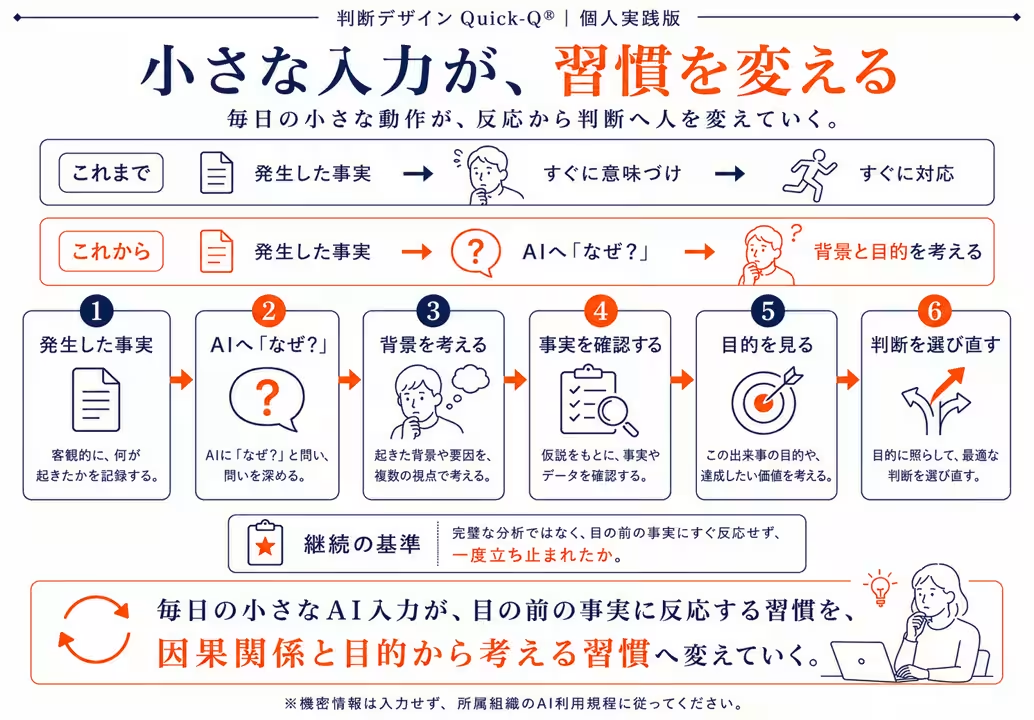
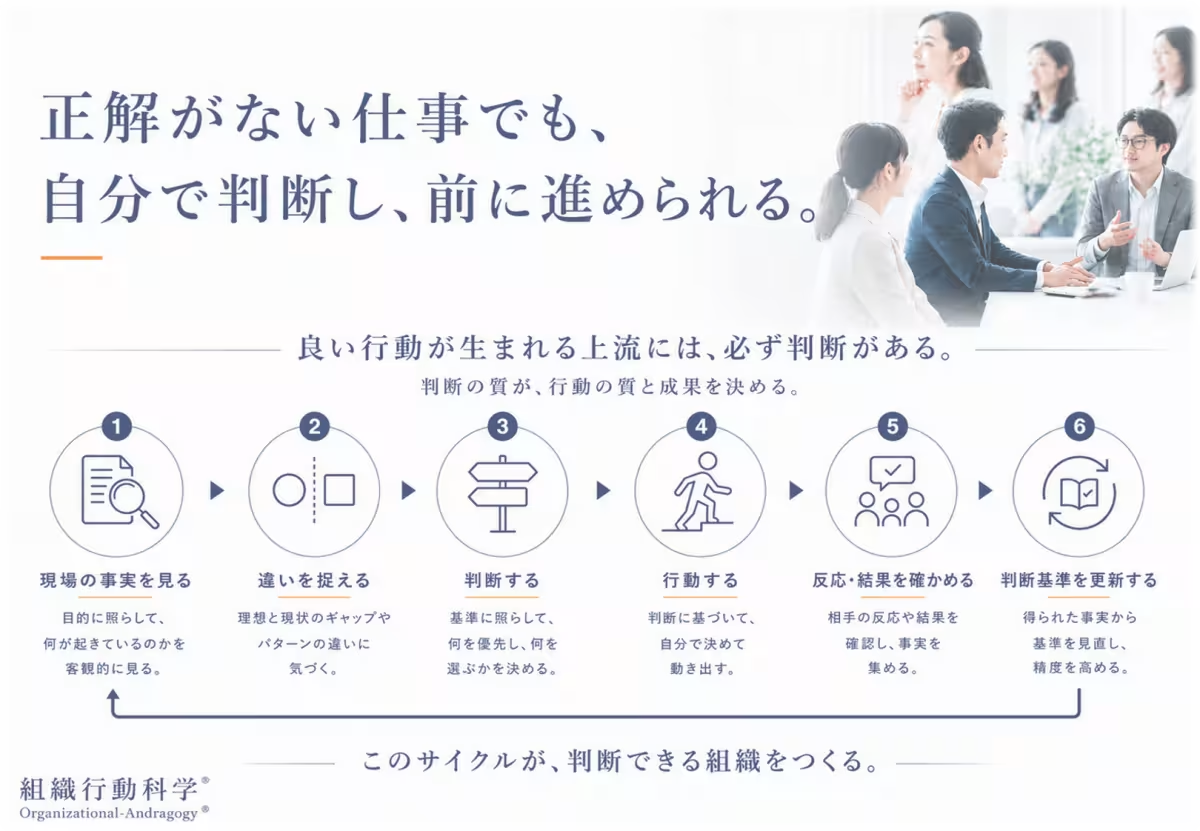
To improve decision-making quality, Quick-Q® emphasizes how critical it is to incorporate deliberate pauses into one’s workflow. Each pause serves not merely to clarify personal thought processes but to integrate a systematic approach to what inquiries need to be posed, what information warrants confirmation, and when to proceed with confidence.
The Relevance of Inquiry in the AI Era
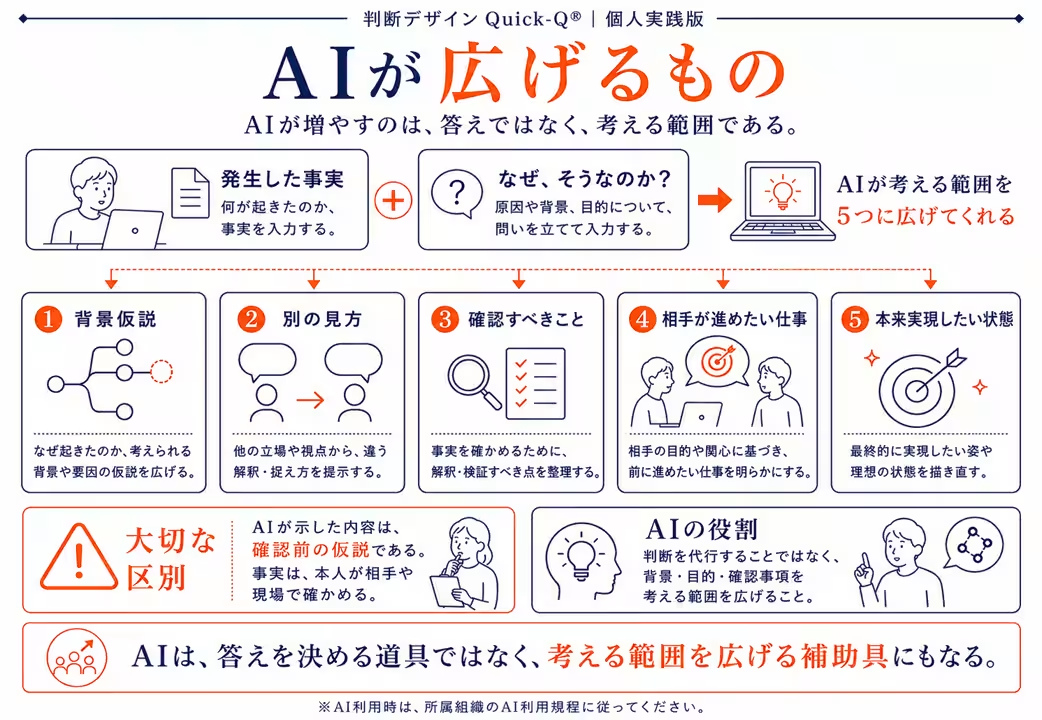
In an age dominated by generative AI, professionals now have the advantage of receiving insightful responses and proposals in minutes. This technological boon, while valuable, also carries the risk of misaligned premises or incorrectly framed problems leading to misguided AI assistance. Thus, creating a framework that effectively positions questions and reevaluates results is vital. Quick-Q® encourages users to engage with AI as a tool for questioning early assumptions instead of positioning its outputs as final conclusions.
The role of AI in Quick-Q® is clear: rather than simplifying thought processes, it serves to broaden perspectives and prompt further validation—a necessary transition from initial conceptions to tangible outcomes.
Daily Practice as a Organizational Approach
Despite its focus on individual practice, Quick-Q® contributes to enhancing organizational judgment experiences through shared learning. Individual logging of decisions can be invaluable in team settings or during reflective meetings, providing insights into the reasoning behind decisions made, the initial interpretative phases, the stopping points for reflection, and the influencers behind the evolving viewpoints.
This approach circumvents evaluations or monitoring of individual inputs fed into AI but rather conserves the essence of how individuals can evolve their thought processes. To solidify this notion, learning from one another's decision-making journeys transforms the individual's experience into a shared resource for collective growth.
Conclusion
Judgment Design Quick-Q® serves as a robust structure for integrating decision processes into daily routines, enhancing both individual performance and fostering learning within teams. Individuals don’t need expert-level AI knowledge to embark on this journey—initiating with minimal but consistent engagement allows for progressive development in complex decision settings.
With a strong emphasis on confirming facts, establishing queries, and purposively linking actions, Quick-Q® strengthens work methodologies aimed at prioritizing meaningful judgments over mere rapid responses, all while maintaining the agility integral to contemporary work culture.




Topics Business Technology)
【About Using Articles】
You can freely use the title and article content by linking to the page where the article is posted.
※ Images cannot be used.
【About Links】
Links are free to use.