


Revisiting 'Tokyo Boogie Woogie': A Tale of Zen and Family Struggles
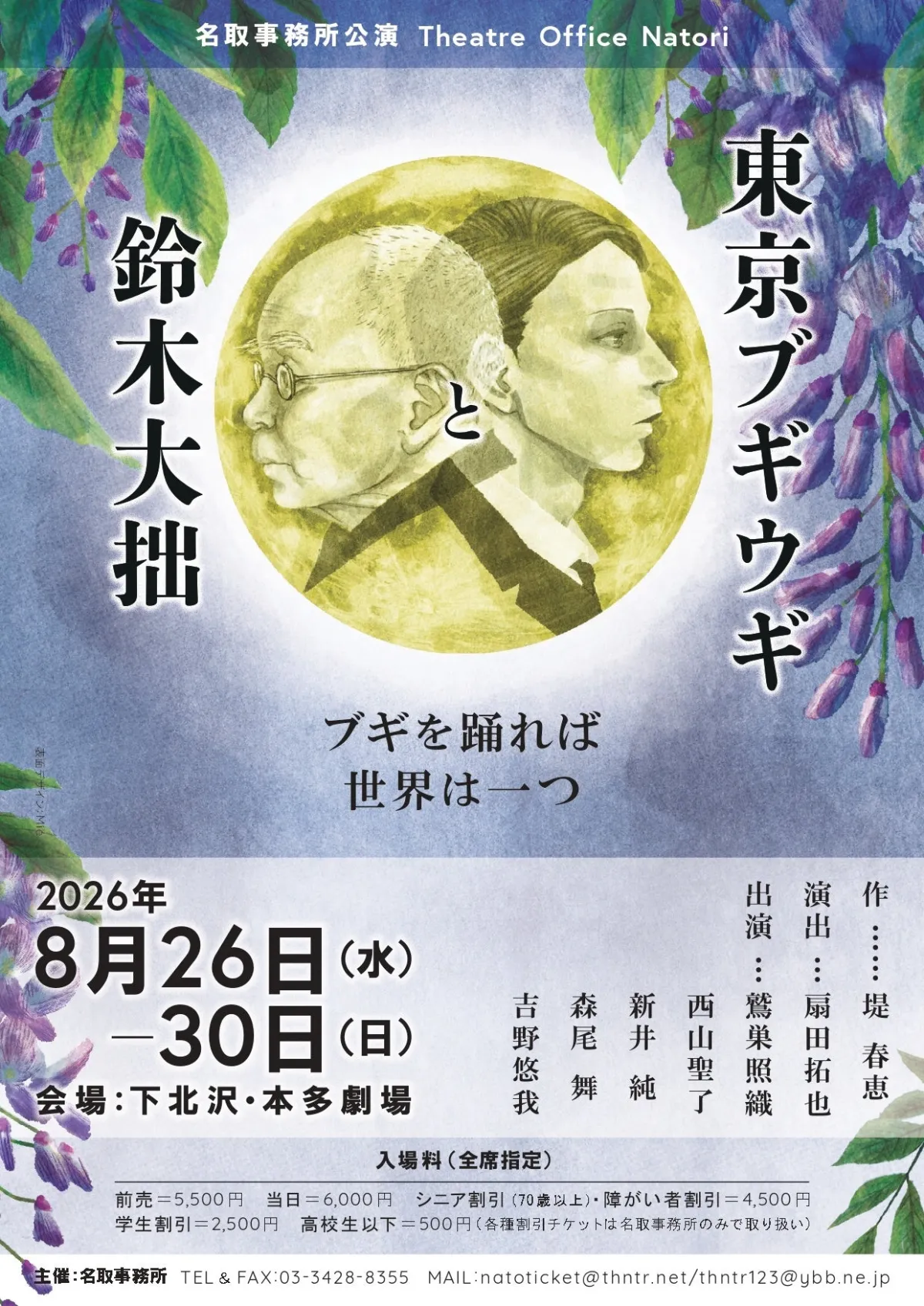
The highly anticipated revival of the play 'Tokyo Boogie Woogie and D.T. Suzuki' is set to take place from August 26 to August 30 in 2026 at the Honda Theatre in Setagaya, Tokyo. This production, hosted by the Natori Office, will explore the intricate dynamics between D.T. Suzuki, a renowned Zen master, and his adopted son, Alan, who penned the iconic song 'Tokyo Boogie Woogie.' Tickets for the performance will go on sale on July 2, 2026, at 11:00 AM through Confetti, operated by Long Run Planning Co., Ltd., located in Shinjuku, Tokyo.
Back in March 2021, the play received rave reviews on its initial run at Honda Theatre, and audiences are eagerly awaiting its return. It is a narrative that sheds light on the personal struggles faced by the Suzuki family during a tumultuous period in history. Through the lens of this family drama, themes of cultural diversity and generational conflicts come to light, making it a reflection of today's society.
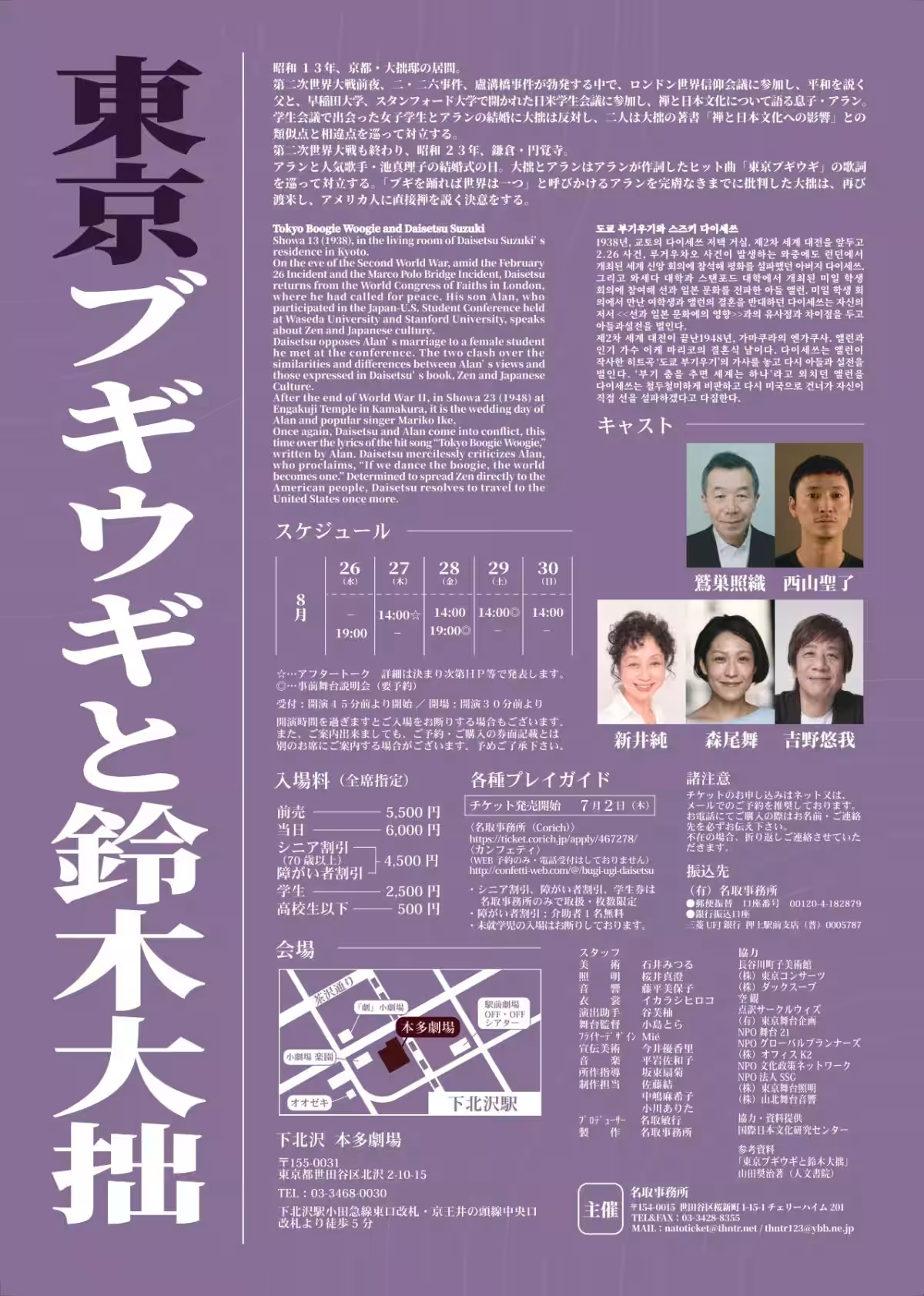
Set in the pre-World War II era of 1938, the play invites viewers to the Suzuki residence in Kyoto. As global tensions rise with events such as the February 26 Incident and the Marco Polo Bridge Incident, D.T. Suzuki advocates for peace at the World Conference on Faith in London. Meanwhile, Alan engages with American and Japanese students at a conference discussing Zen and Japanese culture. Their collision is exemplified in a significant rift over Alan's marital choice and the thematic elements in his lyrics for 'Tokyo Boogie Woogie.' D.T. Suzuki's parental opposition to Alan's marriage to a classmate sets the stage for a larger exploration of personal and cultural confrontation.
Fast forward to 1948 at Engaku-ji Temple in Kamakura, where Alan and the famous singer Mariko Ike celebrate their wedding. The situation escalates as D.T. Suzuki critiques Alan's song, which calls for unity through dance: 'When you dance the boogie, the world is one.' This moment showcases the deep-rooted tensions between father and son concerning their differing views on peace, culture, and Zen philosophy.
The play grapples with Alan's tumultuous life, as he struggled with alcoholism and societal neglect, far removed from the celebrated identity of D.T. Suzuki, who bridged Eastern and Western philosophies. However, despite his apparent flaws, Alan emerges as a potential driving force behind D.T. Suzuki's mission to spread Zen globally. Thus, the Suzuki household becomes a microcosm of the much larger dialogue surrounding diversity and acceptance that continues to resonate in the present.
Directed by the talented Takuya Ogi, who brings fresh vision to the script penned by Harue Tsuji, this revival promises to engage audiences anew with its potent mixture of history, drama, and culture. With a schedule that includes special events for visually impaired attendees and after-talk sessions, the production aims to be accessible and welcoming to all.
Ticket prices are set at 5,500 yen, including tax, for all reserved seating. To learn more about purchasing tickets, visit the official website at Confetti. Whether you are a fan of the original production or new to the narrative, this play is a reminder of the power of art to confront and reflect the complexities of familial and cultural identity.

Back in March 2021, the play received rave reviews on its initial run at Honda Theatre, and audiences are eagerly awaiting its return. It is a narrative that sheds light on the personal struggles faced by the Suzuki family during a tumultuous period in history. Through the lens of this family drama, themes of cultural diversity and generational conflicts come to light, making it a reflection of today's society.
Set in the pre-World War II era of 1938, the play invites viewers to the Suzuki residence in Kyoto. As global tensions rise with events such as the February 26 Incident and the Marco Polo Bridge Incident, D.T. Suzuki advocates for peace at the World Conference on Faith in London. Meanwhile, Alan engages with American and Japanese students at a conference discussing Zen and Japanese culture. Their collision is exemplified in a significant rift over Alan's marital choice and the thematic elements in his lyrics for 'Tokyo Boogie Woogie.' D.T. Suzuki's parental opposition to Alan's marriage to a classmate sets the stage for a larger exploration of personal and cultural confrontation.
Fast forward to 1948 at Engaku-ji Temple in Kamakura, where Alan and the famous singer Mariko Ike celebrate their wedding. The situation escalates as D.T. Suzuki critiques Alan's song, which calls for unity through dance: 'When you dance the boogie, the world is one.' This moment showcases the deep-rooted tensions between father and son concerning their differing views on peace, culture, and Zen philosophy.
The play grapples with Alan's tumultuous life, as he struggled with alcoholism and societal neglect, far removed from the celebrated identity of D.T. Suzuki, who bridged Eastern and Western philosophies. However, despite his apparent flaws, Alan emerges as a potential driving force behind D.T. Suzuki's mission to spread Zen globally. Thus, the Suzuki household becomes a microcosm of the much larger dialogue surrounding diversity and acceptance that continues to resonate in the present.
Directed by the talented Takuya Ogi, who brings fresh vision to the script penned by Harue Tsuji, this revival promises to engage audiences anew with its potent mixture of history, drama, and culture. With a schedule that includes special events for visually impaired attendees and after-talk sessions, the production aims to be accessible and welcoming to all.
Ticket prices are set at 5,500 yen, including tax, for all reserved seating. To learn more about purchasing tickets, visit the official website at Confetti. Whether you are a fan of the original production or new to the narrative, this play is a reminder of the power of art to confront and reflect the complexities of familial and cultural identity.
Topics Entertainment & Media)

【About Using Articles】
You can freely use the title and article content by linking to the page where the article is posted.
※ Images cannot be used.
【About Links】
Links are free to use.