



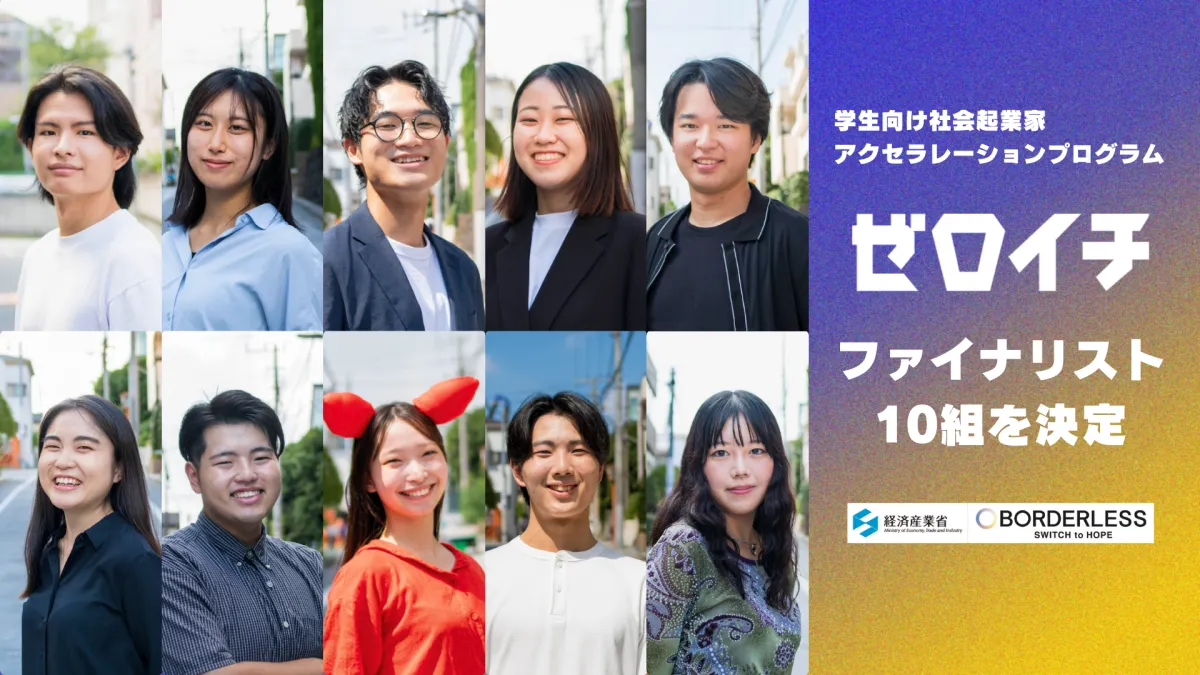
Ten Finalists Selected for the Ministry of Economy's 'Zero-ichi' Student Entrepreneur Program
Introduction
The Ministry of Economy and Borderless Japan have joined forces to run the 'Zero-ichi' Student Social Entrepreneur Acceleration Program, now in its third iteration. From a total of 188 applicants, ten promising finalist teams have been selected to receive dedicated support, showcasing the entrepreneurial spirit and social responsibility of Japan's youth.
Understanding 'Zero-ichi'
Launched in 2023, 'Zero-ichi' aims to nurture the next generation of social entrepreneurs tackling pressing social challenges. The program focuses on students residing in Japan who are committed to addressing various societal issues. Participants gain invaluable experience through lectures, mentoring, and intensive workshop sessions led by established social entrepreneurs and industry supporters. The goal is to equip attendees with both the mindset and skill set necessary for impactful social entrepreneurship.
Overview of the Third Iteration
This year, 'Zero-ichi' has evolved by extending its support beyond just the finalists. All 30 teams that passed the preliminary round will benefit from various specialized courses and events, enhancing learning opportunities for a larger group of students. The ten finalists chosen for the program will receive direct mentoring, guidance for business development, and support for developing prototype models of their projects.
Key Features of the Third Iteration
In this round, 'Zero-ichi' received an impressive 188 pre-entries and 83 main entries, resulting in 30 teams selected through preliminary evaluations. These teams participated in special courses aimed at understanding the core of social challenges and the essentials of turning ideas into viable businesses. Through further evaluations, the final ten teams have been selected as finalists.
First Round Selection Criteria
- - Educational Courses: Participants undergo a series of three intensive workshops focused on constructing businesses that genuinely address social issues.
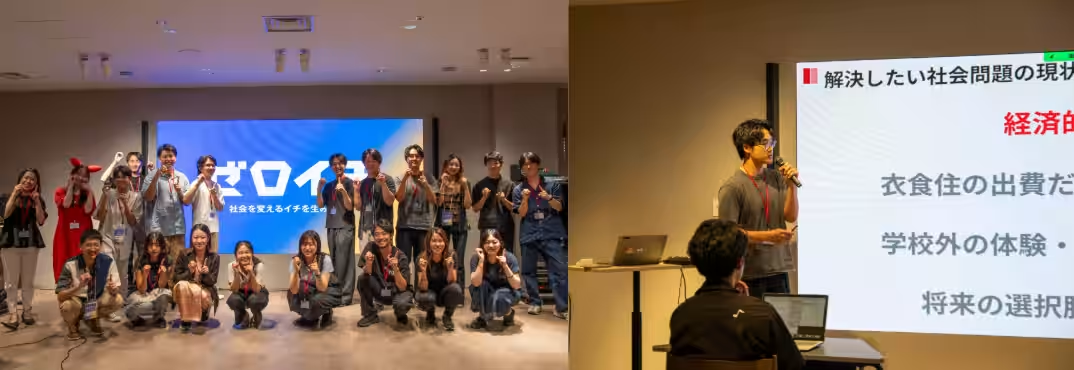
- - Participation in Events: Teams are invited to present their progress during events like interim and final reports, allowing them to interact with fellow social entrepreneurs and their supporters.
Finalist Selection Support
The ten selected finalists will receive special assistance as follows:
- - Dedicated Mentorship: Leading social entrepreneurs will mentor finalists, guiding them in developing and refining their business ideas.
- - Structured Support for Aspiring Social Entrepreneurs: Throughout the program, all teams will gather at designated retreat locations to focus intensely on their business development.
- - Prototype Development Assistance: In the later stages, finalists will work on validating their services and products through prototyping, contributing to their ventures’ viability.
Introduction of the Finalists
Here are the ten finalists whose innovative projects aim to tackle various social issues:
1. Hayate Okawara (Keio University, Energy Issues)
Motivated by a childhood dream of flying, he created jet engines but became concerned about the environmental impact and aims to recover 'wasted energy' to improve energy awareness in the community.
2. Mayu Onozawa (Taylor's University, Education in Cambodia)
With a history of supporting children, she aims to enhance educational access for Cambodian students in need, inspired by her psychological studies.
3. Kaito Komori (Osaka International University, Support for Hospitalized Children)
Drawing from his personal experiences with hospitalization, he volunteers to ensure that sick children do not fall behind in their studies.
4. Daiki Sekikawa (Nagaoka Institute of Technology, Population Decline in Niigata)
Growing up in Niigata, he focuses on promoting 'migration' as a strategy to combat regional depopulation.
5. Kanon Tanaka (Tohoku University, Poverty in Myanmar)
After witnessing poverty in Myanmar, she established an organization to support migrant refugees through educational tours and media awareness campaigns.
6. Masato Hokke (Fukui University, Experiential Gaps for Disadvantaged Children)
Having grown up in a single-parent family, he founded an NPO to support low-income families in enriching their children's experiences and opportunities.
7. Aoki Nakata (Aoyama Gakuin University, Assistance for Developmental Disorders)
Reflecting on her own challenges with developmental differences, she advocates for greater societal understanding and support for those with similar issues.
8. Ayako Hoshino (Jissen Women's University, Decreasing Blood Donations)
Experiencing a medical emergency herself, she passionately advocates for blood donation among youth through community programs to prevent future shortages.
9. Mayu Yoshino (Hokkaido University, Food Waste and Hunger)
Dedicated to simultaneously addressing food waste and hunger, she is innovating sustainable products that inspire individual contributions towards solutions.
10. Moeka Akiya (GAP Year, Stray Dog Adoption in Thailand)
Her passion for animal welfare led her to establish a project focused on improving adoption rates for stray dogs in Thailand.
Upcoming Activities
The finalists will embark on a six-month journey involving intensive support aimed at driving social change through business. A summer retreat took place in September 2023, emphasizing business plan development and personal goal setting.
Future Schedule for Participants
- - Late September – Late October 2025: Online program phase one
- - October 31 – November 3, 2025: Mid-term retreat in Tokyo
- - November 1, 2025: Mid-term report meeting in Tokyo
- - Early November 2025 – Mid-February 2026: Online program phase two
- - February 23 – February 28, 2026: Winter retreat in Tokyo
- - February 27, 2026: Final report meeting in Tokyo
Closing Remarks
The 'Zero-ichi' program continues to inspire and support young entrepreneurs as they strive to make meaningful contributions to society through innovative solutions. For more information or inquiries, please contact the Zero-ichi Program Operations Office at Borderless Japan.
About Borderless Japan
Established in 2007 as a social business focused on solving social issues through entrepreneurship, Borderless Japan operates over 50 projects across 14 countries, aiming to address problems like poverty, environmental challenges, and education. With a revenue projection of 10 billion yen for 2024, the company is recognized for its unique ecosystem that cultivates social entrepreneurs.







Topics Business Technology)

【About Using Articles】
You can freely use the title and article content by linking to the page where the article is posted.
※ Images cannot be used.
【About Links】
Links are free to use.