



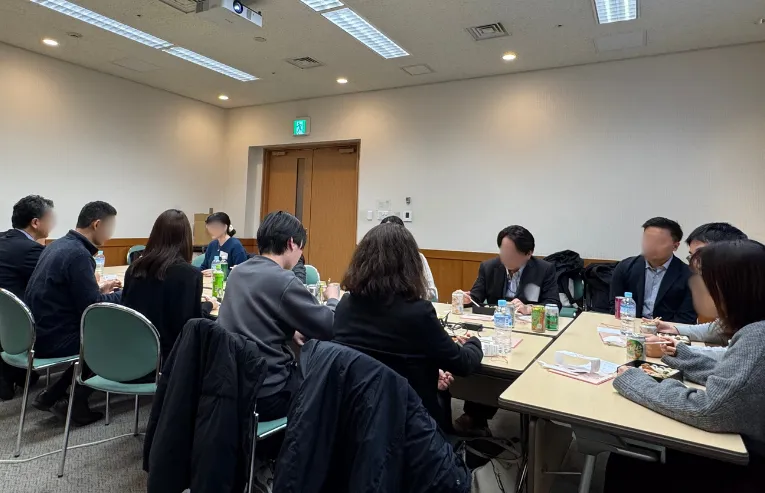
Final Session of the SSBJ Working Group Concludes for Japan’s SLC Community
The Final Session of the SSBJ Working Group: A Key Event for Japan’s SLC Community
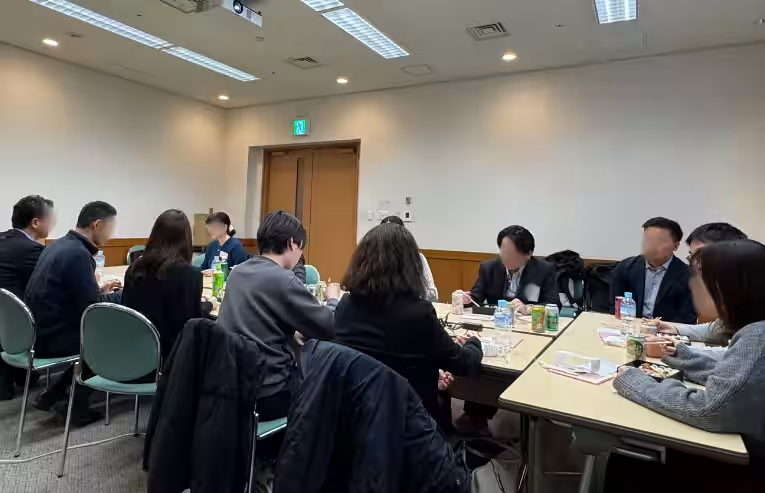
On January 21, 2026, the Sustainability Leadership Community (SLC) officially wrapped up its series of meetings focused on the SSBJ framework by holding the seventh and final session of the introductory SSBJ Working Group. This significant event brought together leaders committed to sustainability under the theme “Let’s make sustainability together.” With an impressive membership of 879 individuals from 612 companies as of December 2025, the SLC is the largest community of its kind in Japan.
The SLC operates under the management of Booost, a leading organization specializing in sustainability-related enterprise resource planning (ERP). This community is designed as a free registration platform for companies and individuals involved in sustainability. Throughout its regular events, participants engage in keynotes, panel discussions, and networking opportunities, fostering a collaborative environment where they can exchange ideas and insights on sustainability practices.
Objectives of the SSBJ Working Group
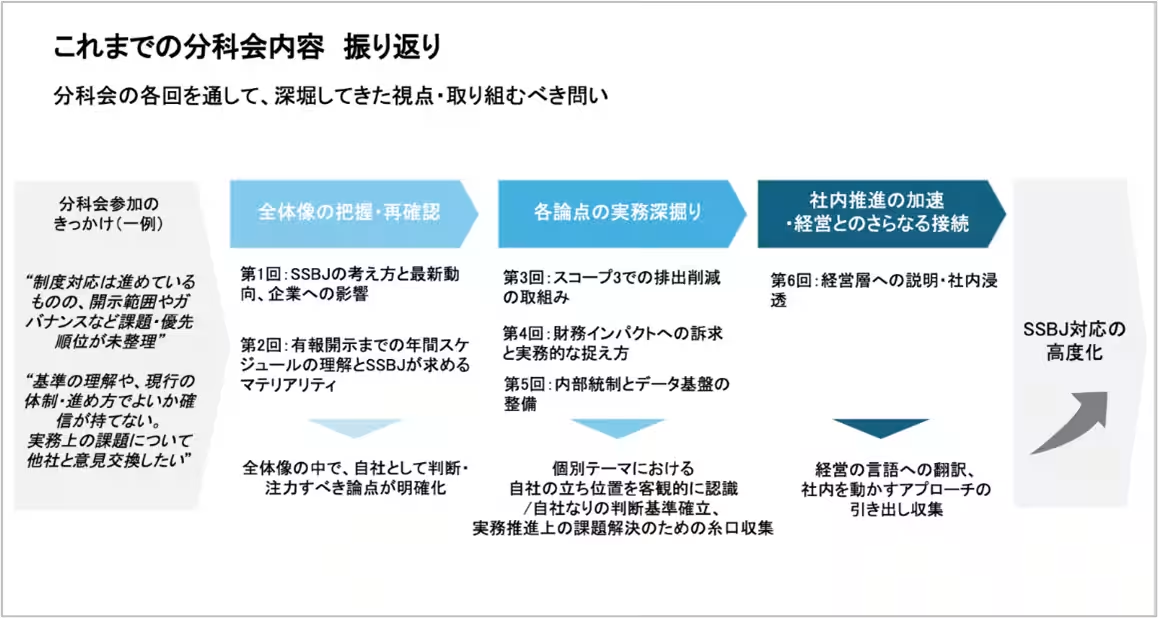
The goals of the Working Group were to align with the SSBJ standards announced in March 2025, focusing on real-world challenges and advanced case studies to enhance response capacities among participating organizations. The initiative targeted professionals from sustainability, investor relations, and executive planning departments within prime-listed companies valued at over ¥500 billion. Beginning in July 2025, the series unfolded across seven sessions, culminating in the latest insights shared during the final meeting.
Key Highlights from the Final Session
In this concluding session, participants revisited previous discussions and shared presentations based on several key areas:
- - Learning from Discussions: Many insights were gained from the thorough explanations and interactions during the Working Group's duration.
- - Complex Initiatives: Participants showcased sophisticated initiatives and strategies that were adopted throughout the sessions.
- - Focus Areas for the Future: Key challenges and upcoming priorities were highlighted, such as reassessing materiality in assessments, integrating financial impact evaluations into business strategy, and establishing comprehensive sustainability promotion systems across departments.
Several common themes emerged from the discussions:
- - Reassessing Materiality: The need to reconfirm that identifying materiality serves as the starting point for evaluating financial impacts, setting metrics, and creating disclosure frameworks.
- - Financial Impact Assessments: It’s crucial not only to refine calculations but also to connect them with management decisions and strategy, necessitating deep involvement from financial departments.
- - Establishing a Comprehensive Promotion System: There is an acknowledgment that the sustainability department alone cannot handle these initiatives; thus, creating cross-functional frameworks that involve finance, business units, and management commitment is essential for driving sustainability efforts forward.
- - Data Governance for Assurance: Beyond mere data collection, there’s an urgent need to establish controls and processes capable of withstanding third-party scrutiny, particularly involving uniform definitions and standards across global operations.
- - Connecting Stories Across Mediums: Clarifying who will serve as the “hub” for maintaining consistent narratives across various disclosure platforms is essential moving forward.
Conclusion and Participant Feedback
The SSBJ Working Group encompassed a comprehensive exploration of topics, from understanding regulations to practical implementation, internal dissemination, and assurance efforts. Participants recognized that responding to the SSBJ standards is not just about compliance but also about enhancing corporate value and informing strategic decisions.
Surveys indicated unanimous agreement among participants that their understanding of SSBJ standards and the practical applicability of the insights obtained had significantly improved. The formation of a closed network for discussions allowed for the sharing of advanced cases and insights that are not easily accessible through public information, leading to high satisfaction among participants.
Feedback from attendees highlighted the value of discussing broader sustainability themes, promoting ongoing internal sharing of insights. Others noted the support provided by networking with other companies in identifying and tackling SSBJ-related challenges.
Future Directions for the SLC
As the SLC continues to evolve, it aims to facilitate events and discussions tailored to the needs of practitioners, enhancing collaboration towards promoting corporate sustainability.
For those interested in becoming part of this growing community, here’s the registration link for the SLC: Sustainability Leadership Community Registration.
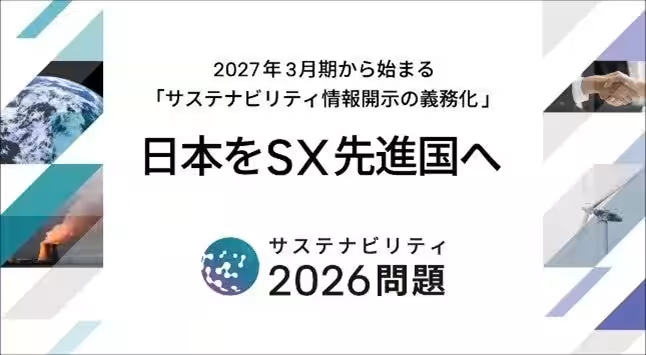
This community represents a vital step in addressing the challenges of the 'Sustainability 2026 Problem' under the new project initiated by Booost to position Japan as an advanced country in sustainability transformation (SX). The SLC will play a significant role in bridging practical actions and strategic discussions aimed at raising corporate value in a global context.
Join the movement towards sustainable corporate transformations by engaging with the SLC. Together, let’s foster a sustainable society.

Topics Consumer Technology)
【About Using Articles】
You can freely use the title and article content by linking to the page where the article is posted.
※ Images cannot be used.
【About Links】
Links are free to use.