



A Healing School: Resilience and Education in Maiduguri, Nigeria
A Healing Oasis for Trauma Survivors in Maiduguri
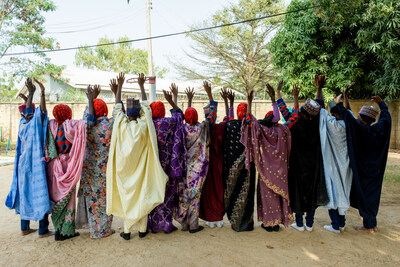
In a serene corner of Maiduguri, Nigeria, young learners are finding solace and hope within the walls of Lafiya Sarari School. This institution is not just an academic setting; it serves as a crucial sanctuary for children recovering from years of violence and instability induced by militant groups like Boko Haram. Here, children gather with open notebooks and pencils in hand, ready to embrace a learning experience tailored to their unique needs. The calm atmosphere belies the tumultuous experiences the students have endured, as they learn to trust again amid the shadows of their past.
The school, anchored by a collaborative initiative between the Global Survivors Fund, Neem Foundation, and local partners, has emerged as a beacon of hope. Thanks to a grant from Education Cannot Wait (ECW), Lafiya Sarari provides a trauma-informed education for youths affected by sexual violence in conflict, fostering a nurturing environment where trust and joy in learning can be regained.
Years of Violence and Its Impact
For over sixteen years, the Boko Haram insurgency has deeply scarred the childhood, safety, and educational prospects of countless children across northeastern Nigeria. In this region, school buildings and homes have often become targets for attacks and abductions, making education a perilous pursuit. Every child at Lafiya Sarari has been touched by this insurgency, carrying the emotional and psychological burdens of their experiences.
One of these students is Fatima, who has not only rebuilt her academic skills there but also rekindled her hopes for a brighter future. She recounts her harrowing journey when Boko Haram attacked her village in 2014, causing her family to flee and ultimately leading her to observe unimaginable horrors, including the loss of her father. After a grueling escape that saw them traveling for eleven days under dire conditions, returning to school felt like a distant dream.
Yet, through the trauma-responsive education program offered by Neem at Lafiya Sarari, Fatima found a lifeline. This institution created a structure and support system that helped her envision a future beyond her trauma.
The Role of Education in Healing
UNICEF reports that over 18 million children in Nigeria have been forced out of school due to ongoing insecurities, with increasing risks from abduction and attacks in educational settings. Girls like Fatima face the dual challenges of reintegrating into education while often confronting stigma as they are viewed through the lens of their traumatic pasts. The label of “Boko Haram wives” or the stigma associated with their identities can complicate their paths to recovery. However, education stands as a fundamental right that facilitates healing, empowers young girls, and enhances their prospects for the future.
At Lafiya Sarari, the curriculum is uniquely designed to accommodate trauma survivors, allowing them to progress at their own pace over an extended timeline rather than adhering to traditional annual benchmarks. The content emphasizes values often undermined by Boko Haram, including peace, respect, and tolerance, which are critical for nurturing resilient future leaders.
Philemon Nyminiba, a biology teacher and educational psychologist at the school, stresses the need for innovative teaching strategies that connect with these children's experiences. Using art, movement, and individual support, educators help students express emotions and experiences that they may find too difficult to articulate.
The school boasts a dedicated team consisting of seventeen teachers, two counselors, and four psychologists trained in trauma-informed care and psychological first aid. Creative interventions, such as play therapy, allow staff to identify underlying anxieties and emotional wounds that conventionally overlooked contexts may ignore.
A Vision for a Brighter Future
With ongoing support from ECW, the Global Survivors Fund, and Neem Foundation, Lafiya Sarari has initiated a transformative model of education that prioritizes dignity, security, and personalized care for trauma-affected children. This initiative empowers the voices of survivors, shaping what restorative education looks like and how it can meet their specific needs.
Fatima’s success story is one of many at Lafiya Sarari. Graduating from the program, she now steps confidently into the next chapter of her life, symbolizing resilience and possibility for other students who follow in her footsteps. “Here, we have almost everything we need to progress in life. This school gives us hope,” one student remarked, underscoring the profound impact of the school's nurturing environment.
The stories emerging from Lafiya Sarari illuminate a powerful truth: with proper support, education does not merely serve as a tool for learning; it becomes a pathway toward healing and renewal. In this sanctuary of hope, students like Fatima are no longer defined by their past but are empowered to shape their futures.
Topics Other)
【About Using Articles】
You can freely use the title and article content by linking to the page where the article is posted.
※ Images cannot be used.
【About Links】
Links are free to use.