



PortX Launches Decision Support for Supply-Demand Balancing in Chemical Industries
PortX's Innovative Move in Supply-Demand Balancing
PortX, a leading integrated software provider, has announced an impressive initiative aimed at assisting major manufacturers in the chemical and material sectors with the complexities of supply-demand balancing. This clever move comes at a time when the demand for efficient decision-making in co-production processes is at an all-time high.
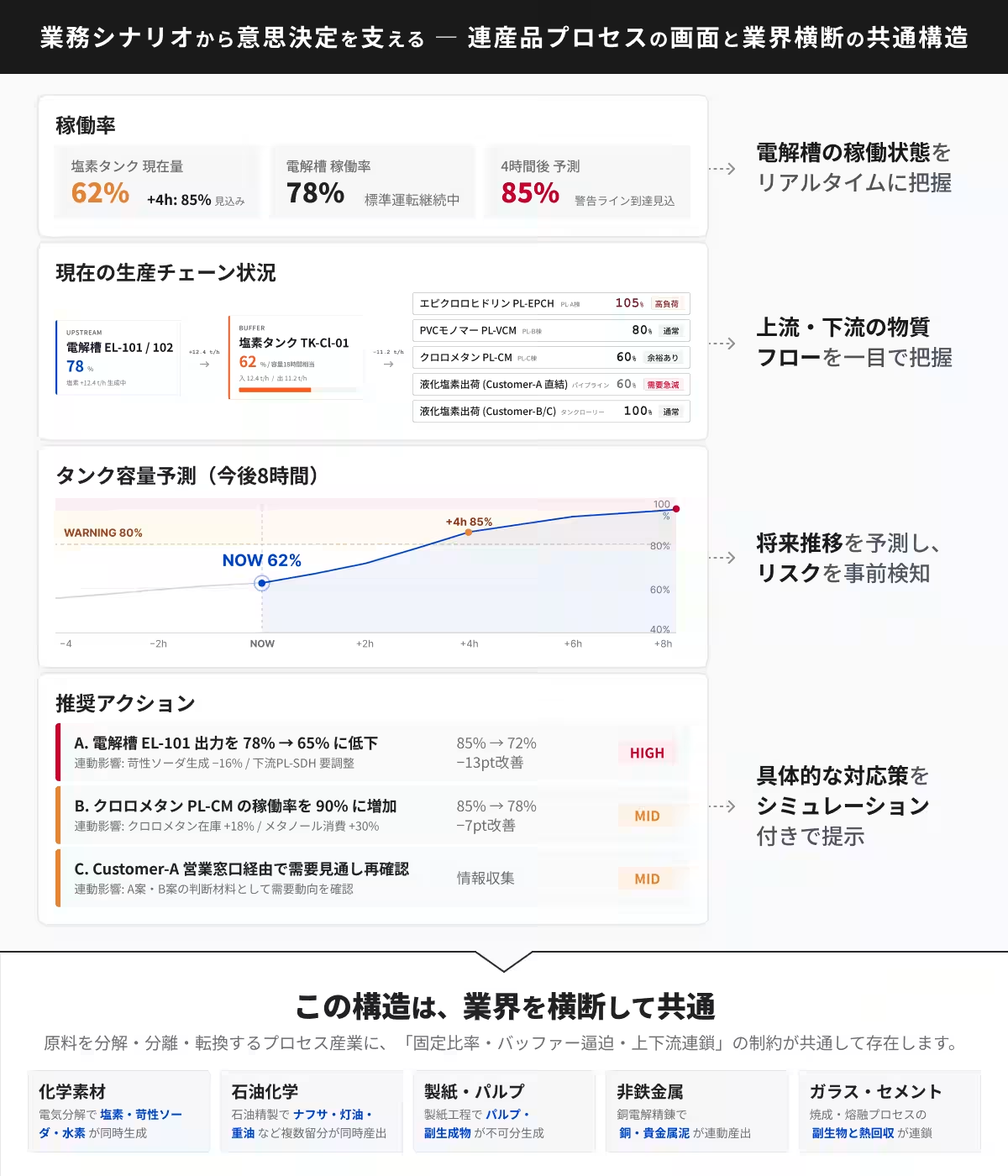
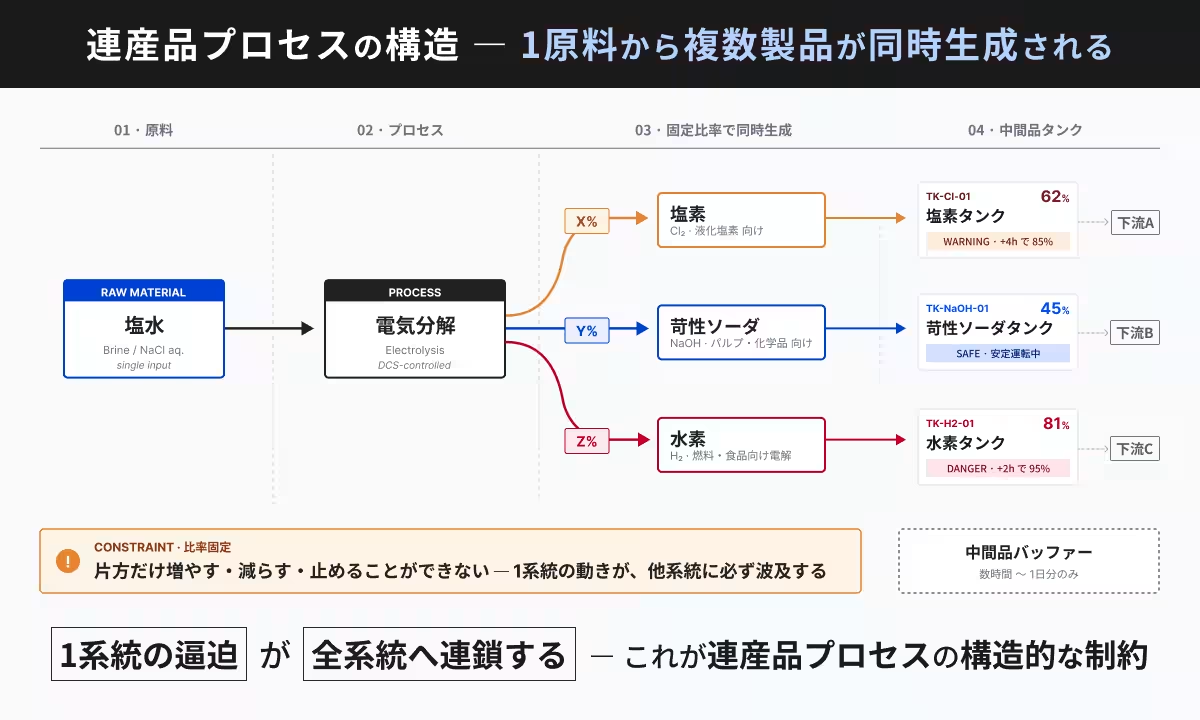
The challenge of co-production processes, wherein multiple products are yielded at a fixed ratio, is well-known in industries such as chemicals, petrochemicals, pulp and paper, non-ferrous metals, and glass and cement. For many companies, making informed decisions amidst fluctuating demand often hinges on the expertise of specific seasoned professionals. This reliance creates issues concerning consistency and knowledge transfer, leaving businesses in need of a more robust systematic approach.
Utilizing PortX's AI development and operational platform known as "Formula," the company aims to revolutionize the decision-making structure within organizations without altering their existing control systems. This initiative primarily targets large manufacturers across the aforementioned industries, providing them with the tools necessary to better manage their operations.
Understanding the Structural Challenges in Co-production Processes
The inherent difficulties of co-production processes are something production management and digital transformation leaders are undoubtedly familiar with. The constraint of fixed ratios in simultaneous production, coupled with a nearly negligible buffer for intermediate goods, creates constant challenges. The interconnections between upstream and downstream processes further complicate the situation.
Despite the availability of data from Data Control Systems (DCS) and historians, industries have lacked an accessible tool to navigate operational questions such as "What will occur in N hours?" or "How will upstream B react if I restrict downstream A?" As a result, critical decision-making has historically been left to veteran intuition and daily adjustment meetings.
This repeated oversight presents a unique structural gap within co-production processes, where no existing ERP, DCS vendor APC, BI dashboard, or generic digital twin has fully addressed the need for specialized solutions. PortX seeks to fill this gap by crafting tools that pinpoint exactly what is required to support decision-making in these scenarios effectively.
The Impact of Inventory Constraints on Business Relationships
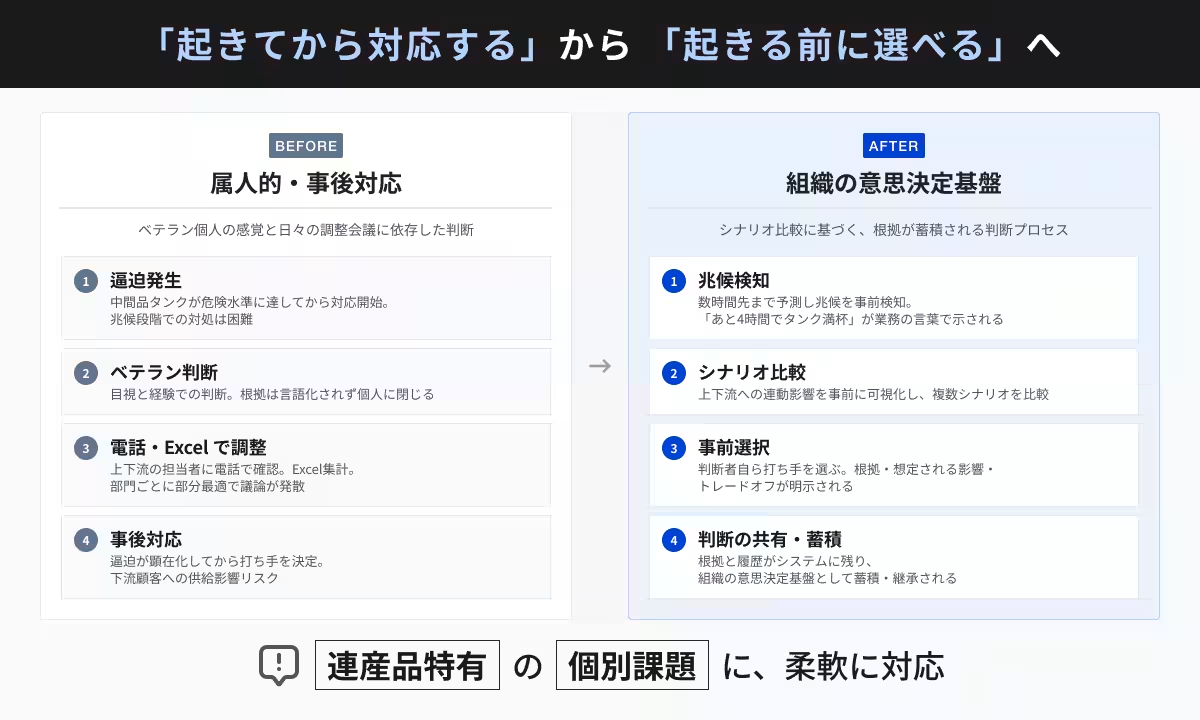
Should the depletion of intermediate buffers risk a supply outage to downstream customers, the consequences extend beyond operational efficiency and directly affect trust and the foundation of ongoing business relationships. PortX aims to help businesses shift from a reactive to a proactive posture. They are focused on enabling plant personnel to translate material balance movements into actionable business vocabularies, thus better preparing them for operational contingencies.
Instead of relying solely on complex equations and graphs, PortX provides comprehensible insights such as "The tank will be full in 4 hours," or "Limiting supply to downstream A will lead to overproduction in upstream B in 2 hours." This shift allows users to explore multiple scenarios ahead of time and make informed choices.
Key Features of PortX's Solution
1. No Modifications to Existing Control Systems: PortX's approach avoids altering any existing DCS or safety instrumentation. It works independently by referencing accumulated operational data, minimizing any safety concerns while ensuring consistent plant operations.
2. Phased Implementation: The solutions can be incrementally introduced, starting with a single intermediate product or system. The strategy allows decisions to be made within departmental approval limits, confirming effectiveness before broader deployment.
3. Collective Decision-Making: By visualizing and sharing the rationale for supply-demand judgments through the system, PortX facilitates a shift from individual decision-making reliant on seasoned professionals to organization-wide collaboration and continuous improvement.
A Vision for the Future
The CEO of PortX, Hironari Ishida, remarked that balancing supply and demand is a recognized challenge among material manufacturers, yet suitable systematic solutions have been elusive. Changing control systems is often fraught with risks and expenses, and traditional ERP and BI tools fall short of addressing these unique complexities.
The essence of PortX's mission is not solely to automate decisions through AI but to empower frontline decision-makers to evaluate various scenarios proactively and select the best course of action. Furthermore, the systematic documentation of these decisions ensures that insights and historical data are comfortably passed along to future teams, enhancing continuity and organizational growth.
In conclusion, PortX's commitment to tackling the long-ignored area of supply-demand balancing in co-production industries embodies its core purpose. By facilitating the implementation of industry-specific software solutions that leverage AI, they aim to empower businesses and enhance their competitive advantages. As such, PortX stands positioned as a pioneer in an area ripe for change in the manufacturing sector.
Topics Business Technology)
【About Using Articles】
You can freely use the title and article content by linking to the page where the article is posted.
※ Images cannot be used.
【About Links】
Links are free to use.