



Okayama University Enhances Middle School Teaching with 3D Printing Training
Okayama University Enhances Teaching with 3D Printing Training
On August 1, 2025, Okayama University's Comprehensive Technology Department conducted a 3D printing workshop for middle school teachers as part of the Okayama Prefectural Board of Education's annual training course. This initiative aimed to enhance the skills and understanding of educators regarding the integration of 3D printing technology into their teaching practices.
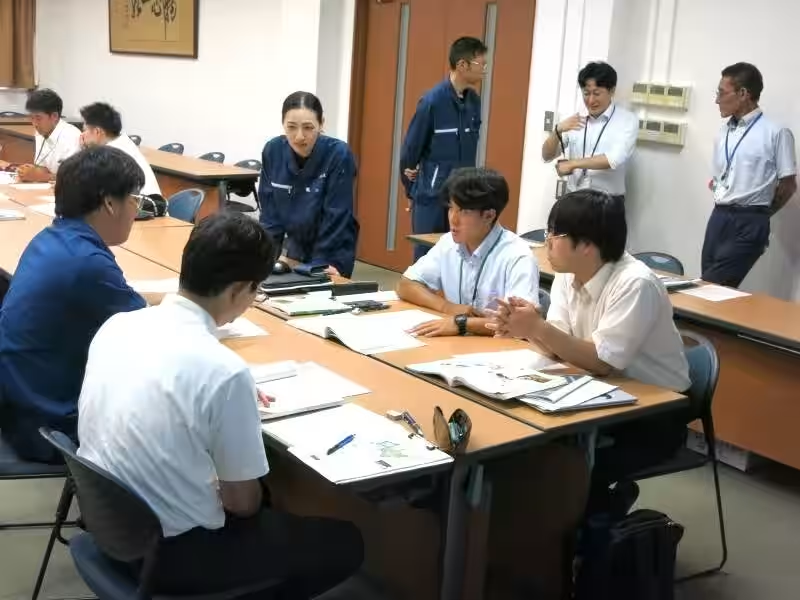
The workshop was designed for teachers from various educational institutions including middle schools and special needs schools. Its primary goal was to equip educators with the necessary competencies and abilities related to technology education. Participants engaged in discussions about the curriculum, assessment methods, and techniques required for effective instruction.
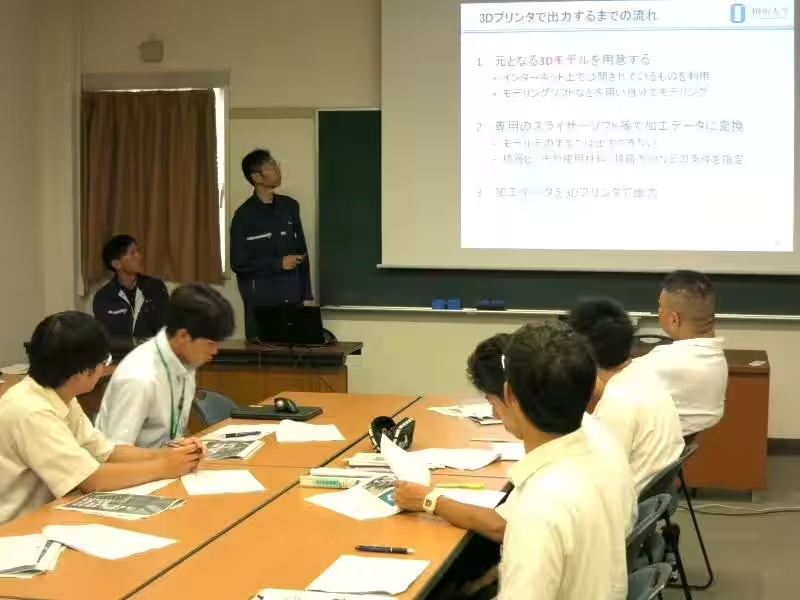
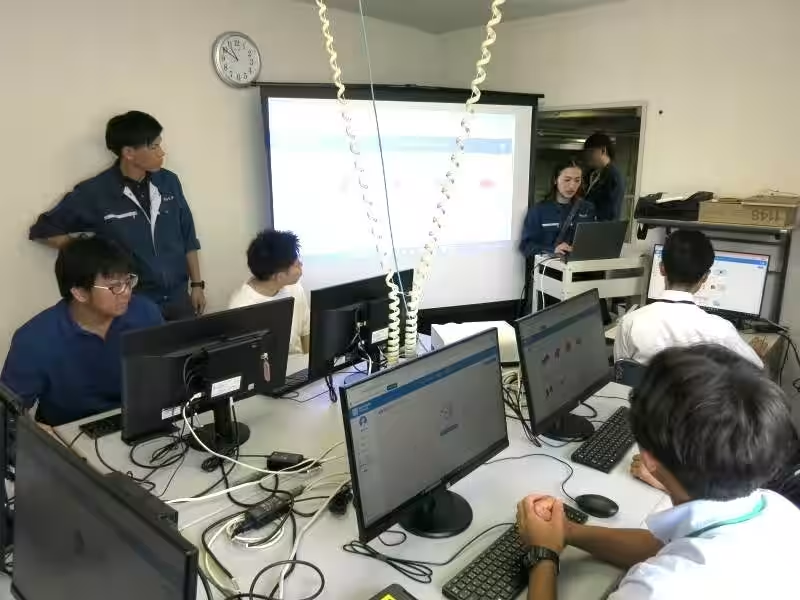
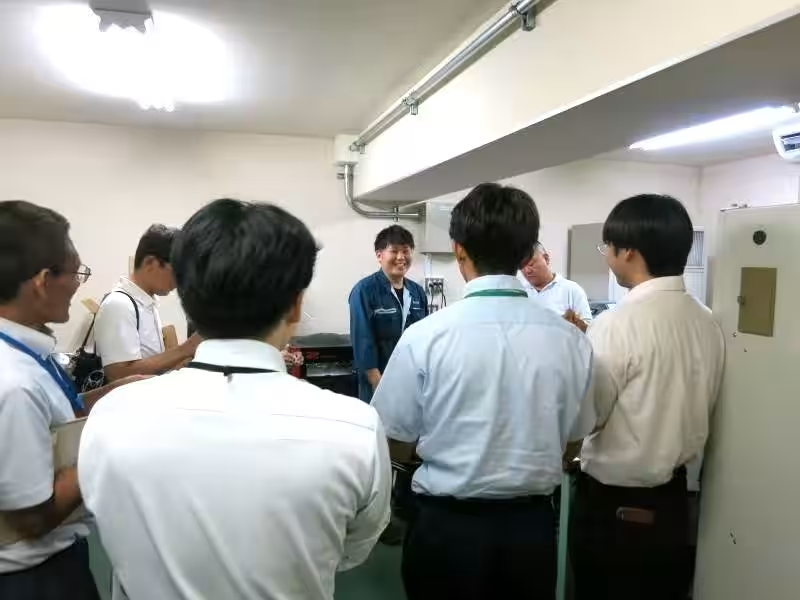
The session commenced with presentations led by Okayama University's staff, who introduced the principles of 3D printing including various printing methods, appropriate applications, and management considerations. Utilizing Autodesk's TinkerCAD software, attendees participated in hands-on 3D modeling exercises, followed by a tour of a 3D printer in operation. Although some teachers faced challenges navigating the new software, they gradually became adept, dedicating themselves to completing the assigned 3D models. This practical session proved invaluable, generating numerous questions from the participants and providing them with rich insights into the technology.
In the afternoon, the workshop featured a presentation from Toshiyuki Morimoto, a teacher at Sashio Middle School, who shared innovative examples of utilizing 3D printing in his classroom. This was followed by group work, encouraging collaborative discussion on potential applications of technology in education.
Toru Omori, the Supervisor from the Okayama Prefectural Comprehensive Education Center, remarked on the current landscape of 3D printing in education, indicating that while the curriculum guidelines include references to these tools, actual implementation in schools remains scarce. Factors such as cost and apprehension about adopting new technologies contribute to this hesitance. He expressed optimism that the workshop provided educators with the necessary insights to begin integrating 3D printing into their classrooms, encouraging them to take steps towards enriching their teaching resources.
Kanae Yasunobu, a technology specialist involved in the modeling instruction, emphasized the need for contemporary middle school education to adapt to the challenges of Society 5.0, as well as to promote STEAM education, sustainability goals, and decarbonization efforts. She acknowledged the diverse and evolving nature of content educators must cover but expressed hope that the training would benefit both teachers and their students.
In concluding remarks, Masahito Sato, Vice Director of the Comprehensive Technology Department and Vice President of Okayama University, highlighted the rapid advancements in technology education. He pointed out the necessity of ensuring that educational practices do not lapse into oversimplifications, losing essential understandings of the principles involved. Sato reiterated the department's commitment to sharing their expertise with society while also fostering skill development among their staff.
With a team of knowledgeable and skilled educators, the Comprehensive Technology Department is equipped to support various training requests geared towards enhancing technical education in the region. The collaboration between Okayama University and local educational institutions promises to instigate meaningful innovations in teaching methodologies, positioning the university as a pivotal player in technology education.
For further details, the workshop's overall objectives were aligned with Okayama University’s mission to promote sustainable development goals (SDGs) and to continue advancing its role as a unique research institution within the community.
For more information about Okayama University's initiatives, visit their official website.

Topics Other)
【About Using Articles】
You can freely use the title and article content by linking to the page where the article is posted.
※ Images cannot be used.
【About Links】
Links are free to use.