



Huawei Unveils Global Smart Public Service Solution at MWC Barcelona 2026
During the Mobile World Congress (MWC) held in Barcelona in March 2026, Huawei has made a significant stride in the realm of public services by launching its Global Smart Public Services Solution, as part of its Public Services Digitization Business Unit (GPSD). This innovative solution aims to accelerate the smart transformation of public services and enhance city governance, fostering discussions around the future of smart environments alongside global clients and partners. The event featured various professional gatherings, including the Global AI + Public Services Summit and a National Foundation Model Round Table, where leaders exchanged insights on optimizing public services through technology.
At the Global AI + Public Services Summit, Jason Slater, the Chief of Digital Transformation and AI at UNIDO, emphasized the importance of integrating effective digital governance, stating that building a digital government effectively goes beyond just implementing technology. It requires creating an inclusive, citizen-focused, and interoperable system that meets the needs of the public. In line with this vision, Saeed Xia, the President of Huawei's Global Public Services Unit, presented the architecture of the new solution, which is based on '1 digital foundation + 1 smart platform + N industry applications.' This framework aims to quickly organize service elements, integrate capabilities, and streamline processes to deliver scenario-oriented, efficient, and high-quality public services.
Furthermore, the solution is committed to promoting innovation and delivering valuable data services through both business and data-centric approaches. Ultimately, this initiative seeks to establish a smart service ecosystem with features such as chat-to-process functionalities, smart decision-making, and proficient operational attributes.
Chomparee Chompurat, the Deputy Permanent Secretary of Thailand's Ministry of Digital Economy and Society (MDES), highlighted that Thailand is leveraging a robust 'Cloud-First' infrastructure and responsible AI integration to propel its transition into a smart government that prioritizes citizen-focused services. The round table held during the event concentrated on crucial aspects like AI-supported national smart transformations and the construction of AI Data Centers, gathering over 20 government and industry experts from Europe, Asia-Pacific, the Middle East, and Africa to share their perspectives. Huawei took this opportunity to share its experiences in foundational model applications and AI infrastructure construction, fostering collaboration to explore pathways for intelligent transformation.
During an open discussion session, Yu Jinxiao, the Overseas Technical Director of Linewell, remarked on how advanced AI technology is traversing a qualitative leap from being merely 'functional and accessible' to becoming 'effortless and intelligent.' This transformation not only significantly streamlines workflows, reducing form completion times by 80% to 90% but also augments efficiency through the innovative chat-to-process interaction model. Yang Xuqing, the CTO of iSSTech, stressed future smart cities will leverage AI-centric 'City Super Application Portals' to efficiently tackle challenges like flood control in urban management. Additionally, super applications could reduce project cycles by 50% for economic development and simplify public services, making citizen interactions about services as intuitive as chatting.
At present, AI is profoundly reshaping the foundational logic of global public services and digital, smart cities. Huawei commits to further developing this digital technology infrastructure and enhancing collaborative synergy with partners to jointly support the advent of a comprehensive intelligence revolution in global public services and city governance.

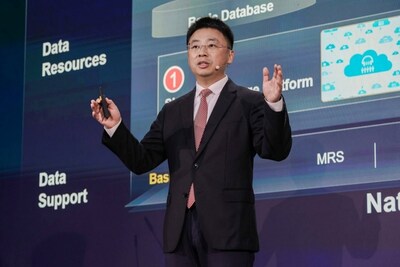
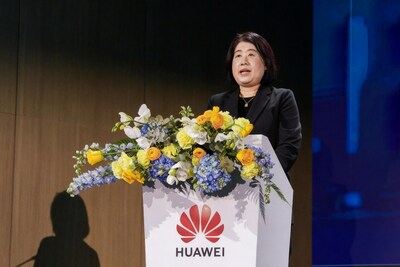
At the Global AI + Public Services Summit, Jason Slater, the Chief of Digital Transformation and AI at UNIDO, emphasized the importance of integrating effective digital governance, stating that building a digital government effectively goes beyond just implementing technology. It requires creating an inclusive, citizen-focused, and interoperable system that meets the needs of the public. In line with this vision, Saeed Xia, the President of Huawei's Global Public Services Unit, presented the architecture of the new solution, which is based on '1 digital foundation + 1 smart platform + N industry applications.' This framework aims to quickly organize service elements, integrate capabilities, and streamline processes to deliver scenario-oriented, efficient, and high-quality public services.
Furthermore, the solution is committed to promoting innovation and delivering valuable data services through both business and data-centric approaches. Ultimately, this initiative seeks to establish a smart service ecosystem with features such as chat-to-process functionalities, smart decision-making, and proficient operational attributes.
Chomparee Chompurat, the Deputy Permanent Secretary of Thailand's Ministry of Digital Economy and Society (MDES), highlighted that Thailand is leveraging a robust 'Cloud-First' infrastructure and responsible AI integration to propel its transition into a smart government that prioritizes citizen-focused services. The round table held during the event concentrated on crucial aspects like AI-supported national smart transformations and the construction of AI Data Centers, gathering over 20 government and industry experts from Europe, Asia-Pacific, the Middle East, and Africa to share their perspectives. Huawei took this opportunity to share its experiences in foundational model applications and AI infrastructure construction, fostering collaboration to explore pathways for intelligent transformation.
During an open discussion session, Yu Jinxiao, the Overseas Technical Director of Linewell, remarked on how advanced AI technology is traversing a qualitative leap from being merely 'functional and accessible' to becoming 'effortless and intelligent.' This transformation not only significantly streamlines workflows, reducing form completion times by 80% to 90% but also augments efficiency through the innovative chat-to-process interaction model. Yang Xuqing, the CTO of iSSTech, stressed future smart cities will leverage AI-centric 'City Super Application Portals' to efficiently tackle challenges like flood control in urban management. Additionally, super applications could reduce project cycles by 50% for economic development and simplify public services, making citizen interactions about services as intuitive as chatting.
At present, AI is profoundly reshaping the foundational logic of global public services and digital, smart cities. Huawei commits to further developing this digital technology infrastructure and enhancing collaborative synergy with partners to jointly support the advent of a comprehensive intelligence revolution in global public services and city governance.
Topics Consumer Technology)
【About Using Articles】
You can freely use the title and article content by linking to the page where the article is posted.
※ Images cannot be used.
【About Links】
Links are free to use.