



Exploring Exclusionary Nationalism Through Language Choice in Pre-War Japan
Introduction
In a groundbreaking study conducted by researchers from Tokyo University of Science, approximately 300,000 newspaper articles from pre-war Japan were meticulously analyzed to quantitatively assess the rise of exclusionary nationalism. This research sheds light on how language choices reflected rising nationalist sentiments during this tumultuous period in Japanese history.
Methodology
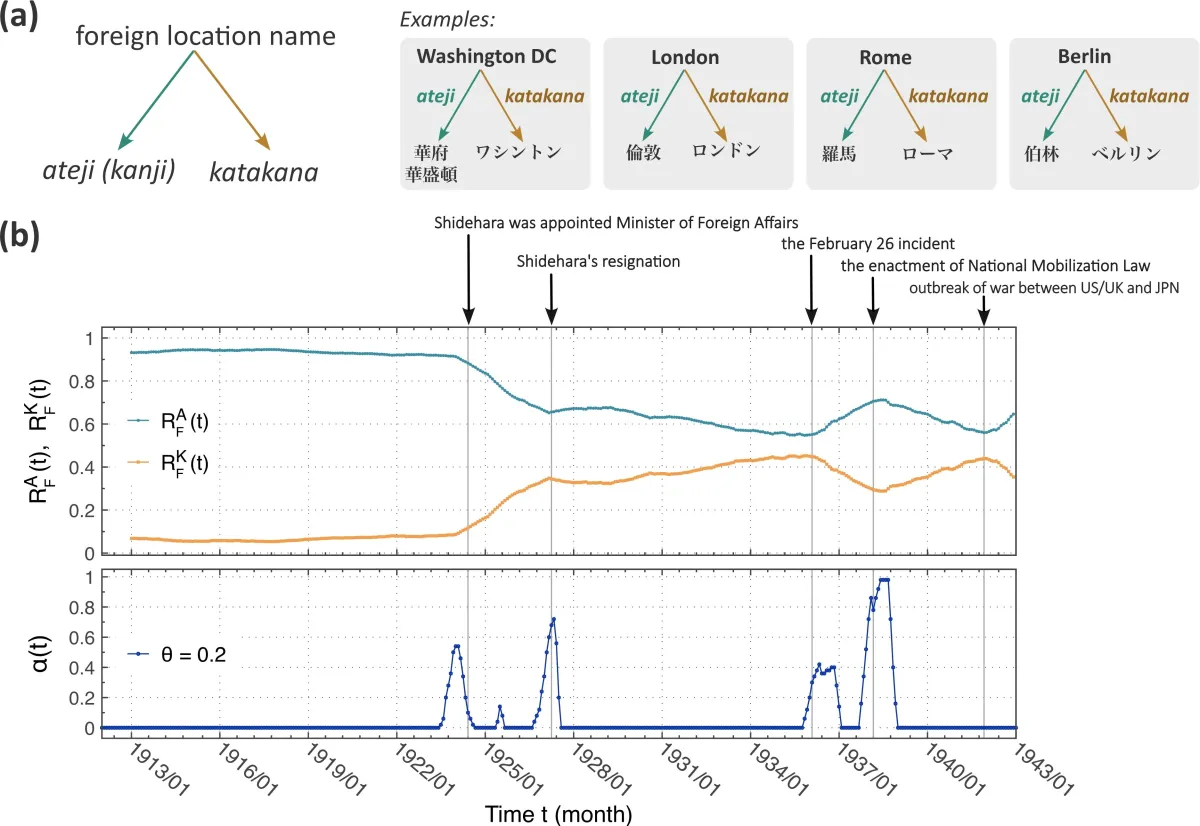
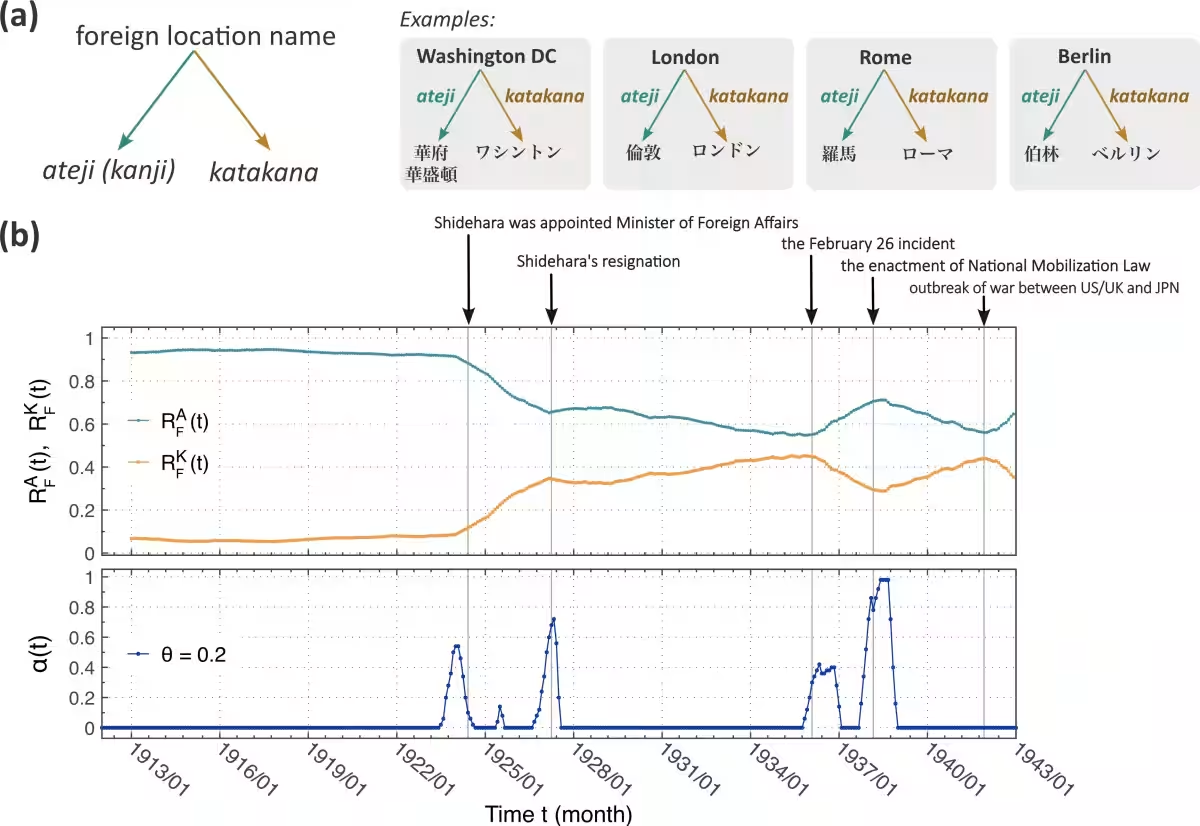
The research team, led by Associate Professor Tomoko Matsumoto, employed a unique approach centered on the representation of foreign place names in Japanese media. By examining how these names were either transcribed into katakana (e.g., Washington) or written using kanji (e.g., 華盛頓), the team identified trends in language use that indicated shifts in societal attitudes toward foreign nations.
They hypothesized that a growing preference for kanji, a distinctly Japanese script, over katakana could serve as a marker of exclusionary sentiment toward foreign influences. Using advanced statistical techniques, specifically a method known as Spectral Change Detection, the researchers pinpointed significant changes in language usage patterns over time.
Key Findings
Their findings revealed a notable increase in exclusionary nationalism starting not in the year of conflict with the U.S. and the U.K. (1941) but rather five years prior, in 1936. This year also marked significant national events such as the 二・二六事件 (February 26 Incident), suggesting an earlier onset of exclusionary attitudes than previously recognized.
Interestingly, the study uncovered that attitudes toward former enemy nations, namely the USA and U.K., were reflected through increased use of kanji in newspaper articles, whereas friend nations, Germany and Italy, were often represented in katakana. This differentiation in language usage was evident as early as the 1920s, indicating that exclusionary nationalism was not simply a blanket reaction to foreign powers but a selective process influenced by the geopolitical context.
Implications of the Research
The implications of this study extend beyond a historical analysis of pre-war Japan. By quantifying the link between language choices and national sentiment, the research offers a novel method for assessing the evolution of nationalism and foreign attitudes within societies. This approach can potentially be utilized in contemporary settings to detect early signs of rising nationalistic sentiments globally.
Furthermore, Matsumoto emphasizes the significance of this research for understanding current international relations, stating that such language analysis could provide valuable insights into contemporary divisions and conflicts among nations.
Broader Context
The concept of exclusionary nationalism posits that nations often perceive themselves as superior to others, leading to tendencies to exclude or reject foreign influences. This perception can deteriorate diplomatic relations and pave the way towards conflict, highlighting the importance of recognizing and addressing rising exclusionary sentiments in any society.
While traditional methods rely heavily on public opinion polls, the researchers successfully demonstrated that language data can yield a more nuanced understanding of national attitudes, even in periods lacking contemporary survey data.
Future Directions
Potential applications of this methodology extend beyond Japanese studies. As databases for etymological analysis expand globally, researchers could apply this framework to various languages, enhancing the understanding of nationalism and foreign relations in diverse cultural contexts.
The ability to recognize rising exclusionary nationalism early could serve as a critical tool for preventing international conflicts. By tracking language trends over time, scholars and policymakers can better gauge the health of international relations and social cohesion.
Conclusion
The research conducted by Matsumoto and her colleagues has opened new avenues for understanding historical and contemporary dynamics of nationalism. Their innovative use of language analysis not only enriches the study of Japan’s past but also offers practical applications for addressing global challenges of nationalism in the present day.
Topics People & Culture)
【About Using Articles】
You can freely use the title and article content by linking to the page where the article is posted.
※ Images cannot be used.
【About Links】
Links are free to use.