



New Partnership Seeks to Green Temporary Learning Spaces in Crisis Areas
New Partnership to Enhance Temporary Learning Spaces in Crisis Areas
In response to the intensifying crises exacerbated by climate change, Education Cannot Wait (ECW) has announced a significant grant aimed at improving temporary learning environments in disaster-stricken regions. Collaborating with Save the Children, Arup, and the World Wildlife Fund (WWF), this initiative seeks to establish new standards for environmentally friendly learning spaces. This move highlights the vital intersection of climate action and education in humanitarian emergencies, especially as global leaders gather for COP30 to discuss more sustainable solutions for the future.
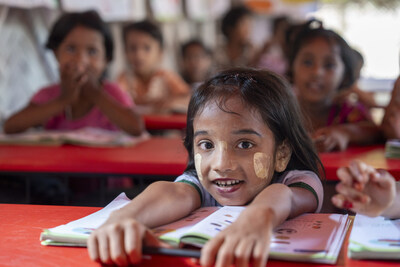
Temporary learning spaces are crucial for children in humanitarian crises. From the refugee camps in Bangladesh to flood-affected regions in South Sudan, these facilities are often lifelines. However, many of these structures currently lack clear guidelines and standards for environmentally sustainable, resilient, and inclusive design and operation. Without proper standards, temporary learning spaces may contribute to waste and environmental degradation, further complicating the learning conditions of vulnerable children.
To fill this gap, the pioneering funding merges the expertise of Save the Children in children's rights and humanitarian efforts, the technical skills of Arup in engineering, and the environmental knowledge of WWF into an innovative partnership that intertwines humanitarian aid, engineering, and ecological sustainability. Marian Hodgkin, Global Education Lead at Save the Children, emphasized, "Our temporary learning spaces provide stability and hope in crisis situations—hopes that must extend beyond immediate needs and support long-term stability. By collaborating with children in designing these spaces, we make them safer, more relevant, and inclusive. Moreover, ensuring these spaces are environmentally responsible shows the children that we are investing in their future."
Arup's Hayley Gryc stated, "We take pride in collaborating with Save the Children and WWF—facilitated by support from Education Cannot Wait—to create safe, sustainable, and climate-resilient environments for children in crises. This initiative is a crucial step in rethinking how education intersects with climate action. It ensures that even in the most challenging contexts, provisional learning spaces uphold human dignity and ecological responsibility."
As part of this initiative, practical tools and guidelines will be developed, tested, and disseminated for education stakeholders working in crisis-hit areas. The guidelines will cover the entire lifecycle of temporary learning spaces—from planning and material sourcing to maintenance and decommissioning—focusing on resource-efficient construction and local adaptation. Enhanced attention will also be given to integrating children with disabilities and those facing gender-specific challenges.
The partners will create a global framework for the ecological design of temporary learning environments, incorporating both local and international partners. Additionally, practical guidelines and cost estimation tools will be created and tested across various crisis situations to ensure their applicability in emergencies. These tools will be disseminated through educational, climate, and humanitarian networks to achieve broad acceptance and impact.
This grant represents part of ECW's strategic commitment to climate-just education in emergencies. It underscores the urgent need for collective investment in education as one of the foremost pillars of climate action. The initiative aligns with the calls to action of COP30 and contributes to global efforts to make education systems more resilient, sustainable, and inclusive amid rising climate and humanitarian risks. By fostering partnerships and encouraging eco-friendly practices, this program aims not only to enhance education but also to safeguard the planet for future generations.
Topics Other)
【About Using Articles】
You can freely use the title and article content by linking to the page where the article is posted.
※ Images cannot be used.
【About Links】
Links are free to use.