



Groundbreaking Research on Periodontal Disease Risks in Pets Published
Overview of the Research
Recently, a comprehensive study, leveraging anonymized pet insurance claims data, was published in Frontiers in Veterinary Science. Conducted by Anicom Insurance Co., Ltd., the research focused on the changing risks of periodontal disease in dogs and cats as they age. By analyzing data from approximately 690,000 dogs and 190,000 cats whose insurance policies began in 2023, the researchers uncovered critical insights into age-related and breed-related factors influencing periodontal disease risk.
Key Findings
The analysis demonstrated that the incidence of claims related to periodontal disease increases with age for both dogs and cats. More significantly, variations were observed based on species and breed, indicating that certain breeds are at higher risk. Notably, dogs exhibited a higher risk level not only by breed but also as they aged compared to cats. This indicates that pet owners should be particularly mindful of the dental health of their canine companions as they grow older.
Risk Patterns in Dogs
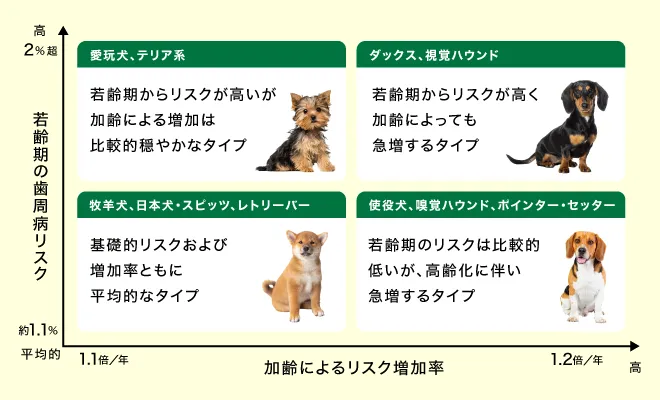
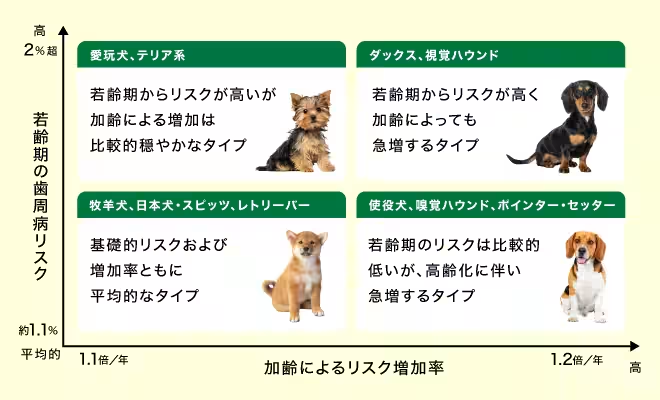
The study identified distinct risk patterns concerning breeds among dogs, which were previously observed but are now confirmed quantitatively. Dogs were categorized into four distinct patterns based on their periodontal risk:
1. High initial risk with gradual age increase
2. Lower initial risk, but sharp increase with age
3. Consistently high risk from a young age with a steep rise as they age
4. Average risk with normal increase rates
These findings suggest that different breeds of dogs might respond to periodontal disease differently, influenced by their specific health factors.
Risk Patterns in Cats
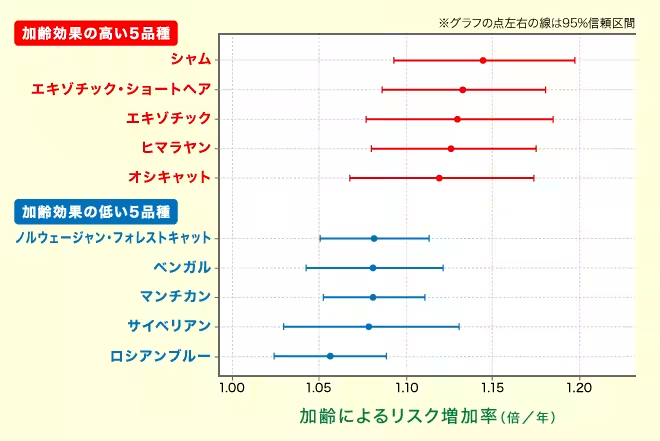
In contrast, the research highlighted that the foundational risks across cat breeds appear to be smaller, even though the extent of risk increase with age does vary. Among 51 cat breeds analyzed, the Siamese was noted for having the highest increase in risk associated with aging. Other breeds, particularly the Exotic, Himalayan, and Persian (ranking 7th), also exhibited higher tendencies towards increased risk as they aged.
Importance of the Study
This study markedly debunks the notion that periodontal disease is solely a concern for older pets. It suggests that both breed and body size significantly affect the manifestation of risk, emphasizing the need for optimal care beginning in younger ages. These insights are critical for veterinary practitioners, informing their clinical approaches and facilitating proper guidance for pet owners regarding their pets' dental health.
Moving forward, Anicom Group continues to leverage pet insurance data to contribute to advancements in companion animal healthcare, aiming for improved quality of life for pets and their owners alike. This study underlines the necessity for early dental care interventions to help mitigate the serious risks associated with periodontal disease.
Published Information
Journal: Frontiers in Veterinary Science
Paper Title: Species-and Breed-Associated Heterogeneity in Age-Related Increases in Periodontal Disease Risk among Dogs and Cats Based on Japanese Insurance Claim Data
Authors: Rei Akiyama (Anicom Insurance Co., Ltd.), Yuki Matsumoto (Anicom Insurance Co., Ltd., Azabu University), Ryo Horie (Anicom Insurance Co., Ltd.)
Topics Health)
【About Using Articles】
You can freely use the title and article content by linking to the page where the article is posted.
※ Images cannot be used.
【About Links】
Links are free to use.