



Revolutionizing Semiconductor Manufacturing with Advanced Nano-particle Analysis Services
Introduction
With the advancements in the semiconductor industry, the demand for high-performance and energy-efficient devices is rising rapidly. As a result, the miniaturization of technology continues to accelerate, presenting new challenges. One significant issue facing manufacturers is contamination by impurity metal nanoparticles, which can lead to circuit failures such as disconnections or shorts. To address this critical concern, Toray Research Center (TRC), located in the Nihonbashi-honcho district of Tokyo, has launched a cutting-edge service for high-sensitivity analysis of impurity nanoparticles using an optimized single particle inductively coupled plasma mass spectrometry (spICP-MS) method.
The Importance of Clean Manufacturing Processes
As devices become smaller and more complex, maintaining the purity of the chemicals used in manufacturing processes—such as photoresists, acids, and organic solvents—has become increasingly vital. Even trace amounts of metal nanoparticles can jeopardize yield rates and device reliability. For this reason, accurate and quantitative evaluation of metal nanoparticles in semiconductor chemicals is essential, necessitating the development of innovative analytical technologies.
Innovations in spICP-MS Technology
The spICP-MS technique allows for the detection of metal nanoparticles one at a time, measuring both particle size and concentration simultaneously, even at extremely low concentrations of a few parts per trillion (ppt). TRC has developed a unique analysis system that maximizes the benefits of this method by enhancing sample preparation methods and optimizing measurement conditions. Because of this, the detection and quantification of trace impurity nanoparticles in semiconductor manufacturing chemicals can now be conducted with the highest sensitivity in the country.
Overcoming Analytical Challenges
Despite its remarkable capabilities, spICP-MS faces challenges related to background noise—stemming from the reagents used in sample preparation, metal ions in the sample, and contamination in the measuring apparatus. Additionally, slight variations in measurement conditions can lead to fluctuations in sensitivity. To address these concerns, TRC implemented stringent management of purification processes for solvents, equipment maintenance to ensure cleanliness, and tailored measurement protocols specific to the chemicals and particles in use. This comprehensive approach has made it possible to detect and evaluate extremely low concentrations of metal nanoparticles in semiconductor manufacturing chemicals effectively.
Case Study: Evaluating PGMEA Impurities
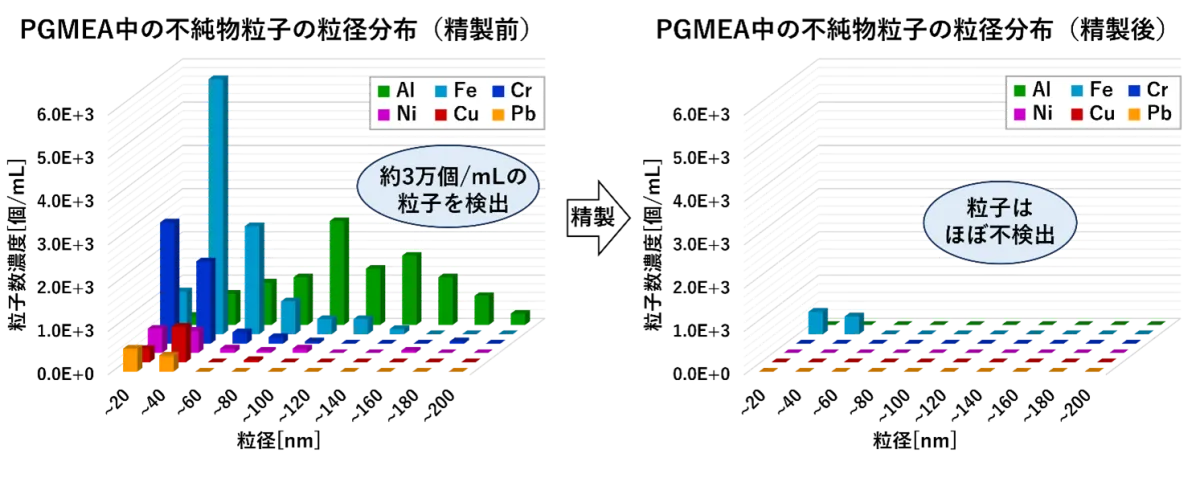
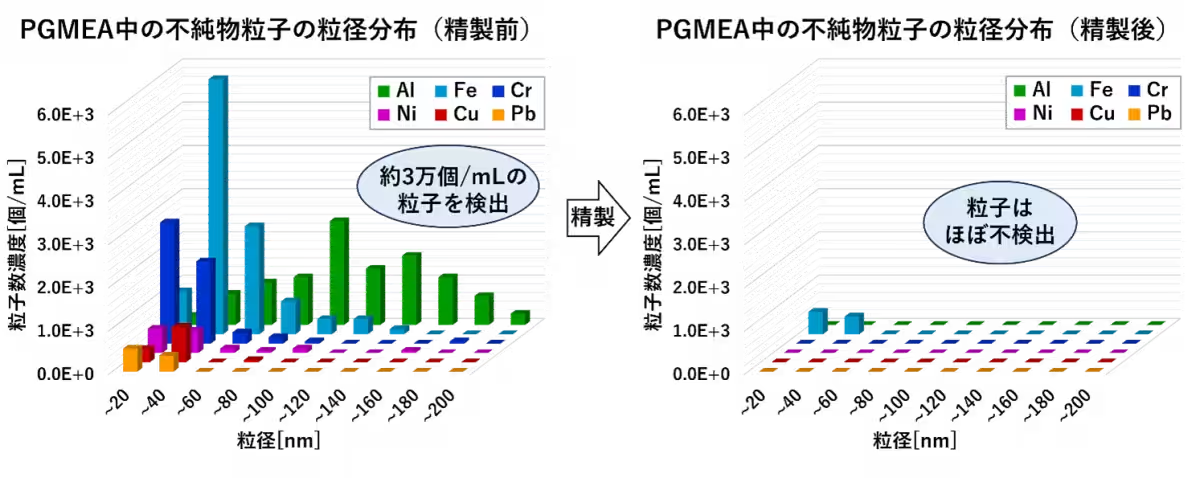
One illustrative case of the effectiveness of this technology is the evaluation of impurity metal nanoparticles in propylene glycol methyl ether acetate (PGMEA), widely utilized in semiconductor manufacturing as a solvent for photoresists and cleaning agents. When commercially available high-purity PGMEA was analyzed, many metal nanoparticles, such as aluminum (Al) and iron (Fe), were detected, indicating the presence of impurities in substances typically deemed ‘high purity.’ This underlines the necessity for rigorous testing even for widely used reagents.
Looking Ahead: Towards Advanced Applications
With the growing demand driven by AI applications and data centers, advancements in semiconductor manufacturing technology will continue. TRC's new service for sensitive evaluation of impurity nanoparticles adds a critical tool for researchers and manufacturers alike, enhancing the reliability and performance of semiconductor devices. As TRC aims to provide advanced solutions that contribute to societal progress, its commitment to refining nanoparticle detection technologies and expanding the scope of analysis options remains steadfast.
Conclusion
In conclusion, the innovative spICP-MS method offered by Toray Research Center pave the way for improved quality control in semiconductor manufacturing, ultimately enhancing device performance and reliability. As the demand for advanced semiconductor materials grows, this technology will play an increasingly crucial role in ensuring the purity and quality of the production process, reaffirming TRC's dedication to excellence in the industry.
Topics Consumer Technology)
【About Using Articles】
You can freely use the title and article content by linking to the page where the article is posted.
※ Images cannot be used.
【About Links】
Links are free to use.