



Optimizing Appointment Acquisition in B2B Sales: Strategies for 2025 and Beyond
Introduction: Unavoidable Changes in B2B Sales
In the world of business-to-business (B2B) sales, sales professionals have sensed a dramatic shift in their playbooks. This feeling is backed up by hard data, indicating that the previous formulas for success are no longer applicable. For instance, data from Scene Live shows that the rate of connecting calls to key decision-makers in inside sales stands at a mere 1.4%, and the likelihood of securing an appointment from that connection is even lower.
This stark reality isn't just a reflection of increasing difficulties; it's indicative of a profound, irreversible change where the balance of information gathering has shifted entirely in favor of the buyers. They can now select and filter information based on their criteria. In this article, we will analyze the most effective strategies for securing appointments, tailored for different industries and business types, based on reliable public data. We will also highlight actionable strategies you can implement as early as tomorrow.
Current Situation Analysis: Evaluating Major Approaches
To devise effective strategies, it’s crucial to first assess how well the current methods of sales outreach are performing. Here, we will compare common sales approaches using quantitative data.
Telemarketing
Research shows that the probability of getting through to a decision-maker through telemarketing is around 0.5% to 1.0% (Source: Aidma Holdings). If you make a thousand calls, you may secure only 5 appointments, illustrating the diminishing returns of this approach over the years.
Email and Form Outreach
In the realm of B2B email marketing, the average open rate is about 20%, yet the click-through rate for links within those emails stands at a meager 1-2% (Source: WEIC). This means that sending emails to a thousand contacts may lead to actual engagement from only about 10 to 20 companies, further narrowing down the path to securing appointments.
Direct Mail
In contrast, direct mail has a significantly higher engagement rate, with a 67.5% view rate among recipients according to the Japan Direct Mail Association. Moreover, around 15.2% of those individuals take some action, such as visiting a website or making an inquiry (Source: JDMA). In an era dominated by digital communication, tangible outreach methods regain prominence in encouraging potential clients to consider your offerings.
The key takeaway from these figures is not which method is superior, but rather how to effectively combine these approaches tailored to specific target audiences.
Identifying Core Challenges: Growth Opportunities and Obstacles
One prominent reason many businesses struggle to secure appointments is their failure to optimize outreach strategies based on their target companies' circumstances. By reevaluating the data, we can redefine effective approaches tailored to company types:
Startups in IT and SaaS (5-20 employees)
Characteristics: Decision-makers often juggle operational responsibilities and may not even have a company phone. Business messaging tools are commonly used.
Effective Approach: Avoid telemarketing as it's unlikely to yield results. Instead, leverage personalized emails that reference recent activities, like funding news or business developments, to enhance open and response rates.
Traditional SMEs (Manufacturing, Construction - 20-100 employees)
Characteristics: A significant portion of smaller companies still rely heavily on phone and face-to-face interactions, with IT tool adoption lingering around 40% (Source: Small and Medium Enterprise Agency).
Effective Approach: Combine direct mail with follow-up calls. Sending a tailored letter including relevant proposals or case studies establishes a physical touchpoint, and a subsequent call can lead to productive conversations framed as information-sharing rather than direct selling.
Larger Companies (100+ employees)
Characteristics: Recent Gartner findings suggest that on average, 6-10 individuals are involved in B2B purchase decisions.
Effective Approach: Implement a multi-channel approach triggered by relevant events such as trade shows or new service announcements, reaching out to multiple key contacts within the organization through various channels.
Insights for the Future: The Intersection of Data and Automation
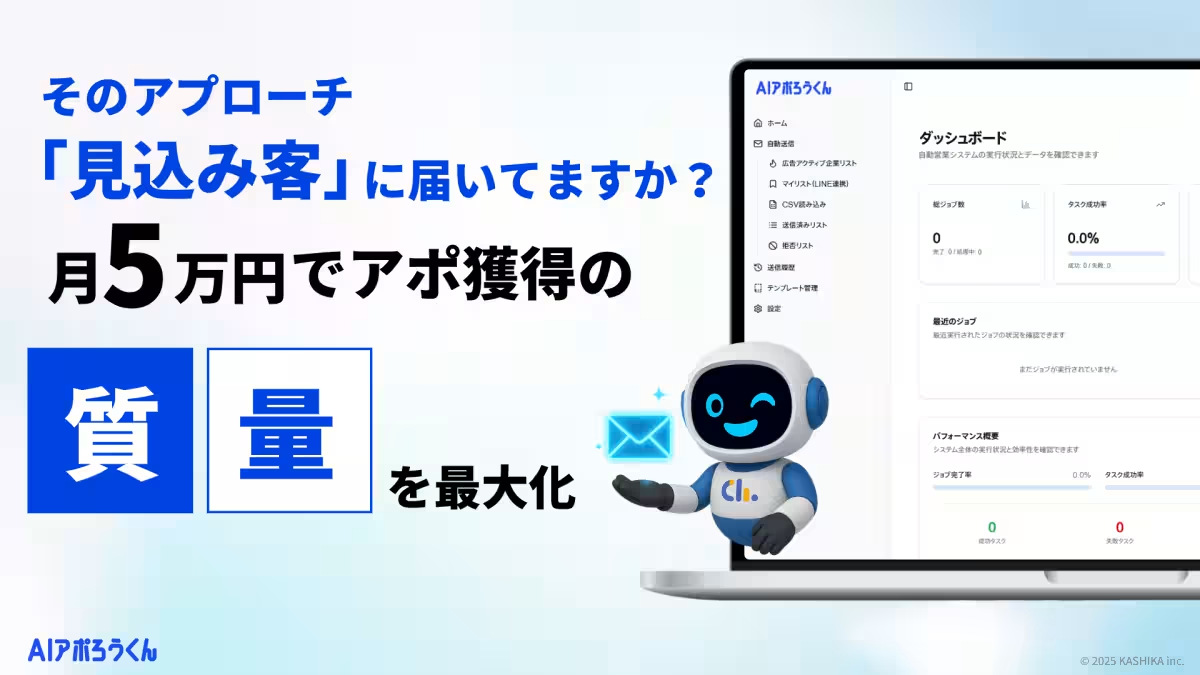
As demonstrated, modern B2B sales hinge on capturing signals indicating what companies need and when. A powerful tool to navigate this information landscape is the

Topics Other)
【About Using Articles】
You can freely use the title and article content by linking to the page where the article is posted.
※ Images cannot be used.
【About Links】
Links are free to use.