



Decarbonization: Understanding and Adopting Sustainable Practices for Daily Living
Introduction
In a world increasingly aware of climate change, the concept of creating a "decarbonized society" has gained traction globally, affecting our daily lives in various ways. Recently, ECODA conducted a survey targeting individuals aged 20 to 60 to examine their understanding and practical engagement with decarbonization in their lifestyles. With increasing environmental awareness, how many people are translating this concern into concrete actions? Also, what gaps exist between ideals and realities in the quest for a sustainable lifestyle?
Survey Overview
The survey aimed to gauge the comprehensiveness of the public's understanding of decarbonization practices and their practical application in everyday life. The key details of the research are as follows:
- - Survey Period: February 17 to February 19, 2026
- - Methodology: Conducted online via PRIZMA
- - Participants: 501 individuals, male and female, aged 20-60
- - Conducted by: ECODA
- - Monitoring Provider: Sakurisa
Awareness Level
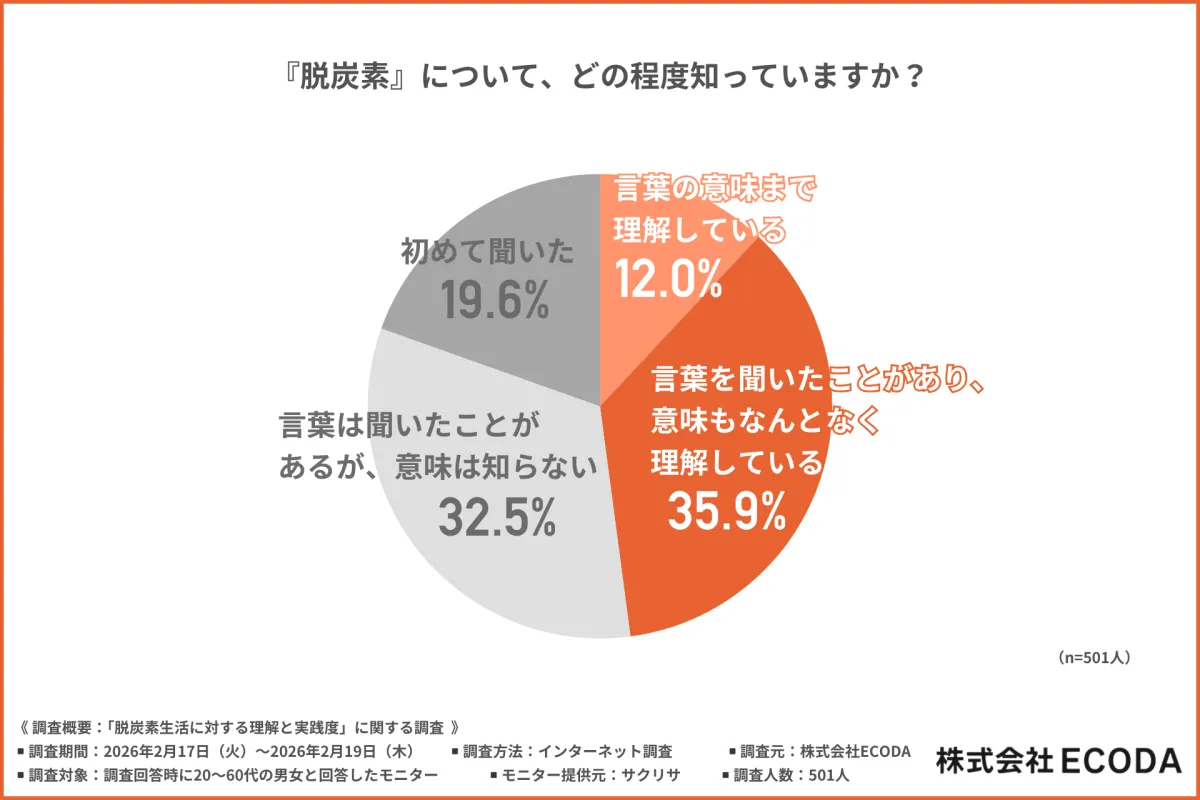
The survey began by measuring how familiar participants were with the term "decarbonization." The responses revealed the following:
- - 12% of respondents indicated a complete understanding of its meaning.
- - 35.9% have heard the term and have a vague understanding of its meaning.
- - 32.5% have heard of it but do not know its meaning.
- - 19.6% reported that this was their first exposure to the term.
While it appears that only a small percentage fully comprehend the term, nearly half of the participants have some level of understanding, indicating that exposure to environmental issues through media has increased awareness. However, understanding does not always translate to actionable behavior in daily life.
Practical Applications
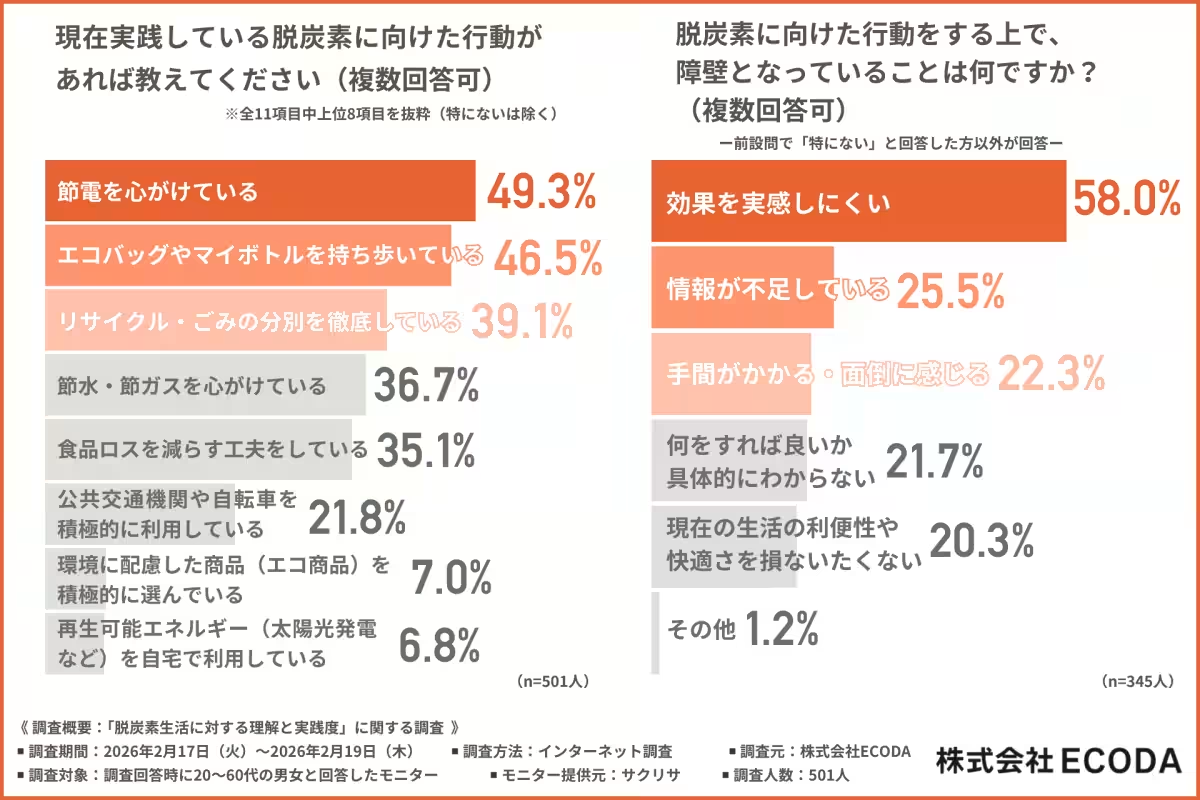
Next, participants were asked to identify any current practices they engage in related to decarbonization. The results were as follows:
- - The most common response, from 49.3% of participants, was practicing energy-saving actions, like turning off electricity when not in use or setting appropriate temperatures for heating and cooling.
- - 46.5% reported carrying eco-bags and reusable bottles.
- - 39.1% mentioned they strictly recycle and separate waste.
Prominent actions did not require significant financial investment or special equipment, suggesting a preference for easily manageable behaviors that also offer savings and convenience. Conversely, actions requiring more commitment, like utilizing renewable energy, ranked lower in popularity, indicating that practical, small adjustments are where current decarbonization efforts primarily lie.
Barriers to Action
When examining the obstacles to embracing decarbonization more fully, participants who expressed reservations shared the following challenges:
- - 58% felt that it’s difficult to perceive the effectiveness of their actions.
- - 25.5% pointed to a lack of information.
- - 22.3% cited the perceived inconvenience or difficulty in making changes.
The notion that the effectiveness of individual efforts is hard to gauge emerges as a significant barrier, suggesting that visible outcomes from personal actions could enhance motivation. Additionally, participants frequently expressed a desire for more guidance on what actions to take.
Ideal Sustainable Living
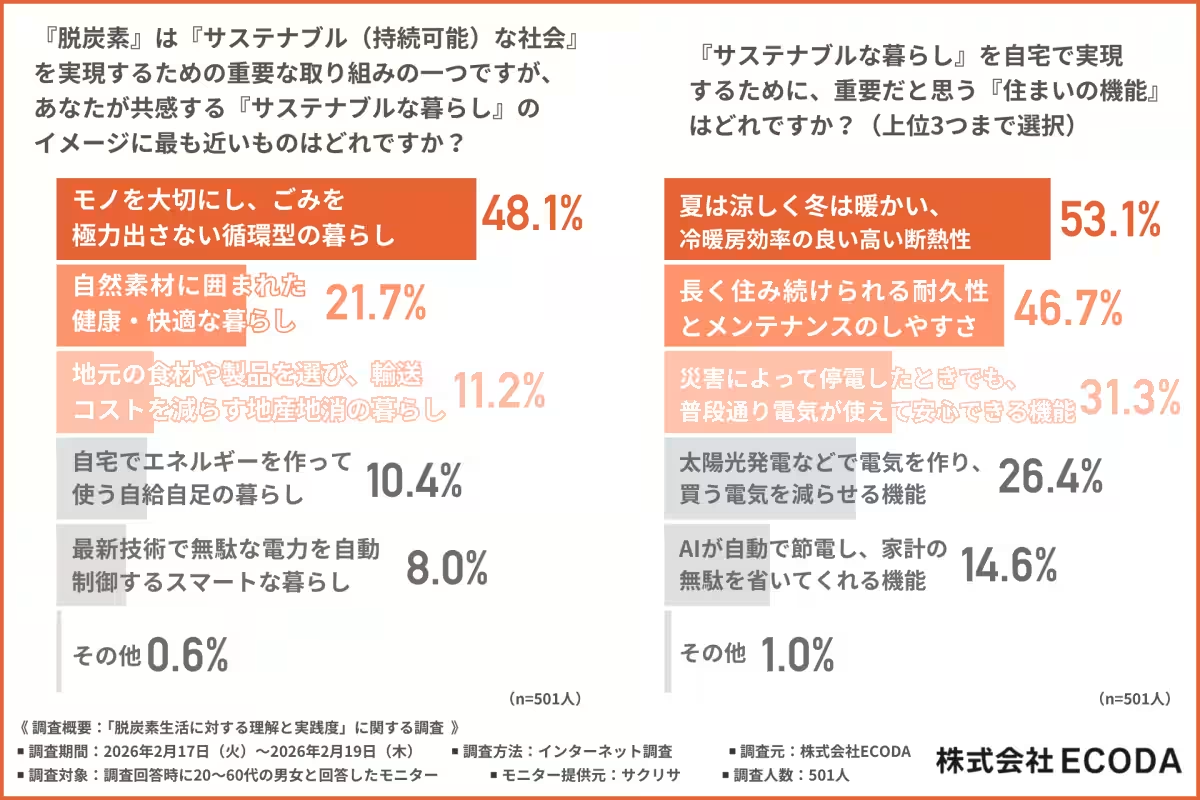
As we look toward sustainable living in a decarbonized future, what is the image people relate to sustainable practices? When asked about their vision for a sustainable lifestyle, participants responded:
- - 48.1% believed in a cyclic lifestyle with minimal waste, appreciating and valuing items.
- - 21.7% favored a life surrounded by natural materials for comfort and health.
- - 11.2% opted for local consumption to reduce transportation costs.
The highest support for a cyclic lifestyle resonates with existing behaviors like recycling and waste separation, suggesting it’s a realistic and relatable ideal. The recognition of natural materials and local sourcing demonstrates a desire for practices that support environmental well-being and individual health.
Functional Needs for Sustainable Living
When discussing necessary features in housing to support sustainable living, the survey revealed:
- - 53.1% prioritized high insulation for energy efficiency, ensuring comfort during hot and cold seasons.
- - 46.7% focused on longevity and ease of maintenance in a home.
- - 31.3% considered the ability to maintain power during outages, emphasizing the utility of backup energy storage.
The results highlight a strong preference for housing characteristics that ensure both environmental sustainability and personal comfort, revealing that individuals are seeking homes that protect their well-being amidst external environmental challenges.
Conclusion
This survey illustrates the gap between environmental awareness and concrete actions among individuals aged 20 to 60. While the term "decarbonization" is recognized, comprehensive understanding remains limited. Common actions like energy-saving and recycling are prevalent, yet barriers such as the difficulty in noticing improvements hinder further participation. The study suggests that individuals resonate with the cyclical lifestyle concept, emphasizing the need for homes designed with energy efficiency and resilience in mind. © 2023 ECODA. For more insights, visit ECODA.
For inquiries or consultation regarding solar power and storage solutions, contact ECODA today!

Topics Environment)
【About Using Articles】
You can freely use the title and article content by linking to the page where the article is posted.
※ Images cannot be used.
【About Links】
Links are free to use.