



APsystems Unveils Innovative Solar Energy Solutions at SNEC 2026
APsystems Introduces Cutting-Edge Solar Energy Storage Solutions at SNEC 2026
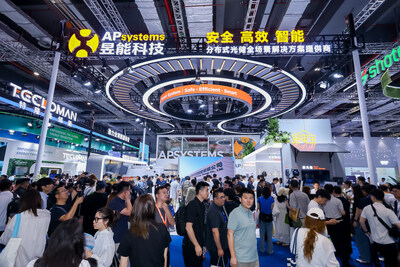
Shanghai, June 3, 2026 – APsystems has showcased its latest innovations in solar energy storage at the SNEC 2026 exhibition in Shanghai. Guided by their philosophy of being a "secure foundation for solar system and storage integration," the company has launched seven new product lines that encompass four categories:
1. AC-coupled energy storage solutions
2. Hybrid AC and DC-coupling systems
3. Off-grid storage
4. Chain-type storage solutions
Among the highlights of the presentation are solutions tailored for microgrid systems and residential energy storage.
Smart Energy Management Driven by AI
As global demand for smarter and more efficient residential solar storage solutions continues to rise, APsystems is poised to meet the increasing expectations for intelligent energy management and higher economic returns. Their new lineup offers a complete suite of smart solutions for balcony and household solar energy storage, integrating built-in AI optimization algorithms and seamless interoperability with virtual power plants. These solutions, powered by APsystems’ proprietary BESS AI model, consider factors such as dynamic electricity pricing, weather conditions, and user energy consumption habits to enhance self-consumption of on-site photovoltaic energy and reduce household electricity costs. For instance, the new Lake 6 Plug-in Energy Storage System (ESS) is projected to yield annual savings of €1,876 per household.
Flagship Product: Lake 6 Plug-in ESS
The standout of the new offerings, the Lake 6 AC ESS, boasts a capacity of 6 kWh and is equipped with large capacity 314 Ah batteries. It is designed to capture surplus daytime solar energy for peak usage, significantly minimizing energy waste. This compact all-in-one solution features a tool-free plug-and-play installation and is widely compatible with common household appliances. With a rated output of 2,500 W, it supports most high-power household devices and promises up to 8,000 charging and discharging cycles for long-term stability. The integrated energy-saving technology reduces standby losses, and the low-voltage design of 19.2 V coupled with a built-in fire-resistant construction eliminates electrical safety risks. Rated with an IP65 dust and water resistance, the unit is suitable for both indoor and outdoor installations, while its low-temperature heating module ensures reliable operation even in temperatures as low as -20°C.
Advanced Residential Inverters: LSH-6 and LSA-6
APsystems is also unveiling two leading residential inverters at the exhibition designed to meet diverse household needs: the hybrid LSH-6 and the LSA-6, both offering AC coupling. The compact LSH-6 model integrates solar energy production, grid and backup power supply, along with intelligent energy management. It features a rated power of 6,000 VA and peak power of 9,000 VA, offering a maximum efficiency of 97.6% and ultra-high overloading with photovoltaic capacity support of up to 12 kW. The upgraded LSA-6 inverter provides rated power ranging from 3.68 kW to 6 kW, with peak standby power of 9,000 VA and peak efficiency of 96.1%. It’s fully compatible with most existing photovoltaic systems, making it suitable for both the modernization of older systems and new residential solar projects.
Both inverters utilize smart management technology developed by APsystems for superior performance and user comfort. They operate quietly at 30 dB due to natural heat dissipation without a fan. The inverter’s 48 V low-voltage design prevents high voltage risks, while the high current charging and discharging of 125 A allows for quick energy replenishment. Ultra-fast 4 ms switching at UPS levels ensures stable operation even during off-grid mode. With a high power density, the unit is 20% smaller than conventional models, and installation can be completed without removing the cover. Flexible parallel expansion greatly simplifies local installation and commissioning. These inverters support parallel connection for flexible capacity extensions and, with four available operating modes, fully adapt to all scenarios of residential energy storage, maximizing photovoltaic self-consumption and the benefits of price fluctuations during peak and low tariff times, delivering efficient and economical smart energy solutions for households.
Conclusion
At SNEC 2026, APsystems proudly presents its scenario-driven product ecosystem, built on safe, efficient, and user-friendly solar energy storage solutions. With flexible configurations and proven reliability, this new product range caters to various household energy requirements, ensuring stable power supply and long-term economic benefits for users.
Topics Energy)
【About Using Articles】
You can freely use the title and article content by linking to the page where the article is posted.
※ Images cannot be used.
【About Links】
Links are free to use.