



Exploring the Future of Paper Recycling Through Innovative Dialogue
Exploring the Future of Paper Recycling Through Innovative Dialogue
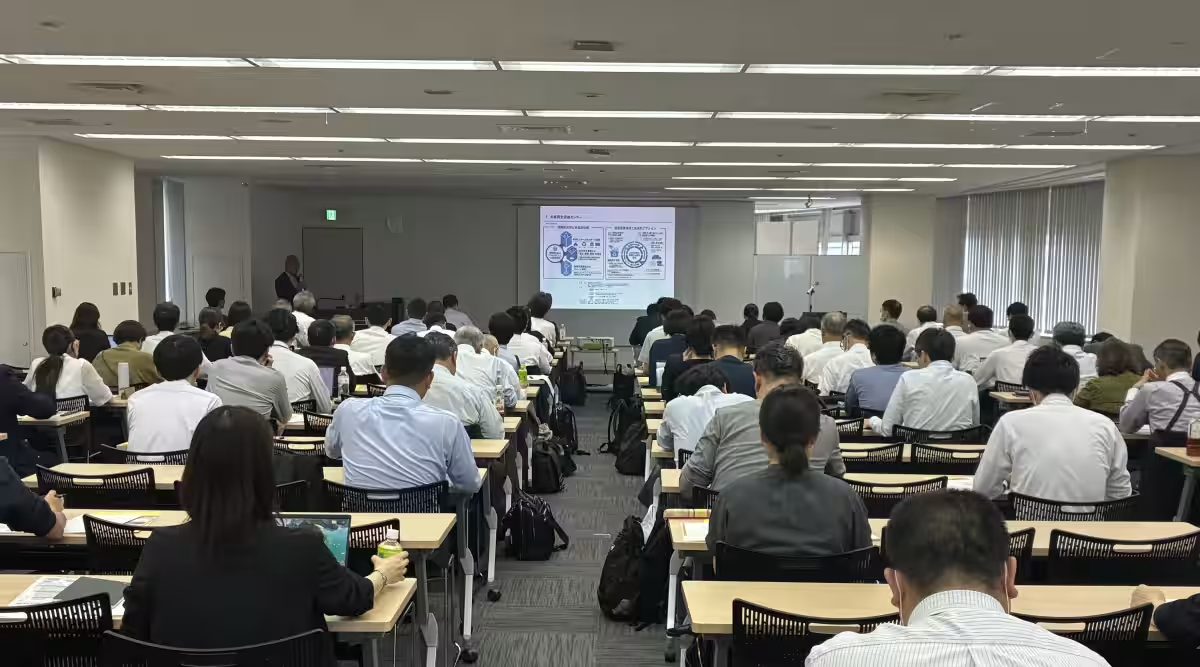
On May 26, 2026, the Japan Packaging Technology Association and the Old Paper Recycling Promotion Center held a groundbreaking seminar titled "Shall We Think Together About the Future of Paper Recycling?" in Tokyo. This event aimed to foster a collaborative dialogue between the key players in paper production and recycling, addressing the pressing issues surrounding paper recycling in Japan.
Current Context in Packaging and Recycling
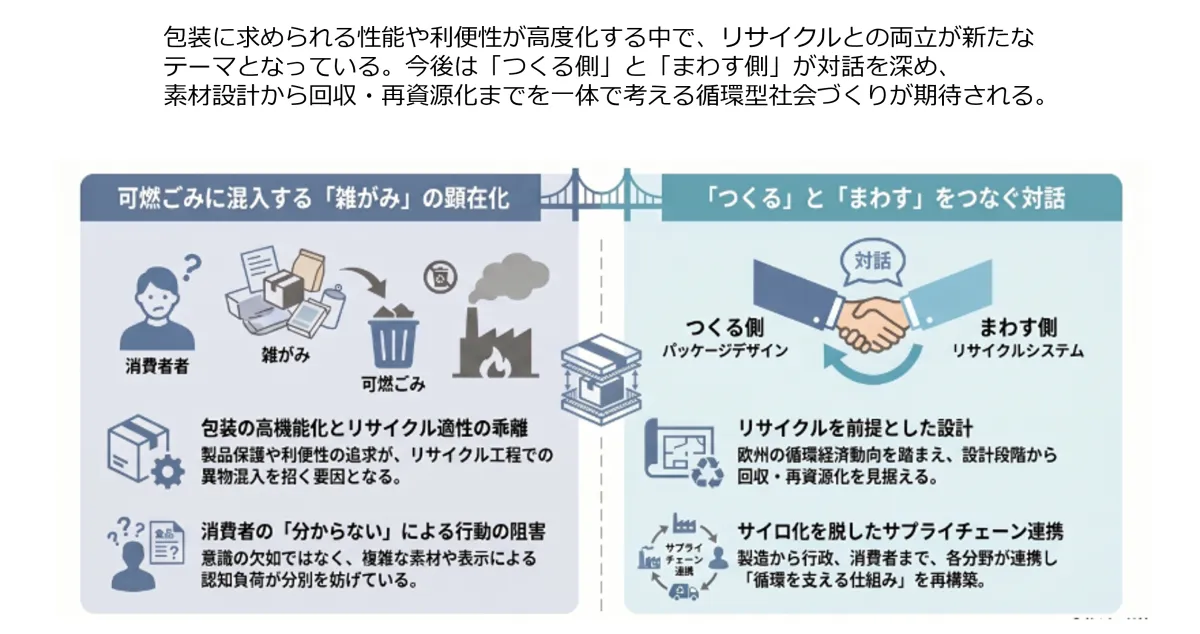
In recent years, the focus on reducing plastic use and increasing paper-based packaging has intensified. However, this shift has also unveiled new challenges within the paper recycling sector. Issues such as the presence of mixed paper waste and quality concerns regarding composite materials have come to the forefront, prompting a need for innovative solutions.
The seminar served as a rare platform for producers and recyclers to share their perspectives and constraints, fostering a holistic view of the entire process from material design to collection and resource recovery. Traditional channels for dialogue between packaging designers and recycling entities have been limited, making this seminar a novel initiative for enhanced mutual understanding.
The seminar commenced with an address by Mr. Ide, the Director of the Japan Packaging Technology Association, who emphasized that the objective was not to reach a definitive conclusion but to share knowledge and foster ongoing dialogue across industries. He recognized this event as a vital first step towards regular communication on these critical issues.
Insights from the Recycling Sector
Following Mr. Ide's introduction, Mr. Masatomo Kawakami, Executive Director of the Old Paper Recycling Promotion Center, discussed the current challenges facing the recycling industry, notably the 'mixed paper problem' and the concept of a circular participation model.
During his presentation, Kawakami highlighted how changes in environmental conditions affect the recycling landscape. He noted that while demand for recycled paper remains robust—mainly in packaging—there has been a significant drop in the generation of old paper alongside an increasing prevalence of mixed paper waste, particularly from magazines. This trend poses a long-term challenge for the recycling industry.
Furthermore, he addressed the barriers faced by consumers, citing that despite many households producing recyclable mixed paper, issues of convenience and clarity in the sorting process deter effective recycling behaviors. Kawakami underscored that there is often a disconnect between the information needs of both the production and recycling sectors, leading to misconceptions and complicating consumer recycling efforts.
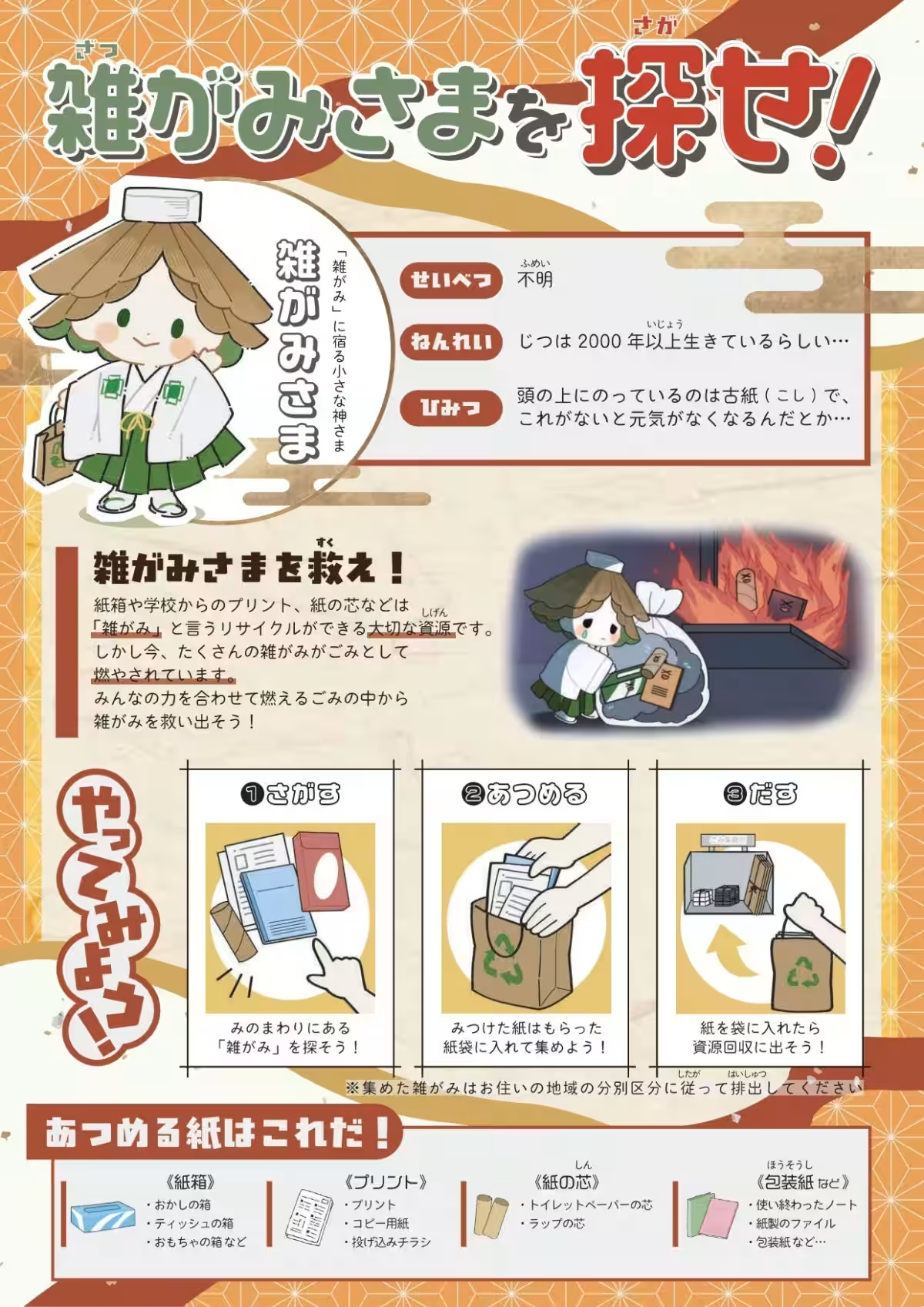
He also introduced an initiative titled “Find Mr. Mixed Paper!” to encourage awareness and community involvement, highlighting the need for active participation and behavior change in recycling practices.
The Packaging Perspective on Circular Economy
Next, Mr. Motokazu Uchiyama, CEO of Pack Yell, presented on the latest trends in packaging design, particularly in light of the evolving circular economy. His talk, titled "Beyond Plastic Elimination: The Future of Paper in a Circular Economy," outlined the shift in regulatory landscapes, especially regarding European packaging waste regulations and other environmental guidelines, marking a move from voluntary compliance to an essential requirement for market entry.
Uchiyama pointed out that while paper usage is on the rise, challenges related to recyclability, accurate labeling, and material composition have concurrently escalated. He stressed that not all paper products are equally recyclable, and articulated the importance of a design philosophy that incorporates recyclability into the creation process—termed “Design for Recycling (DfR).” This is critical as the industry transitions towards creating packaging solutions that are inherently aligned with recycling processes.
Furthermore, Uchiyama advocated for clear communication with consumers regarding what can be recycled, linking this information to the realities of local recycling infrastructure and practices for greater effectiveness.
The Importance of Continuous Dialogue
The seminar effectively underscored that both production and recycling sectors share the common goal of addressing paper recycling challenges, which extend beyond any one industry. The complexities of this issue encompass design, distribution, collection, recycling, administrative policies, and consumer actions.
As such, it is crucial not to rush towards conclusive answers but rather to focus on deepening mutual understanding of current realities, challenges, and insights from both sides. This collaborative approach forms the foundation for future efforts towards a sustainable circular society.
Both the Japan Packaging Technology Association and the Old Paper Recycling Promotion Center are committed to continuing these dialogues and fostering practical discussions around sustainable recycling practices that benefit all stakeholders involved. This ongoing cooperation aims to innovate and enhance understanding in the realm of paper recycling for a sustainable future.
Conclusion
As we move forward, the dialogues initiated in events like this seminar are crucial to fostering collaboration and knowledge sharing between the packaging and recycling sectors. The challenges are complex, but with shared insights and continued efforts, a sustainable future for paper recycling can be realized.



Topics Consumer Products & Retail)
【About Using Articles】
You can freely use the title and article content by linking to the page where the article is posted.
※ Images cannot be used.
【About Links】
Links are free to use.