



Noto Town, University of Tokyo, and JAL Forge Partnership for Future Talent Development
A New Era of Talent Development in Noto Town
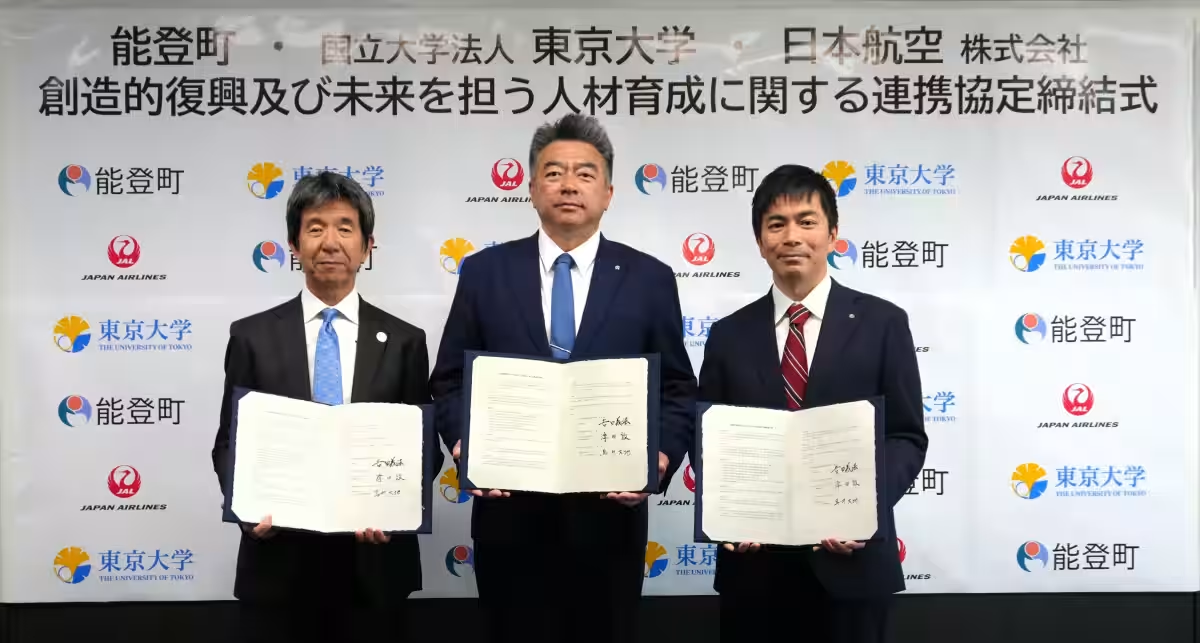
In a significant step toward fostering future talent, Noto Town, located in Ishikawa Prefecture, has partnered with the University of Tokyo and Japan Airlines (JAL). This collaboration aims to enhance human resource development through a creative recovery project called the "Agreement for Collaborative Development of Creative Recovery and Future Leaders."
The agreement was formalized by the Social Cooperation Headquarters of the University of Tokyo, JAL’s internal venture team "W-PIT," and the Mayor of Noto Town, Yoshinori Yoshida. The three organizations plan to launch an exploration learning program starting in June 2026, focusing on addressing regional challenges that have surfaced in Noto as it commemorates three years since the earthquake disaster.
Objectives of the Partnership
The collaboration is designed to engage high school students from Noto, students and faculty from the University of Tokyo, and JAL employees in shared learning experiences. By studying the recovery efforts following the Great East Japan Earthquake, they will investigate pressing local issues such as depopulation, aging communities, sustaining local industries, and maintaining community bonds. The goal is to nurture individuals who can think critically about and take action on these regional challenges, contributing to the bright future of local communities across Japan.
Learning Program Overview
The exploration learning program is structured into three phases: Past, Present, and Future. These phases are tailored to shape participants’ understanding of the past influences, current dynamics, and future implications of regional disasters, preparing them for any impending challenges.
Phase 1: Learning from the Past
In this initial phase, students from Noto, University of Tokyo scholars, and JAL employees will visit areas in Tōhoku affected by the Great East Japan Earthquake. They will engage directly with the local communities to learn about the 15 years of recovery efforts and understand the various challenges these regions have faced.
Phase 2: Investigating Current Issues in Noto
During the second phase, University of Tokyo students and JAL employees will regularly visit Noto Town to collaborate with local high school students. These interactions will include dialogues with community members and business leaders, allowing participants to identify current issues affecting the area and initiate research activities aimed at viable solutions for recovery and growth.
Phase 3: Proposing Future Solutions
In the final phase, participants will embark on expeditions to regions forecasted to be at risk from potential disasters like the Nankai Trough earthquake. Here, they will share insights gathered in Noto and Tōhoku to create proposals and solutions that resonate beyond the immediate locality, promoting disaster preparedness and sustainable community development across Japan.
Roles of the Partners
Each participating entity will leverage their unique strengths to implement this exploration learning program effectively. The University of Tokyo, for instance, has established a fund to support this initiative, welcoming donations from a diverse range of contributors who share an interest in fostering future leaders in these regions.
Through this tripartite collaboration, Noto Town, the University of Tokyo, and JAL aim to undertake pioneering endeavors that promote learning and exchanges beyond institutional barriers. By cultivating future human resources equipped with practical knowledge and innovative thinking, they also hope to significantly contribute to Noto's recovery and revitalization efforts.
Together, these organizations are setting a remarkable example for other regions, actively shaping the leaders of tomorrow who are ready to tackle the challenges ahead in a proactive and informed manner.


Topics Other)


【About Using Articles】
You can freely use the title and article content by linking to the page where the article is posted.
※ Images cannot be used.
【About Links】
Links are free to use.